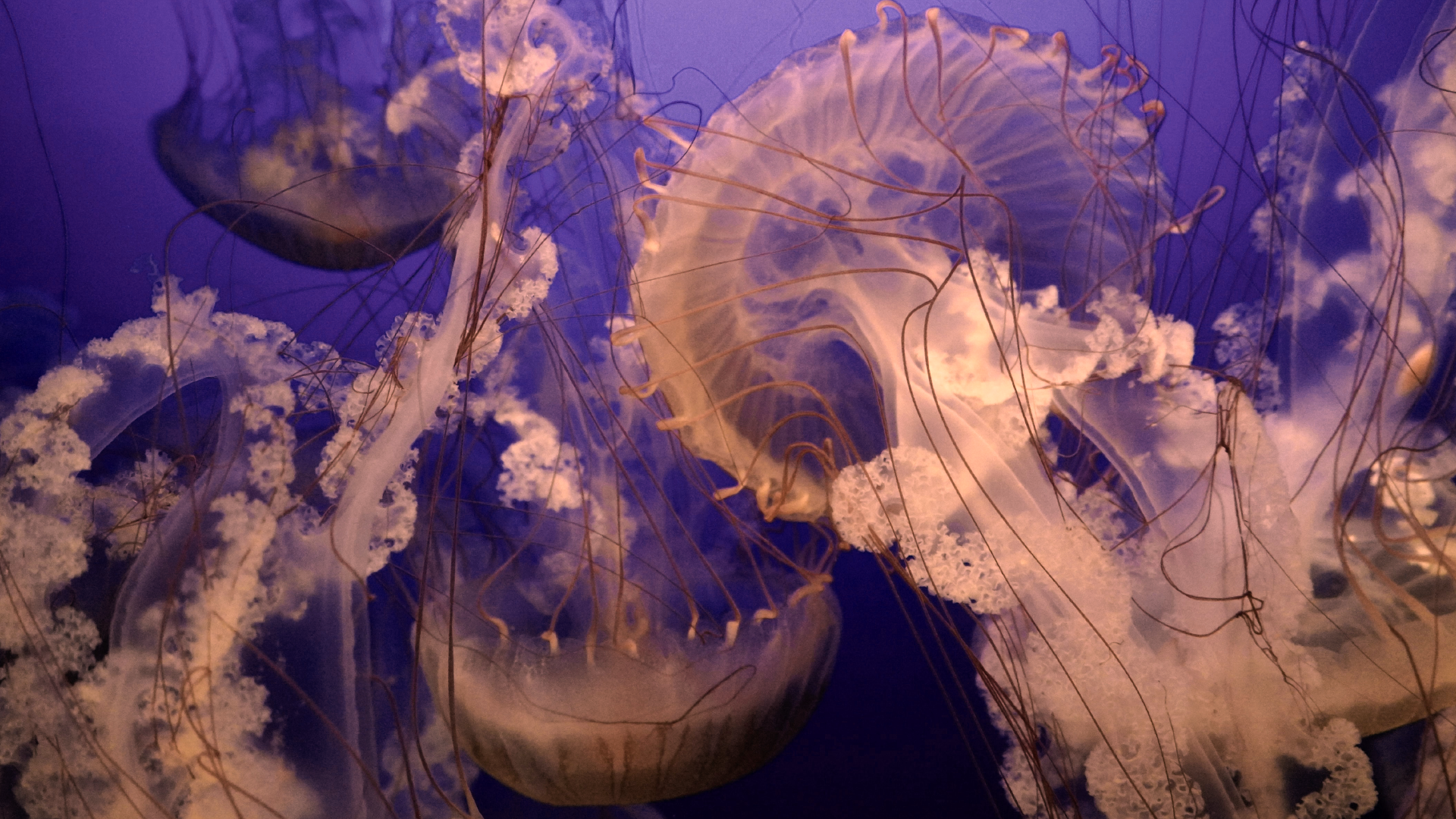
Swarms of jellyfish are becoming increasingly common sightings for beachgoers. Their abundance reveals valuable and slightly worrying information about the health of our oceans.
You don’t have to live near the coast to know that life in the ocean has become tumultuous.
Endless plastic pollution, overfishing, warming waters, and continued loss of vital habitats such as coral reefs have caused the endangerment of thousands of marine species. This especially includes larger animals like sharks, whales, large fish, and turtles.
But there is one creature that serves to benefit from a depleting number of large predators and rapidly warmer waters. That is the 4,000 known species of jellyfish floating around our seas.
The last twenty years have seen jellyfish populations soar, resulting in large swarms being spotted by boaters, beachgoers, and commercial fishermen. Anyone getting Finding Nemo flashbacks?
So what factors are causing the jellies to thrive while other marine animals struggle to adapt to a changing climate? Let’s take a look.
To understand how jellyfish are so resilient in the face of environmental adversity, we have to look at their biology. And when it boils down to it, jellyfish are rather simple creatures.
Unlike the complex animals that feed on them – sharks, sunfish, turtles, and seabirds – jellyfish lack brains, stomachs, intestines, and lungs. Instead, they are made up of 95 percent water and absorb nutrients and oxygen through the gelatinous layers of their skin.
Without these complex body parts, jellyfish can easily adapt. Fluctuating temperatures, ocean acidity, and increased salinity will place pressure on more intricate animals, but the basic jellyfish remains unaffected.
Jellies aren’t selective eaters either, giving them a massive advantage in terms of finding prey. Their stinging, drifting tentacles collect virtually anything available, such as plankton, crustaceans, or fish eggs. The ocean is an all-you-can-eat buffet when you’re a jellyfish.
Reproduction is also extremely easy, with breeding females spawning up to 45,000 eggs per day. They don’t require cozy or safe caves to store them until hatching, with the eggs settling on just about any hard surface they can find.
Concrete docks and fossil fuel rigs have become convenient habitats for jellyfish polyps to attach to, allowing the success rate of hatching to increase. They are so abundant in regions busy with human activity that power plants, desalination facilities, and fishing nets are regularly clogged with them.
Talk about karma, eh?
Human activity is encouraging the growth and frequency of jellyfish swarms in other ways.
When chemical-laden runoff water from factories or farms is emptied into the ocean, it typically results in ‘dead zones’ where very few organisms can survive. Plant life, such as algae, is known to grow to dangerous levels in low-oxygen or highly salted areas, but jellyfish share this capability too.
The Smithsonian reported that the number of coastal dead zones has almost reached 500 after doubling every decade since the 1960s. Dead-zones are prime real estate for jellies, which have become top predators thanks to a lack of competitors in the food chain.
Warming waters are also facilitating their population growth, with massive swarms spotted in the Mediterranean sea this summer near Israel, Turkey, Greece, and Malta. Some species have been spotted floating around the colder coasts of Europe and the UK, Scotland, and Wales.
More frequent jellyfish blooms indicate that life in the ocean is getting easier for invasive species, which experts say is a result of overfishing practices that deplete their natural predators.
Not only are their toxic tentacles a hazard to beachgoers, but their increased presence suggests that the balance of the marine ecosystem has become drastically imbalanced. Marine biologists worry that more jellyfishes are a sign that biodiversity in the ocean is disappearing and being replaced by brainless, spineless, stinging jellies.
Though they can be beautiful, their ominous presence should be taken as a warning sign that we need to improve our ocean health. This can be done by halting overfishing, preventing the acceleration of ocean heating by abandoning fossil fuels, and amping up conservation efforts before it’s too late.
Deputy Editor & Content Partnership ManagerLondon, UK
I’m Jessica (She/Her). I’m the Deputy Editor & Content Partnership Manager at Thred. Originally from the island of Bermuda, I specialise in writing about ocean health and marine conservation, but you can also find me delving into pop culture, health and wellness, plus sustainability in the beauty and fashion industries. Follow me on Twitter, LinkedIn and drop me some ideas/feedback via email.
New research by more than 150 political scientists has found that European voters are now almost five times as likely to vote for far-right parties as they were in 1995. Anti-establishment parties have also seen a surge in popularity.
Far-right parties are on the rise across Europe, new research suggests.
Analysis by more than 150 political scientists from 21 countries was recently published by PopuList, with the study led by...
While billions have been poured into manufacturing hydrogen the dirty way, experts in Canada found what was once thought to be impossible: a steady stream of white hydrogen.
Last year, thanks to a surge in solar panel installations, the world raved about how renewables overtook coal to become one of the largest suppliers of energy. Not to burst that bubble, but as great as that achievement is, it only...
Parasocial relationships have always existed, but social media has made them feel more personal. For Gen Z, constant access to influencers, streamers, and idols is blurring the line between fandom and real connection. What does the research say?
Have you ever watched so many interviews of your K-pop bias that it feels like you know them as a friend? Or what about when you’re watching your favourite streamer? They say...
Despite being a picture-perfect paradise on the outside, a potential population cap highlights the outrageous extent that Swiss politics would go to push an anti-immigration rhetoric.
To many of us, Switzerland might as well be paradise. From its regal landscapes to its powerhouse industries, the nation truly does it all. Life almost feels tranquil there, especially given its centuries long neutrality in global affairs.
Even its politics defies global...
We use cookies to ensure that we give you the best experience on our website. If you continue to use this site we will assume that you are happy with it.
































 0 comments