The high seas are arguably the last lawless place left on the planet. A UN member state meeting in New York hoped to finally create a policy that prevents the overfishing and mistreatment of our oceans – but it has failed.
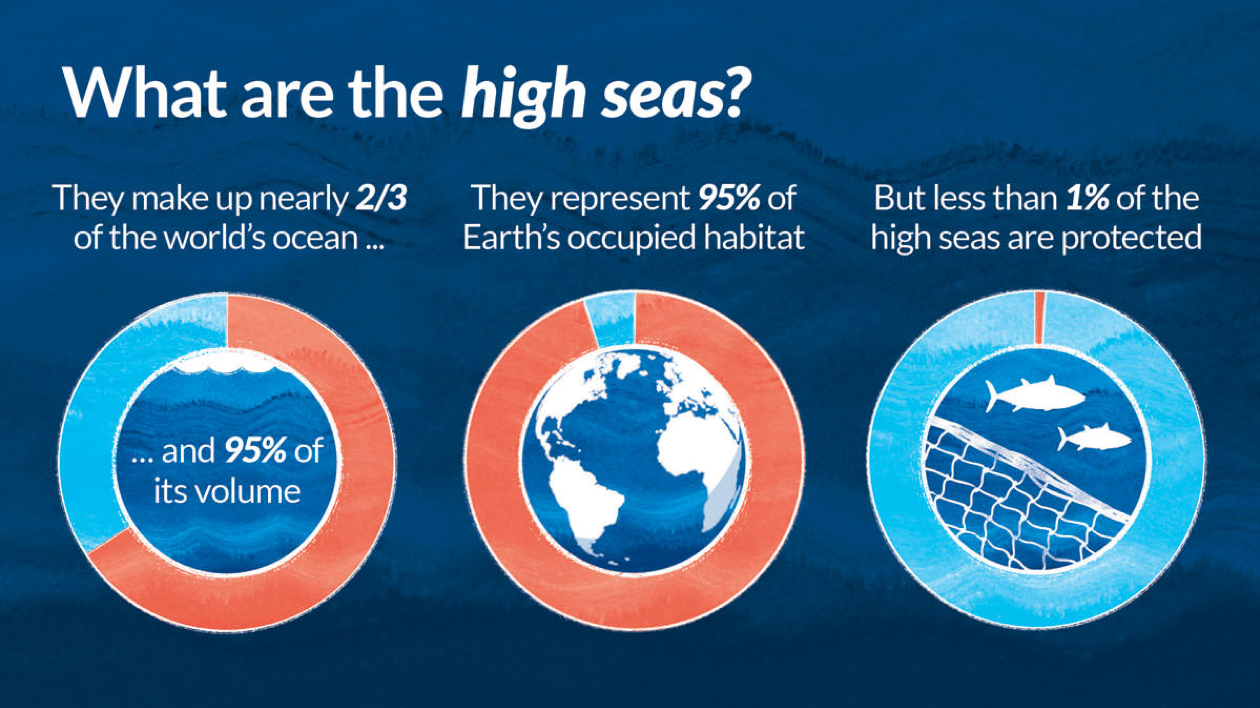
Coastal waters (and all life within them) may belong to the closest nearby nation, but the remaining two-thirds of the world’s oceans are treated as international waters, otherwise known as ‘the high seas’.
Beginning 200 nautical miles outside of the Exclusive Economic Zone of neighbouring countries, the high seas have become an area of free reign for commercial fishing companies with only 1 percent of its expanse protected by law.
The WWF’s International director general Marco Lambertini remarked, ‘the high seas epitomise the tragedy of the commons.’ For readers not familiar with this theory, I’ll use my philosophy degree for the first time in seven years and explain.
The tragedy of the commons argues that when a resource is shared by a large group without clear governance or social structures put in place, individuals will act according to their own self-interest and cause a depletion of resources through their uncoordinated action.
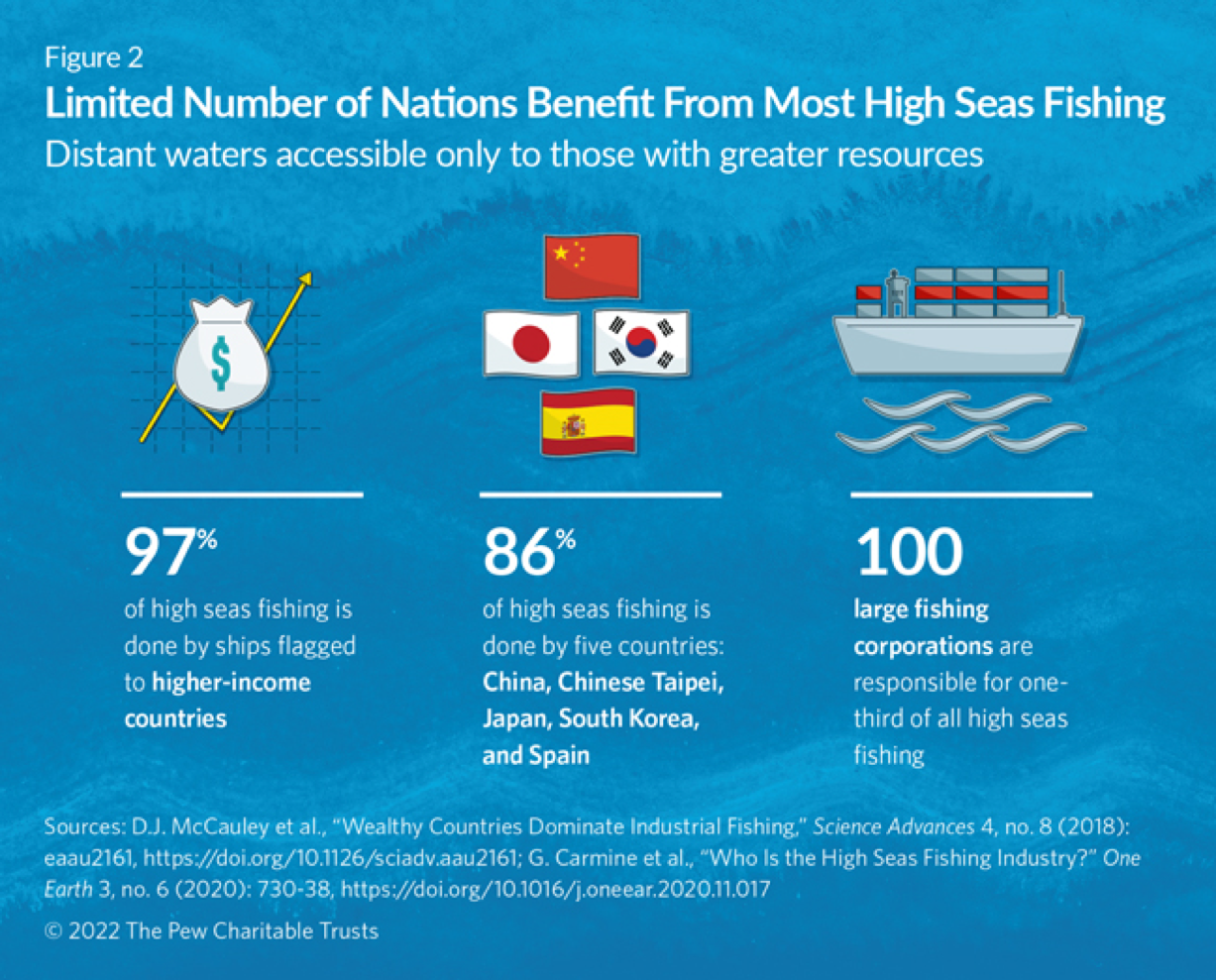
This is exactly what’s happened, as just five countries have scooped up the lion’s share of fish populations from the high seas due to their geographic advantage and access to large fishing boats.
At a week-long meeting in New York, UN members had hoped to finally sign a treaty to protect our oceans, prevent the collapse of the undersea ecosystem, restore balance of fish supplies globally, and help to mitigate climate change.
Sadly, the meeting ended on Saturday without any agreement being made.
The UN High Seas treaty has been in negotiation for the last decade. Despite this, it has never been signed.
On the back of UN member states pledging to protect 30 percent of our planet’s land and seas by 2030, world leaders and environmentalists had hoped to ensure that the high seas are afforded this environmental security too.
The failure to extend legal protection to the high seas means the vast majority of the world’s oceans will continue to see commercial fisheries depleting wild fish populations at a dangerously unsustainable rate – at least for the time being.
This is because members of the UN could not agree on how to equally share or redistribute the benefits from marine life or how to establish which areas would be protected.
The meeting in New York was the UN’s second attempt to get policy passed in 2022 and the fifth attempt overall.
Official statements at the UN Ocean Conference in Lisbon have conjured hope for success, as almost all political leaders present openly expressed their support for the legislation to go ahead.
What progress was made?
UN member states and conservationists have starkly different outlooks on what was accomplished at the week-long New York meeting.
In the eyes of environmentalists who have witnessed discussions surrounding the Ocean Treaty continue without success for the last decade, it seems like it could be ‘too late’ to save our ocean ecosystems.
Sure, securing the development of new ocean sanctuaries was a small step forward. But Laura Meller from Greenpeace’s Protect The Oceans campaign said that wealthy countries are ‘moving too slowly to find compromises, despite their commitments.’
Countries in the Global South, in particular the Caribbean and Pacific Island nations, are highly aware of the consequences of overfishing and negligence due to their proximity and reliance on the ocean. Both have advocated strongly for the treaty to be signed.
As a result of this, many believe countries in the Global North are to blame for hindered any agreements when it came down to the final days. They often placed priority on future fishing profits over the protection of the oceans.
Greenpeace continues to warn the UN general assembly that reaching the target of protecting 30 percent of the world’s oceans by 2030 is absolutely vital to give marine life the chance to recover.
Why is protecting the high seas important?
Aside from the harrowing possibility of a collapsed ocean ecosystem, the inequity of the fishing industry is of serious concern.
In West Africa, fish stocks are being severely depleted due to large fishing vessels from Europe operating off the coast. This is causing food insecurity across the region and harms the livelihood of fishermen who provide for their families through the trade.
On top of this, large fishing vessels have the tools to retrieve extremely large catches, which smaller boats do not. This is problematic, as scientists have discovered that leaving large fish in the ocean helps to reduce overall carbon emissions in the atmosphere.
When a large fish dies, it sinks to the bottom of the ocean and sequesters the carbon it contains with it. This adds to ‘blue carbon,’ or rather all carbon captured and stored by oceans, which is a lot, by the way.
The ocean is known to store about 30-50 percent of all CO2 emitted from fossil fuels. It also stores 50 times more carbon than the atmosphere and 20 times more than plants and soil combined.
Considering that the planet is largely made up of these very important ecosystems, it’s certainly worth protecting them. A failure to sign in the treaty will only prolong the depletion of ocean life and places emphasis on how challenging it will be to convince all nations to put our planet before profit.
Deputy Editor & Content Partnership ManagerLondon, UK
I’m Jessica (She/Her). I’m the Deputy Editor & Content Partnership Manager at Thred. Originally from the island of Bermuda, I specialise in writing about ocean health and marine conservation, but you can also find me delving into pop culture, health and wellness, plus sustainability in the beauty and fashion industries. Follow me on Twitter, LinkedIn and drop me some ideas/feedback via email.
After surviving two doses of a drug intended to kill her, Christa Pike is at the centre of a high-profile legal battle that’s shone fresh light on the absurdity of humane execution.
Last week, Christa Pike survived an attempt on her life. Now doctors at the Tennessee hospital where she’s being held are working tirelessly to save her. Reports state Pike is ‘angry and confused’ about what happened to her,...
When it comes to social change in 2026, Gen Z has lost all the vim of yesteryear. When and where was this energy lost? Let’s break it down.
In the late 2010s Gen Z was synonymous with social change, a broad catch-all term encapsulating the desire for a more equitable and just world.
In 2026, however, the cohort is now more likely to be mentioned in the same breath as subjects...
Used clothes have been enabling people to refine their style and earn money. Now that thrift fashion is reaching new heights on the internet, who continues to benefit the most?
In Nairobi, a second-hand jacket can either be on sale in the market or on social media with all the elegance of a professionally curated thrift shop. It is the same type of clothing item, just sold via different channels.
Some...
A month after the actress was criticised for ‘sexualising women’s sport’, the backlash raised a bigger question: what are women actually allowed to be in the sporting world?
You probably already heard that Sydney Sweeney has ‘great jeans’. The actress stirred up major controversy with an American Eagle advertisement last summer, which was criticised for flirting with eugenics thanks to the aforementioned tagline.
Initially staying silent amidst the backlash, Sweeney...
We use cookies to ensure that we give you the best experience on our website. If you continue to use this site we will assume that you are happy with it.






























 0 comments