0 comments
Put down the hose. England’s Environmental Agency has declared over half of the nation is in a drought as ongoing heatwaves drain water supplies.
When I saw the news alert for a hose pipe ban I was suddenly transported back to primary school, when I mistakenly took the government legislation as an embargo on owning hose pipes.
Alas, here we are decades later, not smuggling garden equipment but being forced to cut back on water usage – as large parts of the country are stifled by ongoing heatwaves.
Forgive me for my British penchant for weather chat, but when it’s persistently over 30 degrees celsius and your desk fan is blowing hot air around the house for the second week straight, there’s little else to talk about.
And now the personal toll is giving way to national crisis. The Environmental Agency (EA) has officially confirmed that over half of England is in a drought, as rising temperatures place pressure on water supplies.
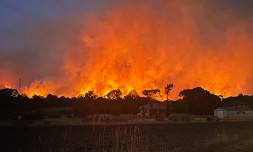
The impacts include low river flows, early harvests and an increased risk of wildfires – meaning the effects of this summer’s heatwave will linger long after the forecast cools.
‘The hot and dry weather means we are currently using water faster than nature can replenish it,’ said Helen Wakeham, director of water at the Environmental Agency and chair of the National Drought Group.
July is set to be the driest on record, with the ‘flash drought’ being brought on by usually low rainfall combined with the recent high temperatures. It’s hard not to notice – walking through London’s parks this weekend was like traversing a desert. Brown, dead grass and dusty soil were all that would do for local picnickers and sunbathers.
The seven areas of England officially in drought are East Anglia, Hertfordshire and the whole of London, Thames Valley, Hampshire and the Isle of Wight, Devon and Cornwall, the West Midlands, and Wessex (covering Dorset, Somerset, Wiltshire and south Gloucestershire).
North Wales and the Upper Severn river basin also entered drought conditions last week, and while Scotland has not declared a drought, the country is monitoring ‘water scarcity’. Some parts of eastern Scotland are in the most extreme category of ‘significant scarcity’ according to the Scottish Environment Protection Agency.
‘A second consecutive summer drought is an exceptionally serious situation and one that will have long-lasting impacts on our environment, wildlife and the economy,’ said Wakeham. ‘We want everyone to stay safe and hydrated during the hot weather but every drop we can save is a drop more for nature and agriculture.’
This latest drought means England has experienced one in three out of the past five years: 2022, 2025, and 2026.
Some parts of Devon haven’t experienced rain in over 50 consecutive days.
Hosepipe bans often become the headline-grabbing symbol of a drought, but they’re ultimately a sign of a much bigger problem. Water companies can ask households to cut back on watering gardens or washing cars, but the wider consequences stretch beyond domestic inconvenience.