






 0 comments
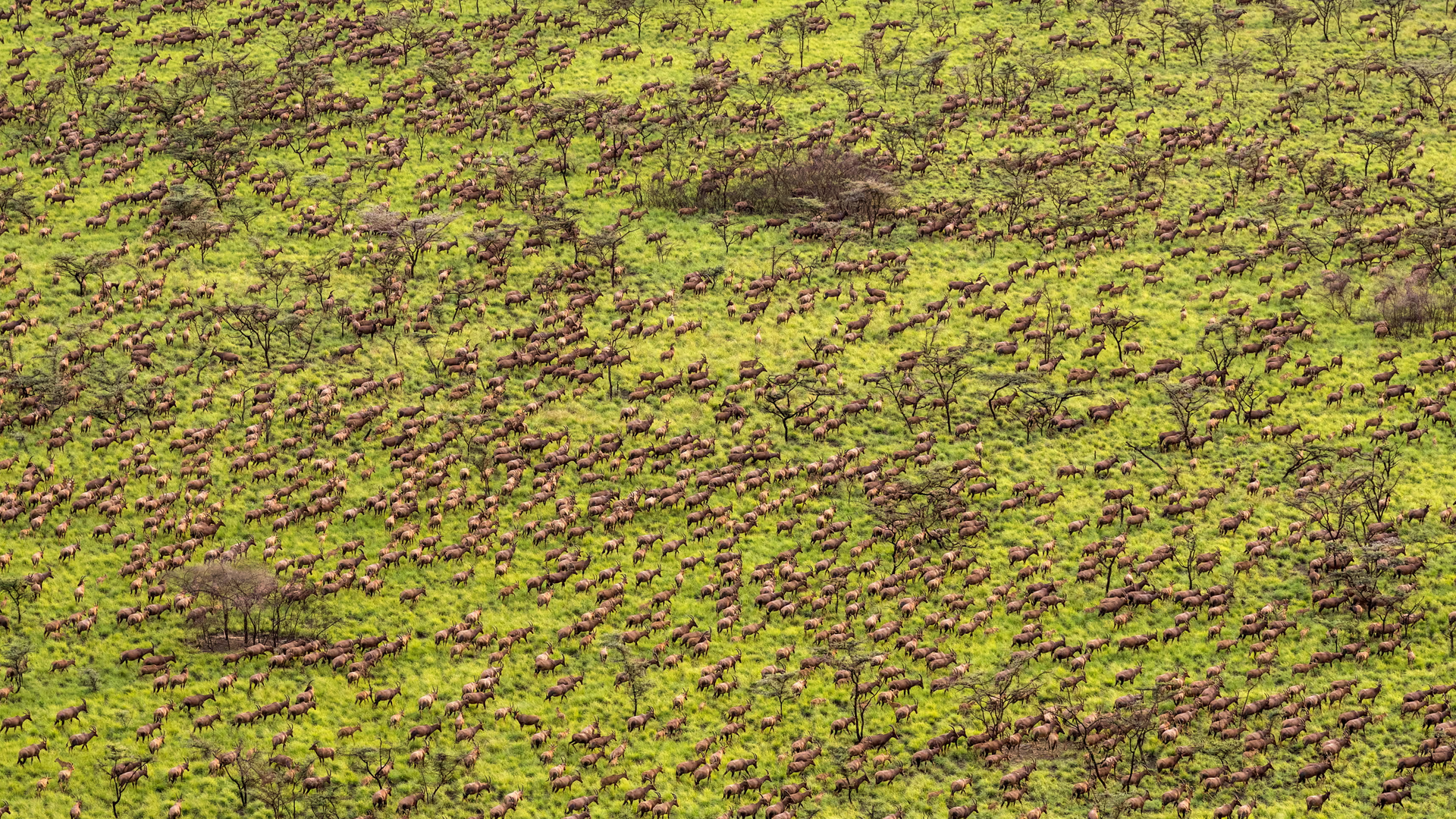
Survey maps published last month have revealed more than six million animals moving through an unmonitored area of South Sudan and Ethiopia in the largest migration of antelope in the world.
A recent survey of an untouched landscape in South Sudan has revealed the largest land mammal migration ever seen on Earth.
The aerial survey, conducted in a collaboration between African Parks and the South Sudanese Ministry of Wildlife Conservation and Tourism, was undertaken over a period of three years and covered 122,774 km² of previously unmonitored ecosystems.
The maps produced from this survey, along with the collaring of hundreds of animals following these migratory routes, have produced data which can track the movement of more than six million antelope.
Ranging between four primary species, White-eared Kob, Tiang, Mongalla gazelle and Bohor Reedbuck, these animals make this mass migration every single year following the rains. The antelope are moving from the East of the White Nile, up into the western tip of Ethiopia – trekking away from the rising water levels of the delta in this part of the Nile basin.
The Great Nile Migration, as it has now come to be called, moves through hugely vast areas of landscape, including three National parks, namely, the Boma National Park and Badingilo National Park in South Sudan, as well as Gambella National Park in Ethiopia.
Due to the remote nature of the area, difficult accessibility, vast wetlands and armed conflict, it has been almost impossible to survey until now. Following years of civil war in South Sudan, which ended in 2011, the landscape had remained almost forgotten to the world. But now, with the help of international conservation agencies, researchers and governments, research has resumed.
The Boma Badingilo Jonglei Landscape (BBJL), which is the new name given to this vast area of almost 14 million acres of wetland, has now become one of the foremost areas of ecological significance throughout the continent – and indeed the planet.
‘The results of this survey are nothing short of staggering. The astonishing scale of the migration is only equalled by the responsibility to ensure that it survives into the future in an extremely complex landscape,’ says Peter Fearnhead, CEO of African Parks.