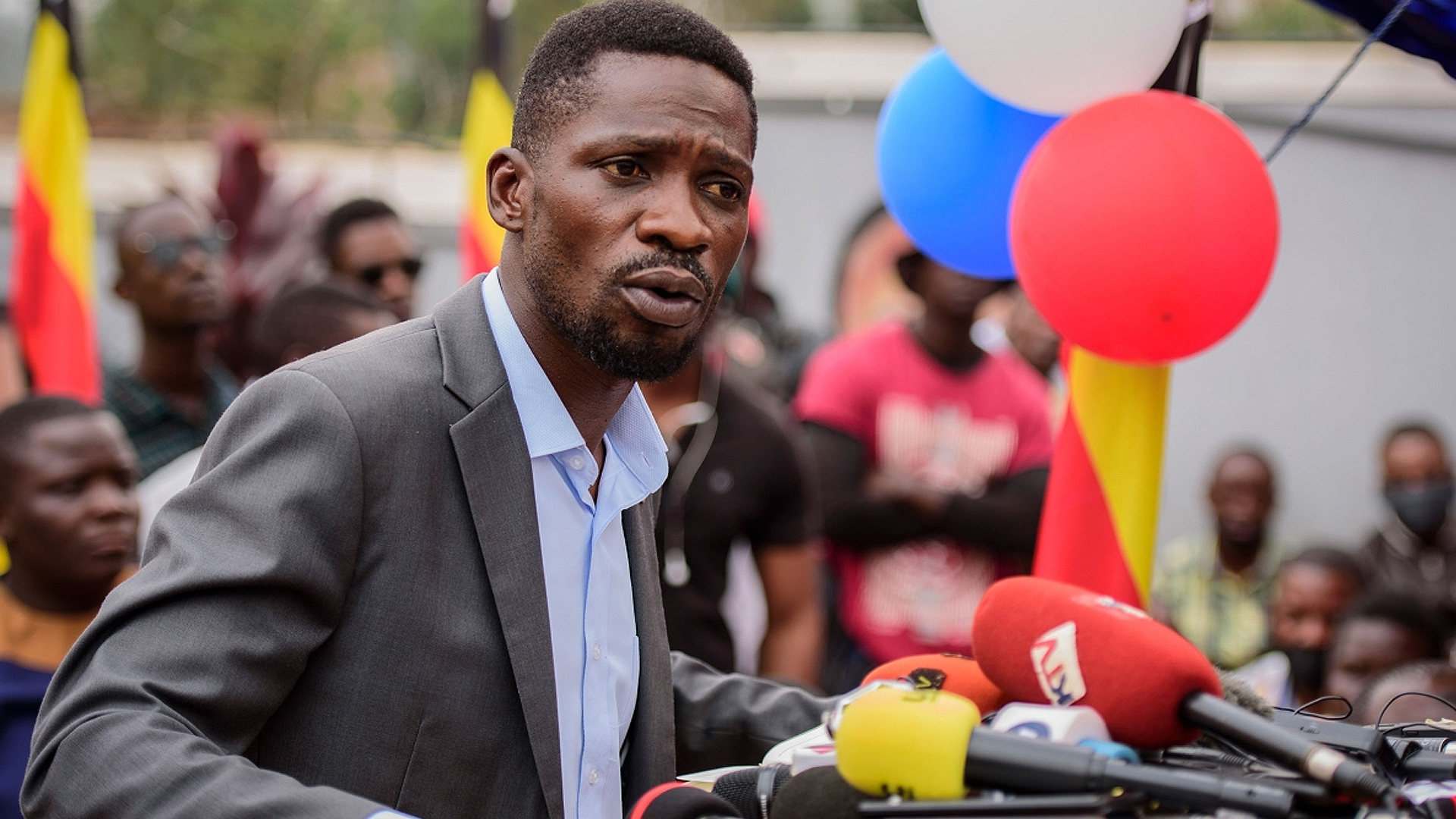
Despite the obstacles to his success, Bobi Wine continues to fight for change in Uganda.
Bobi Wine is somewhat of a legend in Uganda.
Primarily known as a reggae artist, his lyrics are permeated by narratives of social change that focus on the high levels of suffering prevalent in Uganda.
Much of the population is able to identify with the inequality and deprivation that Wine brings to life in his music, which has propelled him to the fame he knows today.
It is Bobi’s musical career that eventually drove him into politics. Wine ran as a member of Parliament in his area and succeeded in 2018. Since then, he has become a central figure in the opposition movement to the current government.
The role he now holds has become more of a curse than a blessing, though. The current ruling party, the National Resistance Movement, has been in power for 35 years under the leadership of Yoweri Museveni.
The length of this rule has allowed for a destruction of the political and democratic foundations of Uganda. Originally a revolutionary, Museveni has dismantled the free press and shown disdain for the principles of the rule of law and of human rights.
How then, does an opposing politician get their voice out? Bobi Wine is fortunate to have already been a public figure. His appeal isn’t limited to his fame – he is young and has proven his undying commitment to grassroots change.
This motivation has inspired a great many young Ugandans to rally their support around Wine. Not only are they showing up for rallies and elections, but they are also running for local councils and even Parliament.
Affiliations with Wine come with harsh consequences. In the past year, hundreds of Wine’s supporters have been arbitrarily detained or even abducted from their homes. These have been undertaken by the Ugandan military and information has been withheld from families as well as from other Ugandan authorities.
Bobi Wine has not been exempt from similar treatment, far from it. Since his overt political involvement in 2018, he has been continuously detained, beaten and was even shot at on the campaign trail.
What Bobi Wine does show, however, is a real dedication to his cause.
Despite all of the obstacles that he faces, in terms of the physical harm he has felt and the political impediments to his success, he has not given up. After every arrest, every incident, he returns to the streets to continue contesting Museveni’s power.
The amount of support he has garnered, and his appreciation for the rule of law, democratic principles and social justice, gives hope that Ugandans will soon see a government that reflects the change they want to see.
This article was originally written by Julie Luebken, a student at the University of Cambridge interested in digital politics, climate justice, and international relations. View her LinkedIn.
I’m a contributing writer here at Thred. My bio and contact information can be found at the bottom of each article. If you would like to become a remote writer for Thred, please email us at [email protected] or click here to see more information on the Change Maker Network.
The ongoing Winter Olympic Games have seen many acts of defiance against the Trump administration. How will the situation play out when the US hosts in 2028?
When Baron Pierre de Coubertin revived the Olympics in 1896, one of his main aims was to promote mutual understanding among athletes. He believed that competing on the track instead of the battlefield could encourage peace and help prevent war.
However, countless...
Anxiety, depression, and emotional problems are on the rise across the globe, cutting across boundaries of culture, geography, and socio-economic status. The World Health Organisation says ‘one in seven’ have a mental health disorder in 2026.
According to the World Health Organisation, ‘one in seven adolescents worldwide has a mental health disorder.’ Such statistics obviously cannot be ignored.
This generation of teens is the first to be raised in an...
Why has the precedent that ‘British culture is dying’ invaded every aspect of our lives recently? From TikTok commentary to culture-war politics, who is really influencing the supposed shift in British culture?
Claims that Muslims and BAME communities are erasing British culture have become a popular rhetoric in recent political spheres in the UK, but also around the Global North as a whole. Popular, but not new.
Here's my take...
Findings suggest women' s professional development was only a priority for half of US businesses in 2025.
‘Many companies are overlooking women – and it’s crucial that they don’t,’ reads the opening line of the 2025 Women in the Workplace report. What follows is no more encouraging. The state of play across the corporate landscape is pretty dire where gender parity is concerned.
The standout finding was that only half...
We use cookies to ensure that we give you the best experience on our website. If you continue to use this site we will assume that you are happy with it.
































 0 comments