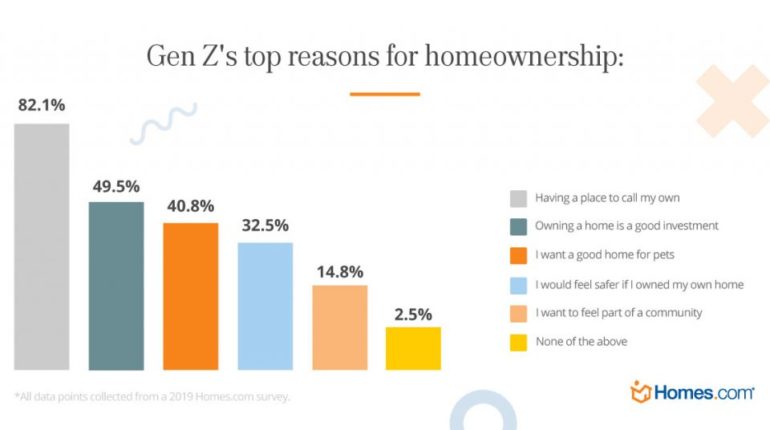
While Millennials are busy complaining that they’ll never become homeowners, Gen-Z is taking the necessary steps to ensure they will be – even if that comes with risk.
Have you taken a look at the housing market recently?
From the perspective of a young professional (and depending on where you live), it might seem impossible that you could ever afford to put a deposit down on a house without splitting the cost or saving for decades to come.
Think I’m exaggerating? Promise you, I’m not. At the start of this year, the UK Office for National statistics reported the average price for a home was £274,000 – which is £24,000 more expensive than the year before.
Coupled with inflation, which is seeing the cost of living rise significantly, Gen-Z is having to redefine the age at which homeownership should happen, how they’ll get the money for it, and who they’ll be looking to share the cost with.
“ur not rich cuz you get coffee everyday” – someone who was alive when u could buy a car with a quarter u found on the floor
Looking at a survey of 875 American Millennials, many believe owning a home is more of a ‘distant dream.’ And rightly so, considering only 35.4 percent of this generation have managed to do so before the age of 35.
Despite US mortgage rates dropping to their lowest in history during the pandemic, over half of Millennials still say buying a home in the area they currently live in is ‘hard’ or ‘extremely hard’.
On top of this, a least half reported abandoning all attempts to save for down payments because they were more focused other financial obligations like healthcare insurance or student debt.
On the contrary, Gen-Z don’t share this lack of confidence towards buying homes, with 77 percent of those surveyed saying they view homeownership as being ‘at least somewhat attainable’ in the next decade.
Some researchers suggest their confidence lies in the abundance of new and different ways Gen-Z can build wealth. The rise of the gig economy, side hustle culture, cryptocurrency, and digital NFTs offer different avenues to accumulate a healthy savings without relying on physical assets.
As a result of these avenues, Gen-Z buyers experienced the biggest growth of any generation during the housing cost drop caused by the pandemic, doubling their ownership of the market from 2019 to 2020.
Those who aren’t quite there yet have interesting motivations. At least 82 percent call ‘having a place to call their own’ as a primary motivation for buying, with less than 50 percent wanting a home for traditional reasons: it’s a good investment.
Gen-Z are known for their will to take calculated risk. This generation is made up of well-informed buyers who have witnessed their families bounce back after multiple world-altering events such as 9/11, the financial crisis of 2008, and the pandemic.
Partnering up in a different way
Though they share different levels of optimism towards the milestone of home ownership, Gen-Z is similar to Millennials in that they still desire to own a house by the age of 30.
But unlike the generations before them, Gen-Z isn’t waiting to find ‘the one’ before they consider buying a place of their own. According to the major bank Halifax, those currently entering the housing market (ages 18 to 24) are prioritising buying a house over marriage.
We already know that Gen-Z is delaying marriage or rejecting monogamy altogether, so it should come as no surprise that some members of this generation are deciding that splitting a deposit on a house with a friend is the most secure option.
It looks like even the housing market is needing to adjust itself to the style of Gen-Z, the generation known for unapologetically breaking the status quo.
Truthfully, there’s still quite a ways to go before home-owning trends will come into full view, but it looks like friendship could be a popular option for Zoomers looking to share the financial burden of a mortgage. And which besties wouldn’t love the idea of a forever sleepover?
Deputy Editor & Content Partnership ManagerLondon, UK
I’m Jessica (She/Her). I’m the Deputy Editor & Content Partnership Manager at Thred. Originally from the island of Bermuda, I specialise in writing about ocean health and marine conservation, but you can also find me delving into pop culture, health and wellness, plus sustainability in the beauty and fashion industries. Follow me on Twitter, LinkedIn and drop me some ideas/feedback via email.
Less 20-somethings are getting married today than ever. As Gen Z ditches wedding rings, it begs the question: what has changed?
There’s little I love more than the sweet sound of an orchestra playing a doting love song, as a couple makes it down the aisle, ready to make the ultimate commitment and say: ‘I do’. Yet nowadays, it seems like my generation is more inclined to say ‘I don't’...
Companies in the Global North are increasingly purchasing carbon credits to offset their emissions, while projects across Africa are encouraging farmers to adopt climate friendly practices that can generate those credits.
The process is theoretically simple. Farmers plant trees or adopt other practices that help to sequester carbon dioxide directly from the atmosphere. This is then measured and sold to companies as credits to help them offset their own impact...
Staff and students at the University of Kent were devastated by a fatal outbreak of meningitis last week, which left two people dead and more than 10 hospitalised.
The incident has thrown a community into chaos, as students begin to worry about those they’ve come into contact with and University staff try to manage the outbreak. Hundreds of young people have since begun queuing for antibiotics, while in-person exams...
A recent move by the UK government may alter the educational routes of thousands of young people in the Global South, especially those from areas experiencing conflict.
Recently, the Home Secretary, Shabana Mahmood, announced a plan by the British government to stop issuing study visas to students from various countries in the Global South. These include Cameroon, Sudan, Myanmar, and Afghanistan. If everything goes as planned, the policy...
We use cookies to ensure that we give you the best experience on our website. If you continue to use this site we will assume that you are happy with it.
































 0 comments