
NASA’s JWST telescope delivers deep infrared images of Universe
NASA’s James Webb Space Telescope has delivered the most detailed and vivid images of the early Universe to date. Within these snapshots, thousands of distant galaxies are visible. Feast your eyes on the deepest infrared images of the universe to date. I’ve got a headache. These mind-blowing snaps arrive courtesy of...
Current in Science

Are space-built supermaterials a secret weapon against climate change?
‘Earth is a terrible place to make things,’ according to aerospace engineer Andrew Bacon. Here’s how low gravity provides the unique conditions to build high-performance materials which may arm us against climate change. Finding ways of building sustainable technologies in a sustainable way is a requirement which perpetually limits our...

AI is being taught to monitor coral reef health through its ‘songs’
Who’s making the hardest beats under the sea these days? We’ll soon find out, because British scientists have trained AI to track the sounds of coral reefs to monitor their health. It’s not all Little Mermaid and Finding Nemo narratives down there, but regardless, the ocean is a noisy place...

Love drugs could soon be a reality
An Oxford University academic has suggested that a new substance to help failing relationships could become commercially available in the next three to five years. Imagine a world where, rather than working on our relationships the old-fashioned way, we just pop a pill and the spark is reignited (at least...
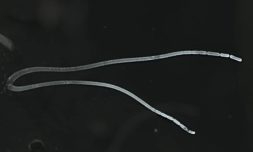
Scientists discover the largest known bacteria on record
Measuring roughly the length of an eyelash, Thiomargarita magnifica is 50 times larger than any bacteria we’ve previously discovered. This challenges long held basics about our understanding of bacterial cells. Germaphobes, get ready to squirm. ‘We’re going to need a bigger dish.’ Government scientists have discovered the first form of bacteria...
UK government announces plan to drive space sustainability
The UK has just unveiled a raft of new measures to ensure the sustainable use of space in the years ahead. Already a leader of green initiatives on Earth, the nation is now looking to lead into the great beyond. Speaking at the Space Sustainability Summit, UK science minister George...

Scientific breakthrough cures memory loss in mice
Researchers at Stanford University are reversing symptoms of Alzheimer’s in mice using a strange tactic - they’re infusing elderly mice with spinal fluid from younger ones. Many medical breakthroughs that benefit humans are discovered by conducting trials on mice. Though we look nothing alike, almost all the genes found in mice have similar functions to genes in humans. We get diseases for the same reasons, meaning scientists can study illnesses closely...

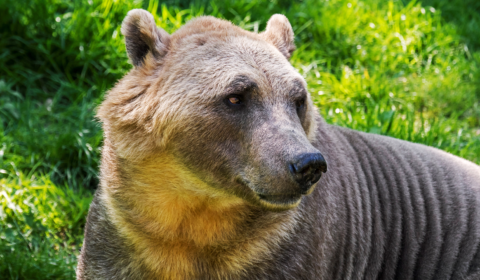
Grizzlies and polar bears are breeding thanks to climate change
Rising temperatures are simultaneously driving grizzly bears north and polar bears south, prompting interbreeding between both species. Conservationists are weighing up the possibility of controlling genetic adaption to help animals of the future cope with climate change. From time to time, it’s good to remind ourselves that climate change isn’t just an imminent threat to humanity. The ramifications of a warming world are constantly throwing delicate ecosystems off balance, and mother...


Europe’s first psychedelic drug trial firm opens in London
Clerkenwell Health aims to establish the UK as the heart of the commercial psychedelic research ecosystem, working closely with experts and drug developers around the world to tackle some of the most complex mental health conditions. After decades of demonisation and criminalisation, psychedelic drugs are being proved to have profound implications for a field that in recent decades has seen few pharmacological advancements. I’m talking, of course, about the treatment...

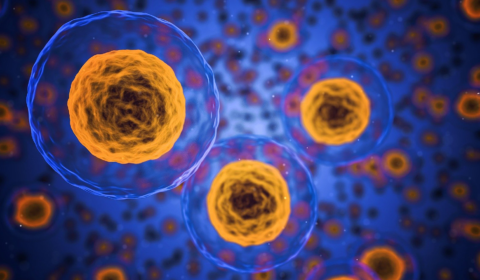
Scientists make woman’s skin cells act thirty years younger
A breakthrough in medicine, skin-care, and anti-ageing research could be on the horizon: 53-year-old woman’s skin cells have been altered to look and behave like those of a 23-year-old. Scientists in Cambridge have stunned the medical community by altering the skin cells of a 53-year-old woman to the equivalent of someone almost half her age. Their strategy was developed from the cloning technique used to create Dolly the sheep...