Artificial grass a huge contributor to marine plastic pollution crisis
A recent study has uncovered that tiny plastic fibres used to produce AstroTurf often wind up in water bodies close to major cities, posing a substantial threat to ocean ecology. AstroTurf (AT) is a surfacing material that simulates natural grass by using synthetic, primarily plastic, fibres in different shapes, sizes,...
Current in Planet

Climate change is altering the colour of our oceans
As climate change continues to throw marine ecosystems out of balance, MIT research shows that the colour of our oceans are physically changing. When we talk about natural wonders of the world, we typically associate rich colour with health and vitality – particularly with fauna and flora. In the case of...

Evidence of diverse organic material has been found on Mars
NASA has announced it has discovered evidence of ‘diverse organic matter’ in the Jezero Crater on planet Mars. This area is believed to be the site of an ancient lake, which may have been vital to supporting previous life on the planet. Ah, the age-old question: is there – or...

Underground climate change is every major city’s ‘silent hazard’
As global temperatures increase, above-ground heatwaves shouldn’t be our only concern. Researchers are uncovering that urban cities are experiencing rising temperatures underground – and that’s a major long-term problem. By now, we’re all well aware that atmospheric climate change and global warming are causing major issues for natural environments,...

Kenya to host Africa Climate Summit and Africa Climate Week 2023
Under the theme ‘Driving Green Growth and Climate Finance Solutions for Africa and the World,’ the upcoming Africa Climate Summit and Africa Climate Week 2023 events are set to galvanize international collaboration and shape a sustainable future for Africa. In a global landscape dealing with the escalating immediacy of climate...

Scientists warn the Gulf Stream shutdown could happen this century
According to a new study, the Atlantic Meridional Overturning Circulation (AMOC) – which helps regulate the Northern Hemisphere’s climate – could collapse any time between 2025 and 2095. A critical system of ocean currents could collapse far sooner than previously predicted under the pressure of human-driven climate change; an alarming...

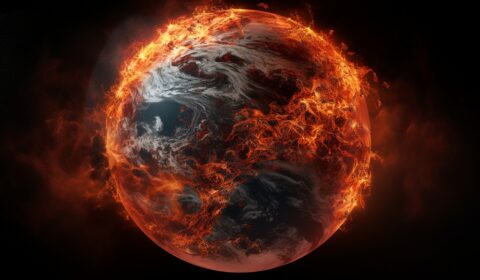
Average global temperature records were broken twice this week
Data collected by the US National Centers for Environmental Prediction has shown that this week has had the world’s hottest days on record. Scientists predict the record will be broken again this year. Are you feeling the heat? According to satellite data, global observations, and computer simulations analysed by the US National Centers for Environmental Prediction, this week has marked Earth’s hottest days ever. On Monday, the average global temperature sat at...


Europe set to bake under extreme heat for weeks
Temperatures across the globe are predicted to break records and exacerbate wildfires as the dire consequences of climate change become more apparent with each passing year. At present, thousands find themselves trapped in the inferno that’s gripping the Mediterranean. This is expected to last for weeks as global temperatures soar and records continue being broken. In Greece, which is currently battling to contain wildfires that have prompted authorities to...


Japan to release radioactive water into ocean
The Japanese government plans to release treated radioactive water from the Fukushima Daiichi nuclear power plant into the ocean, but the plan doesn’t come without controversy. On March 11, 2011, a magnitude 9.0 earthquake, one of the strongest ever recorded, triggered a massive tsunami along Japan’s Pacific coastline. The incident caused the Fukushima Daiichi Nuclear Disaster. The Investigation Committee on the Accident at the Fukushima Nuclear Power Stations (ICANPS) was...

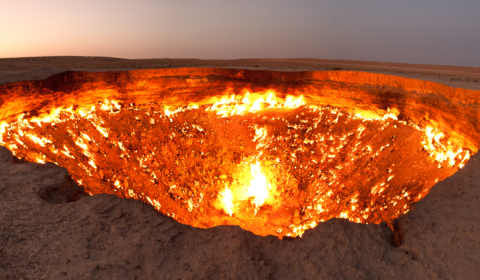
How global cooperation could curb Turkmenistan’s ‘super emissions’
Turkmenistan’s significant methane emissions continue to haunt it as COP28 approaches. However, international cooperation might just be the push the nation needs for climate action. In July 2022, NASA launched The Earth Surface Mineral Dust Source Investigation (EMIT), an instrument that can observe our planet from space. EMIT’s mission is to map the minerals in Earth's dust-producing deserts, which will aid experts to understand how dust affects climate. Most crucially...