Corporations soon have to report their carbon emissions in California
California is about to sign off on a deal to become the first US state requiring large companies to report their carbon emissions. This will affect around 5,400 firms which make more than $1bn in annual revenue. Considering filling out tax forms for the prior year proves too difficult a...
Current in Planet

Exclusive – Meet documentary makers Common Table Creative
As the future of the world balances on a knife edge, these impact documentary filmmakers have started a conversation about how the one thing we share could be the one thing that saves us. If each generation has its cross to bear, then climate change is surely ours. Gen...
Catastrophic flooding is occurring in ten countries simultaneously
Storms of unprecedented strength and ferocity have cropped up unexpectedly around the world. Though countries in conflict and poverty have been the hardest hit by these events, climate scientists have warned that ‘nowhere is immune.’ For those looking for a positive news story to start the week, I apologise in...
Biden cancels Trump-approved oil and gas leases in the Arctic
In a massive win for the planet, the Biden administration has confirmed the cancellation of seven controversial oil and gas leases in Alaska's Arctic National Wildlife Refuge, citing the need to conserve nature and protect Indigenous rights. This week, the Biden administration confirmed its intent to cancel seven controversial oil...
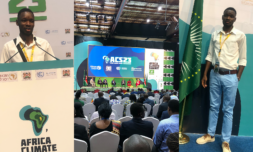
Africa’s first Climate Summit 2023 resolutions, criticisms, and challenges
The just concluded Africa Climate Summit, a significant gathering of leaders, policymakers, and stakeholders, unfolded for 3 days against the backdrop of pressing environmental challenges. Governments, organisations, and heads of African states deliberated on crucial resolutions to address climate change, carbon credits, and various environmental issues, amid a backdrop...

Antarctica’s pollution crisis demands global attention
As the world grapples with the ever-pressing issue of environmental degradation, an unexpected frontier comes into focus – Antarctica, where the alarming presence of contaminants challenges its ecology. At the northern tip of Antarctica lies the Casey research station, one of the three biggest stations overseen by the Australian Antarctic...


A new policy could end low-cost flights in the EU
France's Transport Minister has said ‘€10 flights aren’t possible anymore,’ because they do not properly reflect plane travel’s impact on the environment. He plans to propose a new minimum flight price policy to the EU. Europeans may soon be waving goodbye to cheap city breaks if a new proposal aimed at ending low-cost flights within the EU is accepted. Putting forward the idea is Clément Beaune, France’s Transport Minister. His aim...


UN warns that ‘climate breakdown has begun’
According to the World Meteorological Organisation, Earth just had its hottest summer on record, prompting calls for global leaders to ‘turn up the heat now’ on solutions. The summer of 2023, which saw heatwaves, fires, and floods destroy livelihoods across the globe, from North and South America, to Europe, India, Japan, and China, has officially been confirmed by the United Nations as the ‘hottest on record.’ According to...

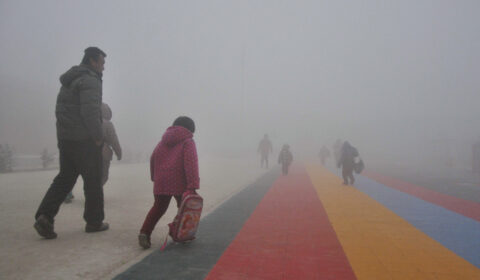
New research finds air pollution is more deadly than smoking
Life expectancy in at least six countries has fallen drastically due to poor air quality, which now poses more of a risk to citizens than smoking. As the climate crisis rages on, air pollution around the world is worsening. Along with it, so is public health. An updated report conducted at the Energy Policy Institute at the University of Chicago (EPIC) has seen researchers declare that ‘particulate air pollution is...

Amazon summit brings attention to the rainforest’s future
The eight Amazonian nations came together to discuss the future of the world's largest rainforest but left many with mixed feelings. Last week, countries across South America were brought together to discuss the future of the world’s largest rainforest. Hosted in Belem, Brazil, the event was an attempt to embrace President Lula’s “Amazon Dream” and his approach to environmental diplomacy. The summit saw two agreements signed; the Belem and...