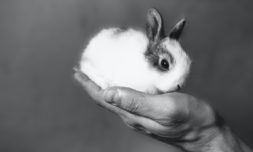
A policy which banned animal testing for cosmetic products in 1998 could be reversed to verify the safety of popular ingredients in makeup and skincare.
Animal testing has been considered a controversial practice since the 1960s.
While it is generally accepted in global scientific research for the purpose of developing prescription medicine, using live creatures to test the safety of beauty products is largely viewed as unethical.
For that reason, more than forty countries – including every country in the EU – have banned or strictly limited cosmetic animal testing.
Despite this, over half a million animals are used for this purpose each year in places such as the USA and China.
Last year, The European Chemicals Agency (ECHA) suggested that two substances only found in cosmetic products need to be tested to see if they are safe for humans.
To satisfy chemical regulations put in place by the ECHA, a German firm called Symrise carried out animal tests for the pair of chemicals, once of which acts as a UV filter.
Technically, this was a breach of the EU’s policy which restricts animal testing for cosmetics – but it was allowed to go ahead in the interest of public health.
Now, ministers are considering softening current animal testing bans in the UK to align itself with the EU’s new chemical regulations.
The decision has been met with anger and disappointment from campaigners who had previously labelled the UK as a leader in animal rights and protection policies.
The charity Cruelty Free International (CFI) has called reverting to ‘cruel and unjustifiable’ animal testing a ‘mockery of the country’s quest to be at the cutting edge of research and innovation’.
There are roughly 100 cosmetics-only ingredients that could need safety checks under ECHA’s regulations – meaning thousands of animals could suffer in the process.
Although Brexit means that the UK is no longer required to adhere to EU standards, it wouldn’t be unreasonable to assume the government will follow its neighbour’s standards regarding health and safety in the future.
The fact that the products we lather onto our faces everyday may contain unregulated and potentially harmful chemicals is worrying.
At the same time, most can agree that our own vanity shouldn’t mean subjecting other living beings to a life of harmful testing regimes within the stressful environment of a laboratory.
Animal testing on cosmetics to be bought back post Brexit.
This was made illegal by the UK Labour government proposal to the EU nearly 25 years ago.
Truthfully, there is no reason to regress back to animal testing.
In fact, 84 percent of people surveyed in 2020 said they would not buy a product if they knew it was tested on animals.
Many beauty brands already pride themselves on being cruelty-free, using natural ingredients or requesting human volunteers to test products in their developmental stages.
The UK’s adherence to the EU’s regulations is not yet set in stone, but we can all play our part in resisting unethical practices by avoiding products that take part in them.
You can find a comprehensive and regularly updated list of cruelty-free beauty brands here. And why not check out this guide to choosing cruelty-free beauty products by CocoKind while you’re at it?
Deputy Editor & Content Partnership ManagerLondon, UK
I’m Jessica (She/Her). I’m the Deputy Editor & Content Partnership Manager at Thred. Originally from the island of Bermuda, I specialise in writing about ocean health and marine conservation, but you can also find me delving into pop culture, health and wellness, plus sustainability in the beauty and fashion industries. Follow me on Twitter, LinkedIn and drop me some ideas/feedback via email.
Spoiler alert: it doesn’t involve resolutions.
It’s that time of year again: the start of a new one. A fresh twelve months lie before us, promising nothing except the unexpected. If there’s one thing I’ve learned after twenty-nine Januarys, it’s that you can make plans all you like. The universe will still find a way to laugh.
Which makes the annual ritual of New Year’s resolutions feel particularly absurd. Perhaps to...
Women joining the carnivore trend might look like a rebellion against diet culture, but the motivations, the messaging, and the results people chase still fall along familiar gender lines.
In his New York Times piece about ‘the Men Who Eat Meat’, Steven Kurutz prefaces his exploration into the carnivorous diet trend by contrasting it with ‘Girl Dinner’.
In case you missed it, the internet trend involves women documenting themselves curating...
A modern twist on work-life balance encourages a more ‘realistic’ and fluid approach to juggling our daily commitments.
From the moment we start working, the question of balancing that work with our personal commitments becomes a lifelong fixation. And as modern capitalism demands more labour, time, and skills for comparatively less compensation, the chasm between our work and non-work selves seems only to grow.
Navigating that gap feels impossible for many...
From getting outside to tweaking your routine, these small changes make a big difference.
Every year, winter rolls around and smacks me in the face. I know it’s coming – and yet I remain naive to its impact on my mental state.
I’ll be half way through December before I realise the nagging sense of doom I’m feeling isn’t just ‘me’. My body’s been contending with dwindling sunlight, freezing temperatures, and a...
We use cookies to ensure that we give you the best experience on our website. If you continue to use this site we will assume that you are happy with it.































 0 comments