Menu Menu
[gtranslate]

Supreme Court rejects Trump’s bid to restrict birthright citizenship

As part of a broader push against immigration, the Trump administration attempted to restrict the nation’s longstanding birthright citizenship policy. Yet, in a turn of events, the bid was ultimately rejected by the Supreme Court.

The moment we’re born, we automatically become citizens of a particular country. Beyond carrying multiple identification cards or even a passport, many of us rarely stop to consider what citizenship truly means or how it is acquired.

For starters, most countries determine citizenship through ‘jus sanguini’, or ‘right of blood’, in which citizenship is inherited from one’s parents rather than place of birth. The majority of countries, particularly across Africa, the Middle East, and Asia, rely solely on this principle.

However, some countries also recognise ‘jus soli’, or ‘right of soil’. Around 33 nations offer unrestricted versions of it, meaning anyone born within their borders automatically qualify for citizenship regardless of their parent’s nationality.

This approach is especially common throughout the Americas. Meanwhile, an estimated 35 countries practice conditional jus soli, granting citizenship only if a child’s parents meet specific requirements.

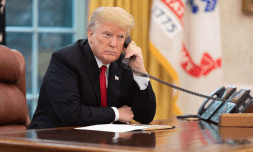
In the US, despite jus soli’s long historical significance, birthright citizenship has become the center of a major political storm under the Trump administration. In an effort to curb immigration, Trump signed an executive order last year to restrict birthright citizenship.


The executive order

According to the Trump administration, individuals who are unlawfully in the US are not subject to the nation’s jurisdiction and therefore should not qualify for birthright citizenship. In fact, Trump has repeatedly criticised the policy, describing it as a ‘disgrace’, while Vice President JD Vance has labelled it the ‘dumbest immigration policy in the world’.

Now it’s unclear exactly how the administration planned on imposing such a restriction. However, the gist of it included that upon a child’s birth, the parents’ status would have to be assessed to determine eligibility for citizenship.

At first glance, this may appear similar to conditional jus soli, which is already being practiced in some countries. However, the situation in the US is far more complex, as birthright citizenship is not just another immigration policy. Instead, it is deeply embedded within the country’s identity and legal framework for over 150 years.
The Supreme Court’s decision

Regardless, such a major constitutional change cannot be imposed overnight. Thus, the Trump administration brought the issue to the Supreme Court, where solicitor John Sauer argued that unrestricted birthright citizenship encourages illegal immigration and birth tourism.

It was claimed that the 14th Amendment’s clause that granted citizenship to those ‘born or naturalised in the US, and subject to jurisdiction thereof’, was originally intended to protect formerly enslaved people after the Civil War. This is where the administration’s rationale about undocumented migrants not being subject to US jurisdiction came from.

Chief Justice John Roberts of SCOTUS argued that the authors of the 14th Amendment intentionally used broad language to prevent attempts to restrict citizenship and followed the Supreme Court’s 6-3 ruling, rejecting the administration’s bid for restriction; a third major loss for Trump in his second term.

The court also referenced the 1898 case of Wong Kim Ark, who was born in San Francisco to Chinese immigrant parents. Following a recent trip to China, he was denied re-entry into the US because he was not a citizen. He challenged the decision, and the Supreme Court ruled that under the 14th Amendment, regardless of parents’ nationality, those born on US soil are indeed citizens.

As of two years ago, immigrants accounted for 14.8% of the nation’s population, hundreds of billions in taxes, and over a trillion dollars in spending power each year. However, with Trump heading the government, migrants are now facing countless mass deportations, with negotiations even underway to relocate some to developing countries, sparking human rights concerns.

From deporting families to detaining parents, the Trump administration’s immigration policies have separated countless families. Many undocumented parents have even been pressured into self deportation, forcing them to choose between leaving their US-born citizen children with a guardian in the country or taking them to a nation they have never experienced.

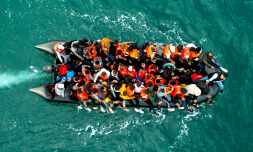
Had the Supreme Court upheld Trump’s order, an estimated 255,000 children born in the US annually could have been left without automatic citizenship. And by 2045, this could have resulted in a population of approximately 2.7 million migrants without proper citizenship in the US.

Beyond current policies, such a move would cripple daily life. I mean, imagine applying for a job or enrolling your children in public school. It would be almost impossible, with the increase in racial profiling from the system itself, with constant demands for proof of family lineage.

As with most of Trump’s policies, the detail remains vague and we don’t know for sure whether the legislation will see the light of day in his original vision.

Enjoyed this? Click here for more Gen Z focused change stories.

Accessibility