






 0 comments
With irregular migration rates on the rise, the new deal involves aggressive physical intervention and conditional pay to prevent the influx of migrants afflicting the UK.
Though it peaked in 2015, the European migration crisis continues to dominate many parliamentary discussions to this day. With millions being displaced by conflicts in their home countries, they have nowhere to turn to but Europe.
For these migrants, the first point of arrival into Europe is through frontier states, which sit on the external borders of the European Union. Yet, while the Dublin Regulation mandates that the country they land on are legally responsible for them, many choose not to stay in these frontier states due to the lack of opportunities and support.
The Schengen system allows migrants to move across EU borders freely and under the radar to reach other European countries. However, for anyone whose goal is Britain, which is geographically and politically detached from the rest of the EU, all roads eventually lead to the beaches of northern France.
The UK-France crisis
France is one of the largest EU recipients of asylum applications. Just last year, it granted protection to 78,782 people, which is a record-breaking number. Despite this, there are still those who choose to venture beyond its borders due to family connections over in the UK.
This is what drives many more migrants into the UK : hope that an established community of friends and family can help them find work and housing, which would otherwise be difficult to figure out on their own in the EU.
Unfortunately, the journey to the UK via the English Channel isn’t the easiest.
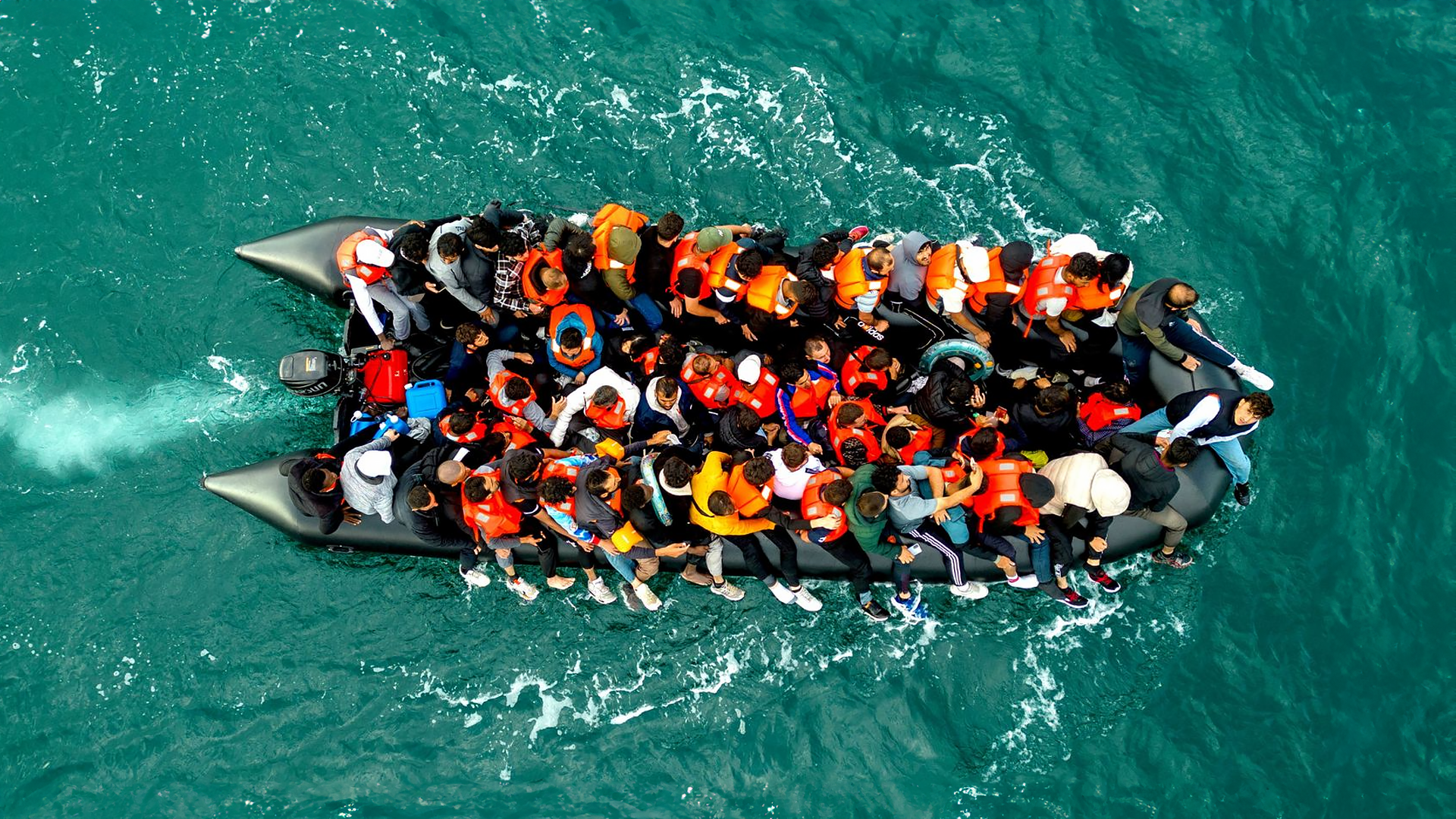
Smugglers are actively transporting these migrants to the UK using small boats designed for just 10 to 15 people. Yet, they’re often loaded with people four-to-five times capacity, going up to 71 pax per boat. Hence, while the cumulative irregular migrant entries into the EU were 178,000, the UK alone saw over 41,000 just last year.
It’s not uncommon to hear that many lose lives in their journey across the Channel, with 162 reported deaths between 2018 to 2025. With the UK government and public seeing this influx of migrants as a sovereignty issue, coupled with the constant dangers of transportation via the Channel, they struck a deal with France.
What was the deal?
A few years ago, the UK agreed to pay roughly £476 million over the course of three years to France to boost the latter’s border patrol. This deal focused on containment and detection, funding 900 officers, thermal surveillance, and port barriers. It also announced the Dunkirk detention center and frequent camp evictions to discourage migrants from staying.
Since its inception, it has been heavily criticised because despite the funding, thousands still managed to cross over.
The UK decided upon new approach. Where the old deal funded observation on the French beaches, the new deal funds hardcore intervention. On April 23, both nations agreed upon a more aggressive £662 million pact. This biggest shocker of this deal, is that £161 million of the money is conditional, meaning that if France doesn’t show a measurable drop in successful crossings, the UK can legally withhold this portion of the money.
Additionally, the deal observes a 53% increase in officers patrolling French beaches as well as a riot squad to deal with migrants and smugglers, using aggressive crowd control tactics like tear gas and batons. France has also authorised tactics to physically jam the engines of the small boats before they even reach French shores. The detention center that was simply announced in the last deal, will now be operationalised too.
Ultimately, in its new deal, the UK is trying to establish that getting in does not immediately guarantee a life in Britain.