0 comments
South Africa is regarded as the land of opportunities on the continent, but at this time, there is fear of settling within its borders for African migrants.
In townships and inner-city neighbourhoods, African migrants are once again becoming targets. Caught in a cycle of violence, exclusion, and suspicion, this crisis evokes a familiar sense of unresolved conflict. However, this time around, it goes deeper than mere politics. It’s becoming an increasingly youth-focused issue.
The youth in South Africa is growing up in an extremely unequal economy. Unemployment is common, especially for Gen Z. Stable jobs are decreasing in number and there seems to be no light at the end of the tunnel when looking at leaders who promised to provide post-apartheid prosperity.
To some extent, migrant communities have come to symbolise the struggle to make ends meet in South Africa’s unequal economy, particularly for young people. Many have successfully started and operated small businesses, often referred to as spaza shops. This visibility can fuel the perception that migrants are benefiting from opportunities in South Africa, a belief that is often amplified by misinformation and anti-migrant rhetoric.
For many migrant youths in South Africa, working within the informal economy represents the only realistic means of achieving any semblance of stability. Migrants from countries such as Zimbabwe (often the largest group), Ghana, Nigeria, or the Democratic Republic of Congo possess a strong business sense shaped by an immediate need to generate income, and therefore, establish small retail stores in remote communities.
Unfortunately, such enterprises do not enjoy formal legal protections, and instead, operate in a very delicate situation. While they earn enough money to provide their owners with a means of subsistence, they are susceptible to theft, harassment, and acts of violence.

Social media narratives
Social media platforms such as TikTok and X are increasingly used to shape narratives about migrants. For example, when a video appears to show a ‘foreign national’ committing a crime, it can go viral before the details have been verified or placed in context.
This can fuel widespread fear of migrants, especially when viral hashtags and isolated videos frame a single incident as part of a broader trend. This isn’t exclusive to South Africa – just look at the recent protests in London – but the feeling of friction in South Africa is arguably at more of a crisis point.
Young activists, journalists, and local community members are using these same social media platforms to challenge negative narratives about migrants. They do this by sharing alternative perspectives, questioning the validity of misinformation, and calling out xenophobia when it appears.
In this way, social media has become a space that can both divide and connect communities, reflecting how people are responding to events unfolding in their own neighbourhoods.
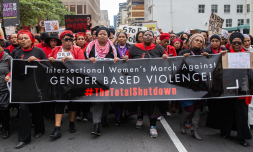
Grassroots movements are using these negative sentiments as a way to mobilise their communities to protest against undocumented migrants and advocate for South Africans being hired over foreigners. While these movements claim to be acting on behalf of the concerned community, they tend to simplify the complex set of socio-economic problems into a single narrative that suggests migrants are the cause of the problems.
This belief redirects attention away from South Africa’s systemic issues surrounding unemployment, inequality, and governance failures. It also deepens divisions within communities that are, in many ways, facing the same struggles.