






 0 comments
The 30th iteration of the global climate summit has to prioritise the beliefs of indigenous communities, said UN chief António Guterres last week. On day two, dozens of protesters stormed the venue in Belém, Brazil.
November serves up two things each year: a frantic race to be Christmas ready, and annual disappointment at how trivial the latest COP conference proved to be.
This year isn’t being hosted by an authoritarian nation synonymous with fossil fuels like in 2024, or a petrochemical state with a shocking human rights record like the year before that, but that niggly sense that hollow posturing is top of the agenda for delegates remains firm.
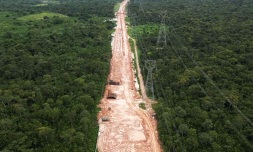
COP30 is being hosted in Belém, Brazil, on the outskirts of the Amazon rainforest, which remains rife with conflict between communities native to the lands and those who seek to develop on it.
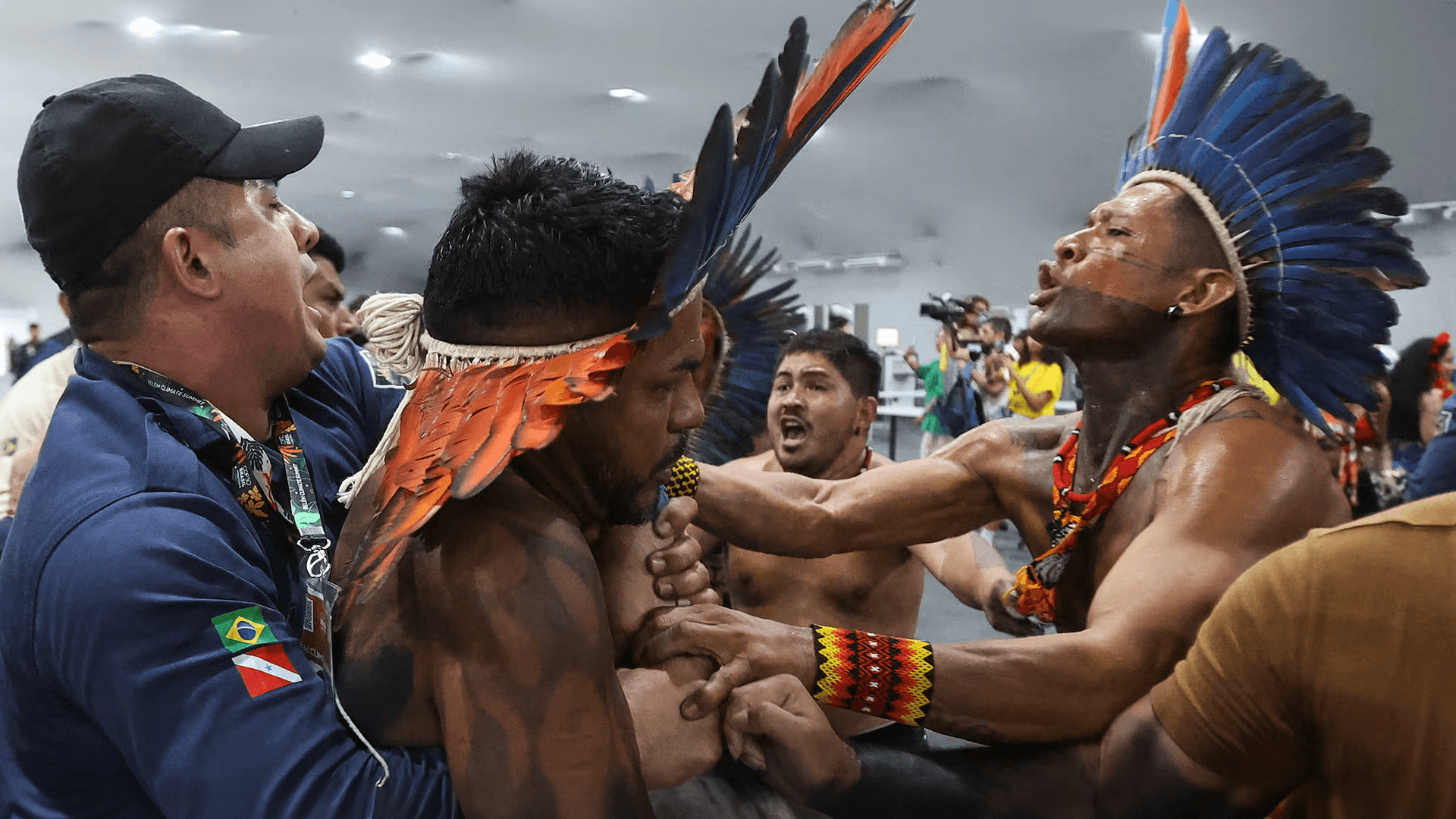
This tension culminated in dozens of protesters storming the Blue Zone on day two of the conference. A mix of indigenous people adorned in their traditional outfits and others supporting their message were restrained by security, where shoving and shouting matches took place. Two venue guards reportedly received minor injuries before the group was forcibly removed.
After the confrontation, in which protesters chanted and waved banners reading ‘Our forests are not for sale’ and ‘Juntos’ (Together), officers formed a cordon to block the entrance. It’s not clear who led the demonstration, but one Panamanian climate negotiator, Carlos Monterry-Gómez, was openly impressed by the passionate display.
‘At last, something has happened here,’ he said, aptly summing up where people are at with climate reform and the merry-go-round of performative placation at these conferences.
Agustin Ocaña, of the Global Youth Coalition, told the AP that protesters were chanting: ‘they cannot decide for us without us,’ underlining the personal investment indigenous communities have to environmental policy in the region.