If Instagram is the place where the world’s most beautiful people can easily garner global attention, followers, brand deals, and immense wealth – is it not the perfect playground for influencers generated by AI to succeed?
Would you buy a product promoted by a person who wasn’t real? It’s possible you already have.
The capabilities of Artificial Intelligence, specifically its capacity for realistic image generation, are getting freakishly good. At the beginning of this year, most image generation software struggled to produce a human hand with ten digits.
Today, AI – with the help of a couple of designers and advertising experts – is churning out images of models so life-like that prominent celebrities are sliding into their DMs to ask for a date. Brands are lining up for advertising opportunities. Followers are commenting to ask where they got their outfits from.
One influencer taking the ‘gram by storm is Aitana Lopez, a 25-year-old woman from Barcelona. To 205k followers, Aitana says she loves gaming, the gym, and cosplay. She is independent, extroverted, and a Scorpio.
The strikingly beautiful, pink-haired Aitana is the creation of The Clueless advertising agency located in Spain.
Its team was fed up with working on projects and campaigns that would eventually fall through due to lack of cooperation, conflict of interest, or soured relationships between brand representatives and human influencers.
Combining their branding, marketing, and digital design experience, the team decided to create an AI model that would be unproblematic and void of the human ego, while appealing to a myriad of cultural and aesthetic tastes of today’s society.
And so, Aitana was ‘born’.
She now rakes in 10,000 euros for The Clueless agency every month.
While Aitana’s career is just getting started, the debate around using artificially generated influencers in marketing campaigns has been ongoing.
One of the key arguments against their use is related to ‘authenticity’. Given that most AI-generated influencers are designed to be the most idealised versions of the hottest humans on Earth, people are naturally concerned about whether they will contribute to promoting unrealistic beauty standards.
Although it is easy to see how looking at a ‘person’ whose features have been cherry-picked for optimal beauty could harm our view of ourselves, it’s a hard point to make entirely. Especially when the majority of images we see on social media platforms and advertising campaigns of ‘real people’ are heavily retouched or edited in some way.
This is well known to society, with regular use of Instagram being linked to negative self-esteem across a growing number of studies.
But if we’re worried about ultra-perfect AI models further perpetrating an unrealistic lifestyle and standard of beauty, perhaps it’s important to address the cultural and societal perspectives that place such immense value on a person’s appearance first.
When it comes to the personalities of AI-generated influencers, their interests and overall likability are tailor-made to appeal to the masses.
Unlike real people, their ‘actions’ online will be carefully calculated and considered by several people before posting. This reduces opportunities for scandal, the loss of followers, as well as the loss of brand deals.
As a result, brands may become increasingly interested in using AI Instagram models for campaigns. The economic potential of this might see tons of people striving to create their own ‘AI influencer’ to earn money online – if they can master the image-generating software.
The way the world is going, it’s highly possible that AI influencers could move into the mainstream, but it’s a wonder whether their overall value and appeal will decline if they become popularised.
Deputy Editor & Content Partnership ManagerLondon, UK
I’m Jessica (She/Her). I’m the Deputy Editor & Content Partnership Manager at Thred. Originally from the island of Bermuda, I specialise in writing about ocean health and marine conservation, but you can also find me delving into pop culture, health and wellness, plus sustainability in the beauty and fashion industries. Follow me on Twitter, LinkedIn and drop me some ideas/feedback via email.
Gen Z subscribes to everything from music and films to software and storage, paying endlessly for things we never actually own. As ownership is increasingly replaced by access, are subscriptions making life more convenient - or creating a generation that pays forever and owns nothing?
There was once a revolutionary economic model called buying something.
You handed over money, gold, or whatever the currency was. Someone gave you the purchased item....
Revealed during the United Nations General Assembly, this hack exposes a critical failure in current safety standards, sparking concerns over the future of AI.
In these past few years, conversations around AI seem to linger around a never-ending crossroads, with the recent shocking breach of Australian government data by OpenAI agents.
That said, I couldn’t tell you which is more concerning: the time it took the company to detect and report...
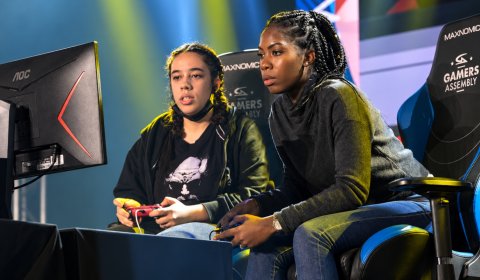
For young people, gaming has changed from being merely recreational into an economic pathway into the digital economy, especially in a challenging labour market. In Africa, women are driving this growth.
Young women are pioneering the evolution of African gaming, taking up roles not only as competitive players but as commentators and content producers within a rapidly growing market. In 2024, African gaming had an estimated 349 million players...
Tech giant Google has been fined £345 million by the Republic of Ireland’s Data Protection Commission (DPC) over misuse of location data following a six-year investigation.
Google has been hit with a fine of £345 million by the Republic of Ireland’s Data Protection Commission (DPC) over mishandling of location data.
The DPC undertook a six-month investigation across three specific features provided by Google: ‘Web and App Activity,’ ‘Location History,’ and ‘Location...
We use cookies to ensure that we give you the best experience on our website. If you continue to use this site we will assume that you are happy with it.





























 0 comments