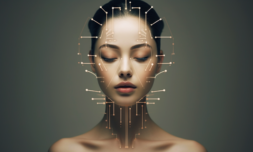
As AI photo creation tools like Midjourney become more advanced and widely used, the world’s largest advertising agency Ogilvy is encouraging marketing companies to explicitly state when they are used in social media campaigns.
The advent and rapidly improving capabilities of AI image generators such as Midjourney have sparked both excitement and debate in the online world.
On Instagram, digital novices have opened accounts to share their imaginative experiments with testing the boundaries of AI tools to large followings. These colourful and highly detailed images depict AI-imagined architecture, artwork, and beyond.
A quick scroll through displays how the accuracy of these tools has improved massively over a very short period. Just months ago, Midjourney had trouble making realistic-looking human hands, but now, this is rarely ever an issue.
As a result, experts at Ogilvy, the world’s largest advertising agency, anticipate that a flood of newly introduced AI-generated social media celebrities will emerge within the digital sphere. This might sound far-fetched if you aren’t familiar with the character Miquela, who already boasts an arsenal of brand partnerships to her 2.8 million Instagram followers.
But the boundaries of such deals could change, as Ogilvy prepares to launch an initiative that urges advertising firms to disclose when AI-generated imagery is used in digital campaigns.
According to the Financial Times, Ogilvy’s initiative will require social media companies to ‘clearly disclose and publicly declare AI-generated influencer campaigns.’
The advertising giant has already planned to include a ‘watermark’ on all AI images it uses in its own advertising.
This new code follows a similar tone to others around filtered images on social media. In Europe, specifically Norway and soon France, social media influencers are now legally required to disclose when their photos have been retouched or filtered.
These kinds of policies have been put in place to protect citizens from the wrath of ever-changing and unrealistic beauty standards, but also to guarantee a degree of truthfulness about the efficacy of products influencers are paid to promote online.
Thousands of global advertising and marketing executives will be meeting next week for the annual Cannes Lions conference. Ogilvy plans to launch its new AI accountability code at the event, where the use of Artificial Intelligence in the industry is sure to be a central theme of discussion.
Not only will the use of AI in marketing be heavily debated, but experts will also be expected to address the way automated algorithms are on track to affect and replace certain jobs – from the process of buying advertising space to producing creative content across the board.
Why do audiences need disclosure?
The global head of influence at Ogilvy, Rahul Titus, has said that AI-generated characters are starting to make up a notably larger percentage of social media influencers.
These individuals – though not actual humans – are easily presented as real characters existing in the digital world. Their online personalities, unique styles, and quirky characteristics attract online fanbases made up of millions.
Their large followings create the perfect opportunity for brands looking to promote products online. With the boundaries of AI-generated imagery becoming limitless, these characters can be easily recruited as brand ambassadors for various companies.
The psychology behind what drives us to make a purchase is well-studied – and the power social media influencers have to convince us to click ‘buy’ is no exception. ‘People buy people, not brands,’ said Rahul Titus.
So what happens when that ‘person’ isn’t actually real?
Recognising that AI marketing is on track to grow by 26 percent before 2025, Ogilvy is looking to protect real-life social media influencers who rely on digital advertising and brand partnerships for their income.
It is putting forward watermarks as an important step in ensuring that the ‘authenticity’ of influencer marketing and advertising is upheld and that audiences are not misled by AI-generated influencers or advertising campaigns.
It will be interesting to see what else comes out of the upcoming advertising summit in Cannes. We’ll be sure to keep our eyes peeled for any interesting developments.
Deputy Editor & Content Partnership ManagerLondon, UK
I’m Jessica (She/Her). I’m the Deputy Editor & Content Partnership Manager at Thred. Originally from the island of Bermuda, I specialise in writing about ocean health and marine conservation, but you can also find me delving into pop culture, health and wellness, plus sustainability in the beauty and fashion industries. Follow me on Twitter, LinkedIn and drop me some ideas/feedback via email.
Shane Gillis’ uninspired, unfunny SNL monologue proves sexist humour is still shaping our social norms.
Forgive me for thinking that as a society we’d passed the point of giving men a platform to call women ‘whores’. Turns out we haven’t. Not only did Shane Gillis have free reign to do just that this weekend, he did so on live television, delivering an uninspired SNL monologue in which he mocked women...
The new judge is dismantling diet culture with big bites and no nonsense. We need more of this on TV, now more than ever.
I’ve always loved Nigella Lawson. I’m a fellow foodie, I’m a writer – which means I’ve devoured her written recipes as fervently as the dishes themselves – and I’m also a woman. Nigella has always represented the essence of womanhood in my eyes. She’s confident and unapologetic...
Gen Z subscribes to everything from music and films to software and storage, paying endlessly for things we never actually own. As ownership is increasingly replaced by access, are subscriptions making life more convenient - or creating a generation that pays forever and owns nothing?
There was once a revolutionary economic model called buying something.
You handed over money, gold, or whatever the currency was. Someone gave you the purchased item....
Recruiters are debating on TikTok whether it’s okay to bring iced coffee into a job interview, highlighting discrepancies in professional standards between different generations and industries.
Would you bring iced coffee into a job interview?
A debate has been underway on social media this week as Gen Zers and older professionals consider whether it’s ‘inappropriate’ or an unnecessary restriction that makes new, potential employees uneasy.
It began when TikToker @caitlinrecruiter uploaded...
We use cookies to ensure that we give you the best experience on our website. If you continue to use this site we will assume that you are happy with it.






























 0 comments