Fashion sustainability guidelines constantly tell consumers to reduce their shopping habits in order to minimise their environmental impact. But should there be a legal limit on how many items fashion companies can produce?
Those with an interest in sustainable fashion are probably tired of hearing that they should be reducing their shopping habits even further.
Many of us may have started buying less and investing in clothing made from longer-lasting eco-friendly materials – but how impactful is our behaviour when the production of fast fashion continues increasing rather than slowing down?
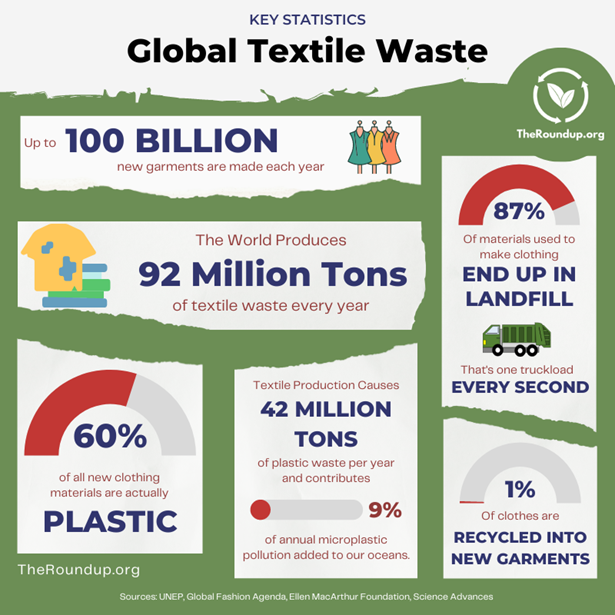
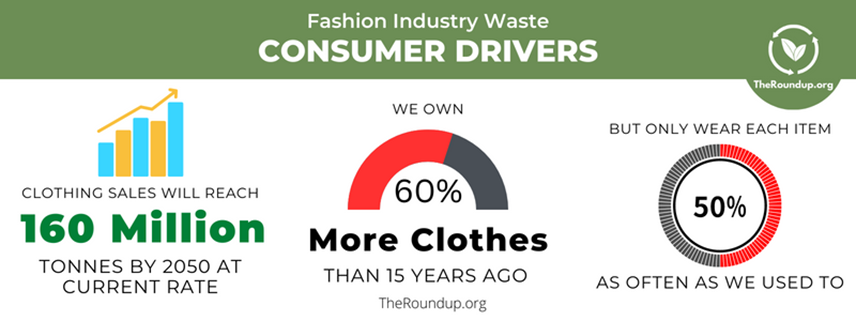
Consider that 80-100 billion items of clothing are produced each year – about 14 items for every person on Earth. This may not be so problematic at face value, except that an estimated 15 percent of these items will become ‘deadstock,’ remaining unsold on shelves inside retailers’ warehouses around the world.
Things get worse when we unpack what these clothing items are made from. Around 60 percent of all garments made today are fashioned from fossil-fuel-based plastic material, such as polyester, acrylic, and nylon textiles.
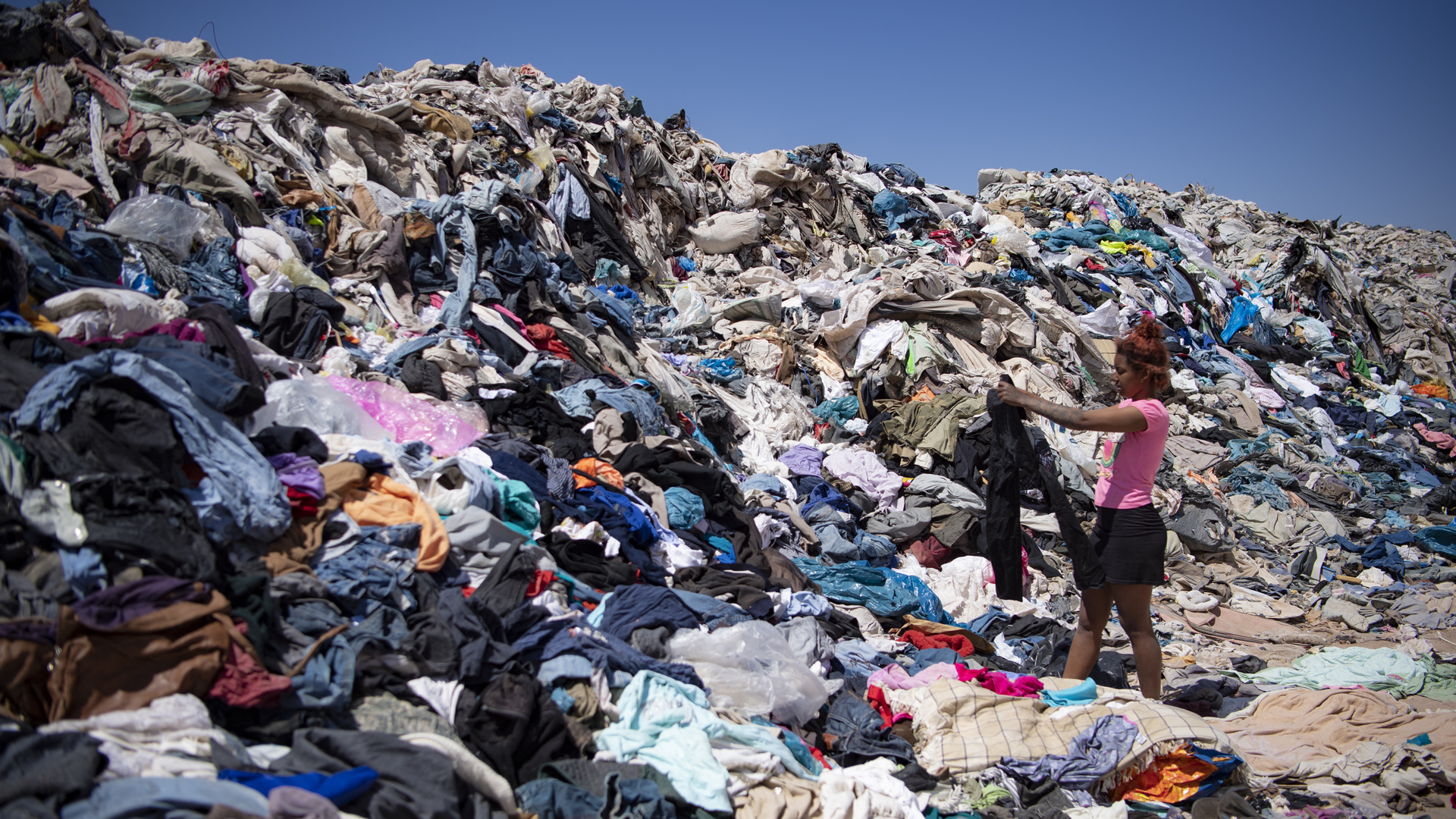
Upon reaching the end of their life cycle or as a result of being unsold, 92 billion tons of clothing is sent to landfills annually. That equates to a garbage truck full of clothes every second, most of which are not made of organic materials and can never break down.
A mere 1 percent of all clothing produced is later upcycled into something new.
As the industry’s waste contribution spirals out of control – about 7 percent of global landfills are comprised of textiles – is it time to place limits on how much clothing individual retailers can produce?
Most truly sustainable brands are inherently limited in the number of products they can produce.
They use high-quality materials, engage in fair trade, and uphold ethical working standard. As a result, they employ fewer people and fewer items available on the market. Up until about 30 years ago, this is how the fashion industry was run.
By sharp contrast, the rapid boom of the fast fashion industry has seen brands such as Zara, H&M, and especially SHEIN and its competitors AliExpress and Timo, capitalise on the use of materials that are environmentally destructive but easy to come by.
To ensure higher output of items at a lower cost, they began outsourcing labour to regions where ethical working standards and environmental regulations are sparsely enforced.
As many readers will know, these companies stay afloat by producing clothing according to trends. These cheaply made and sold items are designed to last a single season before they fall apart, with designers and factories moving onto whatever’s hot in just a couple of weeks’ time.
On top of this, their efforts towards sustainability are superficial. Many of the aforementioned brands have launched secondary ‘planet-friendly’ lines without reducing standard rates of production, greenwashing the consumer into feeling better about continuing to shop at these places.
And without dialling down output or intensive marketing strategies, consumers are drawn to these brands under the guise that they are making conscious choices.
The law behind clothing production
While the fashion industry is governed by some nationally outlined legal frameworks, these policies require little transparency beyond product origin and chemical or material use.
Such restrictions leave unaddressed potential human rights violations, environmental pollution, and exploitation taking place in factories overseas. Without close inspection from regulatory bodies or existing universal supply chain standards, the industry has been left to loosely police itself.
‘So far, letting the industry grade itself has led to little substantive change,’ say those campaigning for a crackdown on how fashion production currently operates. ‘Many policymakers believe the fashion industry has been given enough chances to sort out its own mess.’
Although the EU, UK, and America have already set or are in the process of enforcing regulations that ensure garment workers are fairly paid and that sustainability claims are based on actual practice, these laws are not a silver bullet.
Ideally, consumers would not have to worry whether their favourite clothing item landed in their closet at the detriment of another living being or at the expense of the environment.
But it’s arguable that without forcibly halting the overproduction of clothing, this will always be the case. The only answer, it seems, would be to make the overproduction of cheap, environmentally destructive clothing illegal – at least to some degree.
I’m not the first to suggest this, either. Governments of most western nations are trying to squeeze fast fashion out of business by making their current practices incompatible with national laws.
Whether this will work remains to be seen.
How consumers play a role
All of this is not to say that consumers do not have a choice in the matter.
We can absolutely choose to stop buying clothes from fast fashion companies if that is financially feasible. Even if we can’t afford to shop 100 percent sustainably, scaling back on the amount of clothing we purchase from these brands each season would reduce the demand for them.
Committing to stop supporting – or at least reducing support for – fast fashion companies will help as governments and regional or universal regulations for this relatively new type of industry are put in place.
These regulations likely appear as legal limits that factories must comply with in regards to water, land, and energy use. There will also be a stronger crackdown on greenwashing by major companies.
In conclusion, consumers cannot be expected to reform the entire industry through their shopping habits alone. It is simply not realistic when we are constantly being marketed to and by way of this, often deceived by fast fashion companies’ false sustainability ploys.
Stricter regulation needs to be enforced from the top so that overproduction resulting from human and environmental exploitation no longer leads to overconsumption in the first place.
Deputy Editor & Content Partnership ManagerLondon, UK
I’m Jessica (She/Her). I’m the Deputy Editor & Content Partnership Manager at Thred. Originally from the island of Bermuda, I specialise in writing about ocean health and marine conservation, but you can also find me delving into pop culture, health and wellness, plus sustainability in the beauty and fashion industries. Follow me on Twitter, LinkedIn and drop me some ideas/feedback via email.
The value of personal attractiveness is established much younger than you might think. But what does this mean for girls growing up in an image-obsessed era?
We check our appearance around 38 times per day. That pastime was once reserved for mirrors, and now extends to every reflective surface in our vicinity. Phone screens are the obvious preference – whether via their front-facing cameras or shiny black lock screens.
Social media...
It seems everyone and everything is inflamed, but is that really such a bad thing?
From cortisol to caffeine, the wellness world loves a scapegoat for stress. It’s easy to blame life’s problems on some controllable symptom that can be stifled with the right pill or lavish morning routine.
The latest buzzword to take charge of the health conversation is ‘inflammation’. To look at any wellness page is to feel as...
Beauty pageants in the UK have had a rebrand.
The stereotypical image of women parading around in bikinis, smiling until their cheeks hurt and answering some variation of ‘how would you achieve world peace?’ feels increasingly outdated.
Today, pageantry sells something different. Confidence. Advocacy. Charity. Entrepreneurship. Empowerment. Contestants have platforms, careers, and causes they genuinely care about.
And, having competed in one myself, I actually believe there is some truth to that.
In...
After struggling to go public in both the US and UK, Shein saw its shares fall in a disappointing Hong Kong stock market debut. It suggests the company is unlikely to keep its fast-fashion, low-cost business model intact amid intense scrutiny and competition.
Fast-fashion company Shein saw its shares fall by roughly 10% during early trading on the Hong Kong stock market this week.
Co-founder of Shein Global Holdings, Sky Xu...
We use cookies to ensure that we give you the best experience on our website. If you continue to use this site we will assume that you are happy with it.






























 0 comments