A UK-based firm is focusing on giving a second life to the most difficult-to-recycle items we throw away every day.
Packaging used for health and beauty products are extremely difficult to recycle, mainly because they are comprised of various different materials.
This is a problem, considering we throw away around 100 billion of these items each year, but the companies who produce them are also guilty of discarding entire pallets worth of products before they even make it to store shelves.
Most recycling plants accept just two out of the seven types of plastic used in the health and cosmetic industry, simply because they don’t have the capability to deal with them. But things are changing in the UK thanks to an organisation called Refactory.
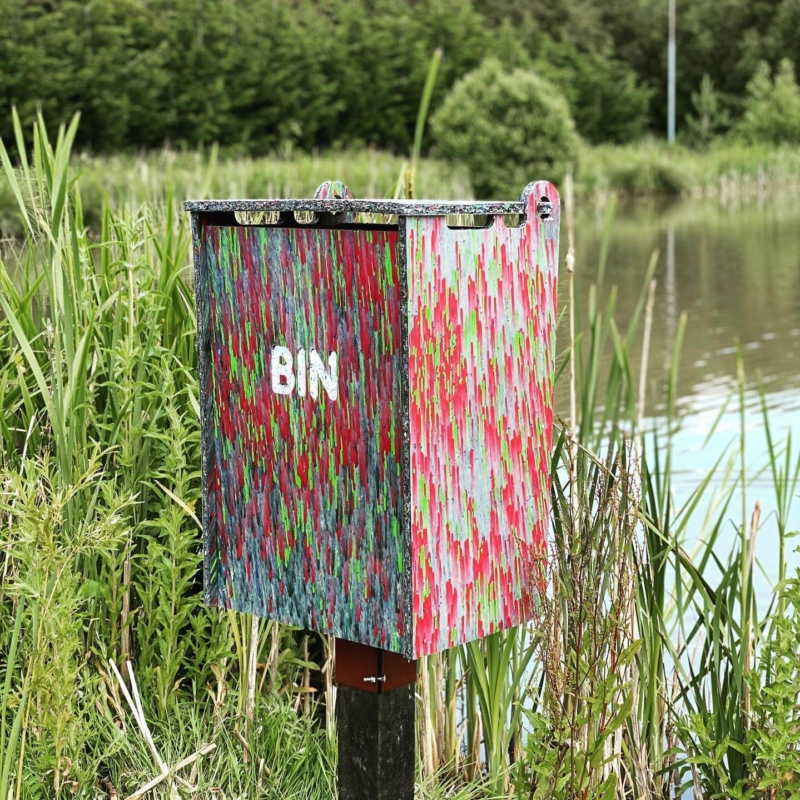
Its ethos is that any and every material is capable of being reused or upcycled. It transforms plastic waste into sheets that resemble plywood and constructs them into planters, furniture, bookshelves and more.
It all starts with gathering the stuff we throw away.
One-third of the waste that ends up at Refactory’s facilities comes from waste collection boxes in stores such as The Body Shop or Boots Pharmacy. Refactory is working with these brands to help them improve their waste management output, while simultaneously improving their sustainability credentials.
However, a massive 70 percent of the waste arriving at Refactory comes directly from product manufacturers. Though they don’t exactly shout about it, beauty companies frequently throw away entire shipments containing hundreds of recalled, expired, or mislabelled products.
Because of the secrecy around this wasteful practice, it’s near impossible to know how many unused products are destroyed simply because of a defect or a poorly printed label globally. It’s a shame, considering much of the product inside is often perfectly fine.
Packaging for perfume bottles has always been a no-go zone for traditional waste processing facilities due to the fact that they contain alcohol solutions and are highly flammable. But Refactory is happy to deal with them – smashing, rinsing, and sending off the bottles to nearby glass and metal recycling companies for processing.
Other bottles and tubes, such as body wash and shampoo for example, are machine-shredded into small pieces and washed multiple times at Refactory’s site. Around half of the water it uses for cleaning is rainwater, undergoing 3-4 cleaning cycles before being drained.
This makes Refactory stand out, as standard recycling plants may reject plastic bottles and containers based on the fact that they are ‘dirty.’ Most will end up sent to landfill or incinerators, rather than being put through a cleaning cycle.
Credit: Refactory
Once Refactory has shredded these plastics, workers then sort them to find any remaining metals and glass. A magnet later helps to collect any pieces that are missed, before the plastics are ground further and turned into a powder.
Larger shreds of plastic are combined with the powder, then heated up and pressed by a machine. The result is a multi-coloured sheet of ‘plywood’ that can be cut into various sizes and used as a building material.
The only downside to this process is that microplastics are released when the sheets are cut. For this reason, Refactory does all of its cutting and building in-house, before delivering the finished product to its buyers.
If any customers want to discard of their products or transform them into something new, Refactory will book a collection and complete this process. This ensures that no plastic material that leaves their plant is wasted or disposed of incorrectly.
Refactory has donated hundreds of bookshelves to schools and libraries through its scheme. It has also made walls and flooring for public bathrooms and office spaces, but this is not how it makes its money.
Companies pay Refactory to complete their waste collection and processing, a procedure that has only become profitable after two years of operation.
Steven Carrie, the group director of Refactory said, ‘It’s really refreshing to see these brand’s approaches [to recycling]. It’s happening in a way that’s not been done before, for the very first time.’
Reiterating the company’s mission, he continued, ‘I don’t believe there’s a material out there that does not have a route to recovery or recycling.’
Well done to the Refactory team for their determination in tackling a waste problem that few others wanted to! Let’s hope we see more initiatives like this in the future.
Deputy Editor & Content Partnership ManagerLondon, UK
I’m Jessica (She/Her). I’m the Deputy Editor & Content Partnership Manager at Thred. Originally from the island of Bermuda, I specialise in writing about ocean health and marine conservation, but you can also find me delving into pop culture, health and wellness, plus sustainability in the beauty and fashion industries. Follow me on Twitter, LinkedIn and drop me some ideas/feedback via email.
Cameroon’s historic win in the Women’s Africa Cup of Nations is much bigger than just another victory in football. The Indomitable Lionesses beat Malawi 3-0 in Rabat, Morocco, securing their first ever WAFCON title.
With Cameroon becoming one of the four nations to have won the continental championship after three final defeats, the team’s triumph is about to inspire many other African girls.
For years, the football world had been perceived...
As conditions aboard the USS Abraham Lincoln raise concerns over soldiers’ mental health, a worrying pattern is emerging of military ambition being placed above the welfare of soldiers.
For nearly nine months, the USS Abraham Lincoln has been stationed near the Middle East, aiding the US in its campaign against Iran.
Though its deployment was initially intended as a seven-month routine mission, its purpose quickly shifted amid rising tensions...
The US congresswoman is sharing her journey to freeze her eggs, and in doing so opening up conversation around the trade-offs professional women face. It’s also driving backlash from the right.
Alexandria Ocasio-Cortez (or AOC as she’s often dubbed by the media) has become a major play for Democratic Socialists in the US.
After campaigning alongside Bernie Sanders and amassing a huge following amongst young voters on social media, AOC has...
President William Ruto proposes full funding of tuition for all students accepted into universities, colleges, and TVET institutions within the country’s national placement process, starting from the September 2026 intake.
The proposal of free tuition is meant to replace the country’s Student-Centred Funding Model, which consists of scholarships, loans, and household contributions based on the needs of a family.
However, it is important to point out that it is still...
We use cookies to ensure that we give you the best experience on our website. If you continue to use this site we will assume that you are happy with it.

































 0 comments