







 0 comments
Substack is rolling out a new AI detection feature able to scan posts, notes, replies, and comments.
Substack is one of the last safe havens for organic human-written content, right?
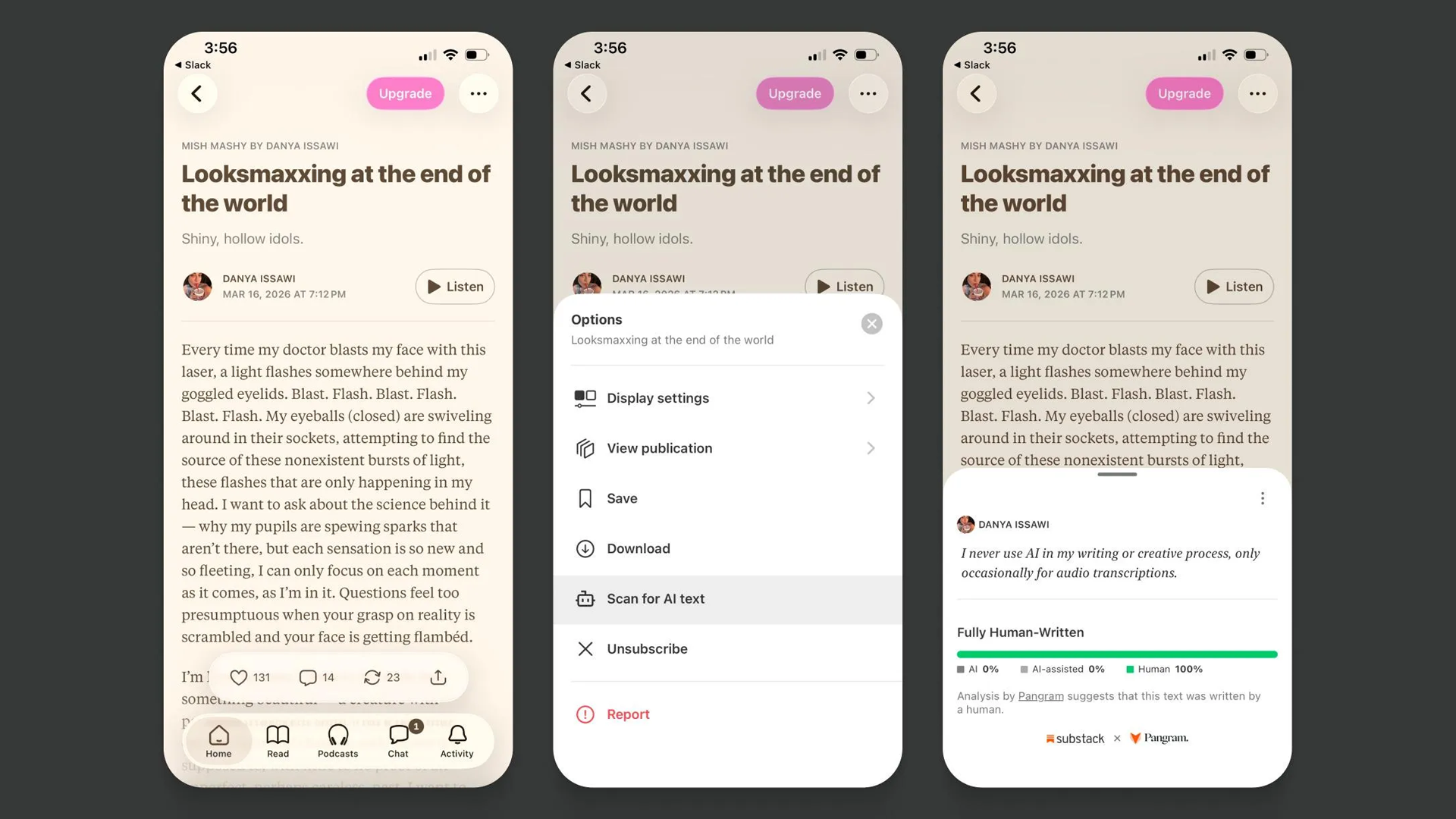
This week, the beloved writing platform announced its imminent integration with AI detection software Pangram. It will allow users to instantly scan a post, comment, note, or reply – anything over 100 characters – for the presence of text generated by large language models.
In the same vein as tools like GPTZero, Pangram is able to reverse-check text and estimate what percentage of it was created by AI or assisted by AI. The feature will soon be ubiquitous and accessible by clicking the three dot menu in the corner of every post under ‘Scan for AI text.’
It’s a ballsy move, and one that suggests Substack is playing the long game in the name of integrity. As the internet becomes increasingly saturated with bots and AI content, a bonafide way to be seen as rebelling is to opt for complete transparency.
Make no mistake, the decision could hurt business in the short term when it inevitably transpires that popular channels or newsletters have been leaning on the technology. However, by giving users the ability to discern whether a blog or newsletter bears any hallmarks, company execs are hoping it will build greater trust among the community.
‘The core problem is not people using AI, or the quality of its output,’ explains CEO Chris Best. ‘The problem is when there is a mismatch between a reader’s expectation and reality, especially when they unwittingly invest their attention in something with no human thought on the other end.’ He aptly dubbed that deception ‘Claudefishing.’
The disappointment of twigging that something has no human input is magnified on a platform like Substack, where its entire USP is hosting high-quality content that offers insight and value based on lived experience, knowledge, and real-life introspection.
And it’s no secret that while younger generations may lean on AI tools for certain tasks: research, admin, mundane work, there’s a glaring aversion to the technology when used to directly replace human creativity. That’s arguably where the term ‘AI slop’ comes from.