Are we buying things because they help us to express ourselves, or because we believe we deserve a little treat for dealing with the demands of capitalism – or both?
A little while ago Thred’s brilliant Jessica Byrne wrote about the long-term financial ramifications of ‘little treat’ culture. This is the term given to the current trend of buying yourself ‘a small reward in the midst of life’s challenges.’
People continue to purchase these little treats for themselves – a latte on the way into the office, or maybe a new flavour vape – despite the likelihood of small, regular expenses of non-necessary items leading to ‘financial vulnerability’ later in life.
In the face of dwindling career prospects on a personal level, and of the mass murder of innocent people on an international scale, is it any wonder that people felt the need to distract themselves by purchasing ‘a little something nice’?
The problem with ‘little treat culture’ lies not with the seeking of dopamine after a doom-scroll through headlines that leaves you feeling somehow simultaneously hollow and outraged.
As Jessica pointed out, ‘faced with an increasingly chaotic and sometimes soul-crushing reality, these small indulgences seem to offer us a tiny anchor, a moment of relief.’
Rather, ‘the problem arises with the normalisation – and widespread promotion – of these small, regular expenses’.
By buying into the trend (literally and metaphorically), we risk spending our way into a state of financial vulnerability that not only drives capitalism, but sustains it as a hegemonic economy.
This leads us to the ‘lipstick effect’, a term first coined by American economist Juliet Schor in The Overspent American, published in 1998. In her book Schor explores the growing rates of conspicuous consumption amongst the rich, and later the upper-middle, and later just middle, class Americans.
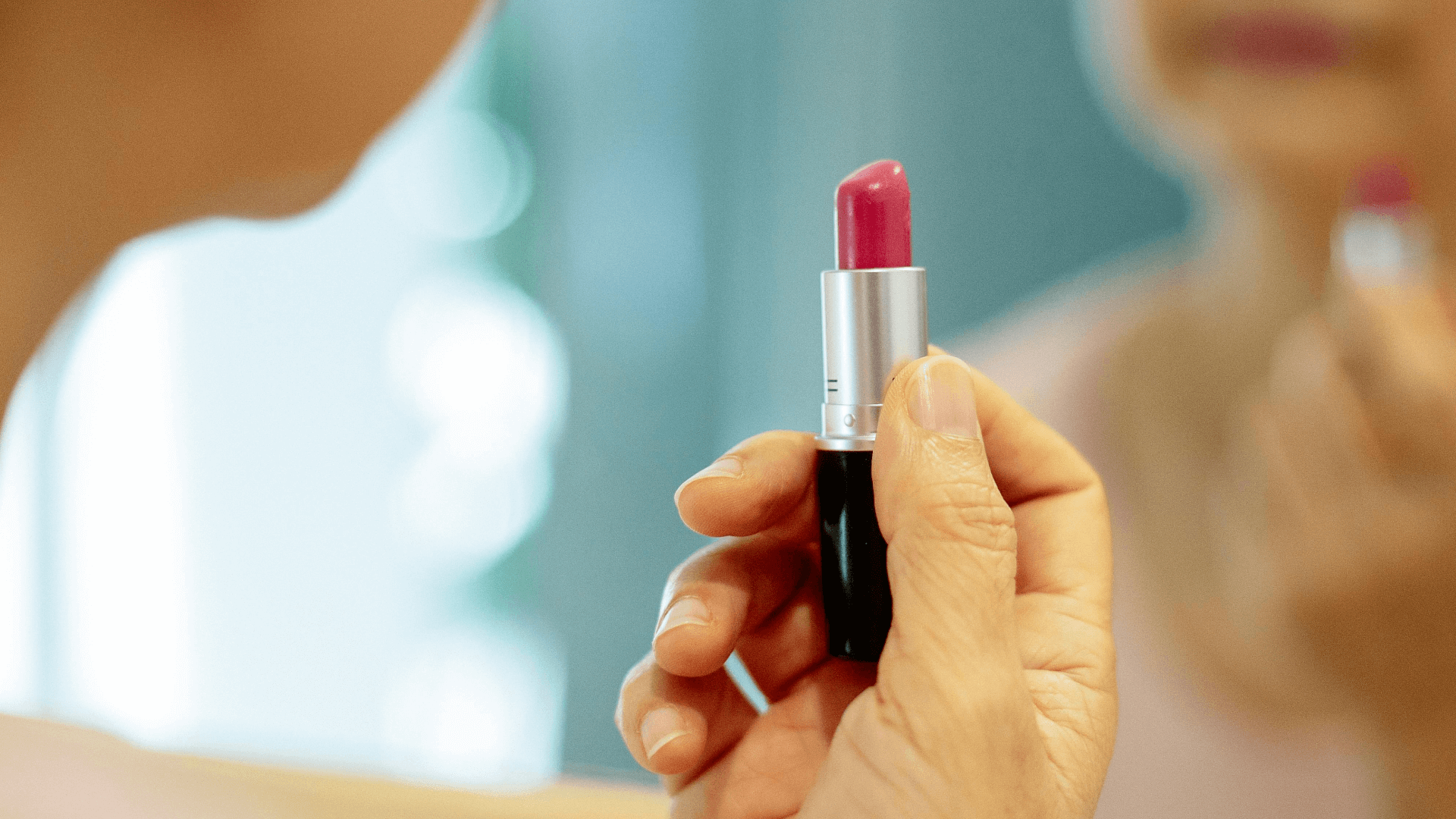
The ‘lipstick effect’ is the tendency of consumers to purchase smaller luxury items (such as lipstick) when larger purchases (like a holiday, for instance) become increasingly inaccessible.
This is likely due to the triggering of dopamine that occurs when people make a purchase; compelling enough to convince people to shop higher-end products but, generally speaking, not enough to make them blow their entire savings on a luxury cruise or pamper retreat.
In other words, it provides a sense of ‘ersatzbefriedigung (substitute satisfaction)’ within the confines of capitalism. It allows us to cope temporarily with our current circumstances without either alleviating the oppression we’re experiencing, nor fulfilling us completely.
And just like that, capitalism really has just made the entire consumer market a casino with no escape into the cold, refreshing light of day.
US has the highest income equality than any Group of Seven country, but all over the world we’ve seen grotesque gains in wealth. Truly a mafia economy where rich people just make money off of money . <than 3000 billionaires own more wealth than 1/3 the 🌎https://t.co/AA1DOuYfrwpic.twitter.com/UqbwViUbne
Arguably, we could make a case that people are embracing the ‘lipstick effect’ not just with the things they put on their face, but with what they’re willing to have put into it as well.
Likewise, we see people opting for an expensive face cream rather than a spa membership, DIY manicures instead of salon visits, and even posher chocolate and coffee to enjoy at home rather than going out to indulge.
Sweet treats aside, the use of cosmetic products like lipstick to describe this indulgence impulse is a useful one when thinking about the relationship between commodity fetishism and our sense of self-expression.
As video essayist Jordan Theresa emphasises: ‘beauty is also currency’.
Documentarist Adam Curtis has cited a shift in the 1970s when self-expression was introduced to politics through the hippy movement.
As subcultures became increasingly disillusioned with the hegemonic political system which continued to exploit the poor in order to boost profits for the oligarchy, people became fatigued by the prospect of unionisation and mobilisation as a means of claiming back their fair share of global wealth.
Instead of sticking it to the man in a political movement which harked back to 19th century revolutionary poetry, people turned instead to self-coddling, branded today as ‘self-care’, within which ‘little treat’ culture has nestled itself comfortably.
Curtis called this ‘hypernormalisation’: even though people could see that the system was broken, they could no longer see a way, or have the energy, to attempt to fix it.
As this concept has evolved and our society has become more obsessed with self-imposed surveillance than ever before, people’s desire for self-expression has led to a movement of individualism instead of community. Naturally, capitalism has picked up on it.
Not only, as Curtis explains, are people today unable to see the power of togetherness in the face of oppressive bureaucracy, the concept of self-expression has also been sublimated into the dominant capitalist narrative and resold to us as accessible only through the purchase of certain products that supposedly make us more able to be ourselves.
‘The first phase of the domination of the economy over social life brought into the definition of all human realisation the obvious degradation of being into having.’
Curtis also points out the way in which algorithms are made to find patterns between our so-called self expression in order to group us into categories.
These categories allow companies to target smaller subsections of consumer society to sell us things which we’re told (falsely) will amplify their sense of self.
In doing so, he forces us to weigh up the value of our hyper-individualism – inextricably linked with ‘little treat’ culture – in a society which continues to limit the price of our ‘self-expression’ to the occasional luxury lipstick.
As Marxist-socialist author Sally Rooney posits: ‘We’re all connected in a network of human relationships which sustain us all the time…The idea that you can move through the world as a self-sustaining individual is a fiction – it’s a delusion really.’
Annie (She/Her) – Originally from Newcastle Upon-Tyne, Annie’s writing focuses mostly on class and feminist issues, with a particular interest in sex-culture, identity politics, and current affairs. She studied both her undergraduate and postgraduate degrees in English literature at the University of Manchester. (Yes, it was a lot of reading. No, it didn’t ruin books for her). Follow her on Twitter or Instagram, or feel free to get in touch via email.
Beauty pageants in the UK have had a rebrand.
The stereotypical image of women parading around in bikinis, smiling until their cheeks hurt and answering some variation of ‘how would you achieve world peace?’ feels increasingly outdated.
Today, pageantry sells something different. Confidence. Advocacy. Charity. Entrepreneurship. Empowerment. Contestants have platforms, careers, and causes they genuinely care about.
And, having competed in one myself, I actually believe there is some truth to that.
In...
Clothing retailer ASOS has launched an investigation after some mobile customers received a notification claiming that hackers had ‘fully compromised’ company data.
Some ASOS customers received a push notification on Tuesday claiming that hackers had ‘fully compromised’ company data, The Guardian reports.
The message included a link to Telegram, the largely unmoderated chat service, directing users to a channel supposedly operated by a cyber gang called the ‘Xuayne’ group.
The fashion...
The value of personal attractiveness is established much younger than you might think. But what does this mean for girls growing up in an image-obsessed era?
We check our appearance around 38 times per day. That pastime was once reserved for mirrors, and now extends to every reflective surface in our vicinity. Phone screens are the obvious preference – whether via their front-facing cameras or shiny black lock screens.
Social media...
It seems everyone and everything is inflamed, but is that really such a bad thing?
From cortisol to caffeine, the wellness world loves a scapegoat for stress. It’s easy to blame life’s problems on some controllable symptom that can be stifled with the right pill or lavish morning routine.
The latest buzzword to take charge of the health conversation is ‘inflammation’. To look at any wellness page is to feel as...
We use cookies to ensure that we give you the best experience on our website. If you continue to use this site we will assume that you are happy with it.






























 0 comments