Lawmakers in key parts of the world are remodelling their approaches to salmon fishing. In one hotspot, higher taxes seek to better manage income from the salmon-farming capital of the world. On the other, a reform on fishing is looking vital to conservation as the consequences of climate change set in.
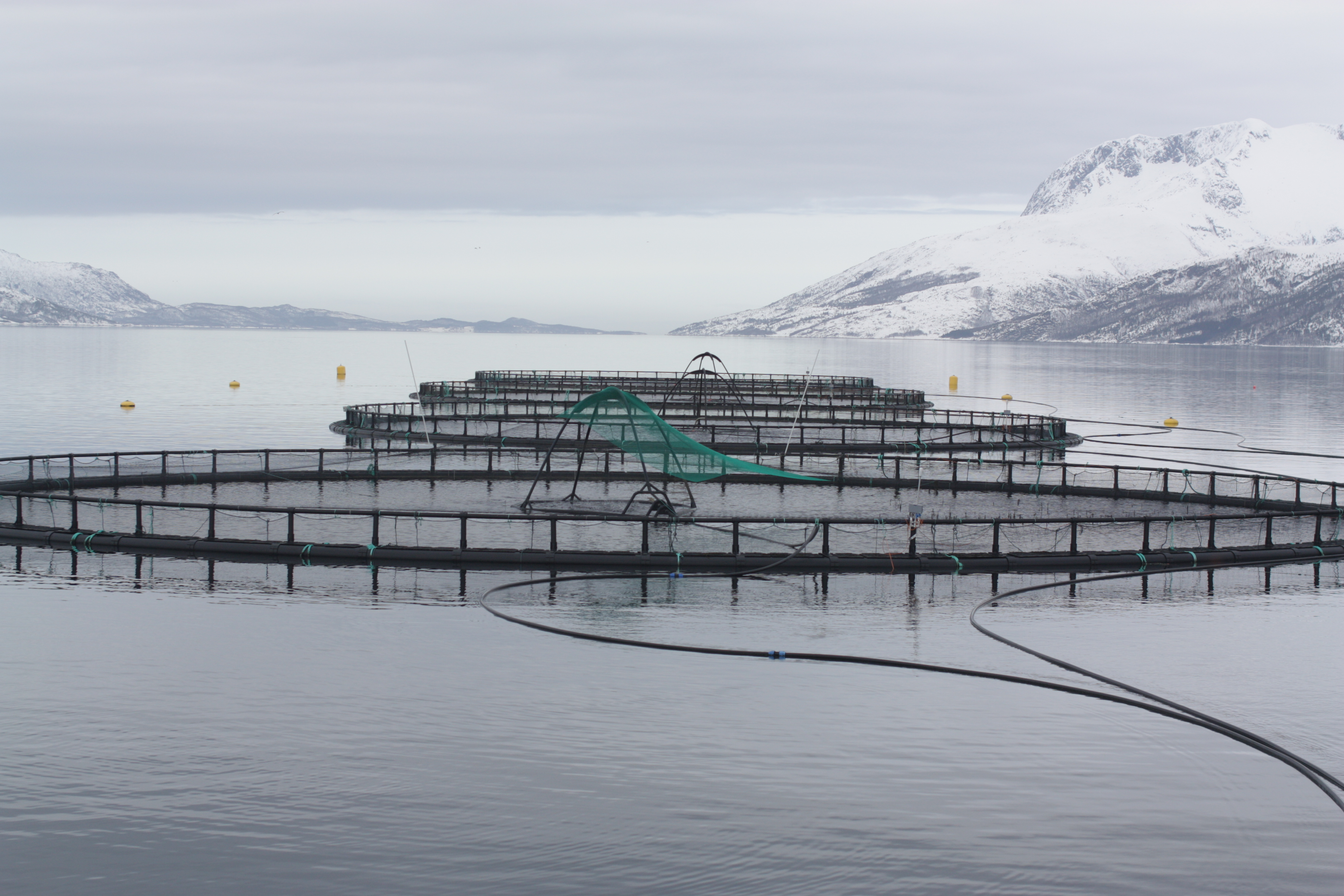
If the salmon you ate for dinner last night didn’t come from Scotland, it likely came from Norway. The Nordic country supplies more than half of the world’s farmed salmon, exporting 1.5 million tons of it annually.
Considering these insane figures, the local government is determined to start funnelling cash made from salmon exports into building a better life for its people.
To do so, it will raise taxes on earnings from the aquaculture industry. Dubbed ‘the salmon tax,’ all farmed fish profits will be taxed at 35 percent. This is in addition to a 25 percent corporation tax for operating fisheries.
A steep bill, sure. But it will allow coastal communities to reap the economic value generated from fish farming happening around them. The government-collected taxes are set to improve local welfare services, such as schools and care services for the elderly.
In the eyes of those supporting the salmon tax, the boosted revenue stream will also help reduce the country’s dependency on oil.
As a result, it will ease the need for government subsidies issued to deal with the ongoing energy crisis. We love a good domino effect.
Supporters also say that this kind of policy – aka, not letting major fishing companies rake in the dough while local residents watch and scrape by – creates a great framework for how economic earnings from aquaculture can be managed in a fair way globally.
Meanwhile, Pacific salmon fishing on the west coast of the US is seeing new approaches put in place by means of necessity. Local salmon are disappearing – and not just from overfishing.
Pacific salmon are getting long-overdue protection
California and Oregon are taking a good look at their relationship with local salmon species. Their motivation for change is arguably far more alarming.
Hot weather and prolonged drought on the west coast have reduced the flow of local waterways in recent years, leading to severely depleted levels of fish stocks in areas where populations have been historically abundant.
Climate scientists in the area have pointed out that although a variation in numbers can be normal, the current situation is definitely not. Along with climate change, they blame accumulating instances of human action.
Looking at the big picture, they’ve branded it an ‘assault on California’s salmon’.
First, fur traders over-poached beavers, whose humble dams created perfect habitats for salmon. Then, high levels of mining during the Gold Rush heavily polluted local creeks and rivers with gravel. More recently, gigantic man-made dams were installed, drying up 90 percent of California’s wetlands.
All of these actions have contributed to the loss of salmon species, which has made life for Indigenous groups extremely difficult. Members of the Yurok Tribe said, ‘We lost our language. We lost our religion for a long time.’ In losing the fish, they say, ‘We lost a lot.’
An incoming season ban on salmon fishing in California and neighbouring Oregon is now inevitable. Good news for salmon, but bad news for local fishermen who rely on the fish for their livelihoods.
Scientists closely monitoring the situation say that this doesn’t have to be the end for Pacific salmon or people who catch it. ‘The best thing we can do is give the fish the best chance they have to figure [a modified environment] out evolutionarily,’ one researcher told the NYT.
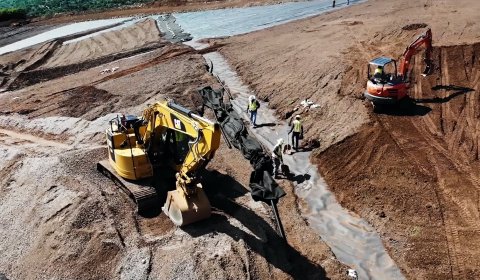
There are steps being taken to fast-track this ‘wait and see’ approach. A campaign to remove unused hydroelectric dams in California succeeded last month. This will open up 400 miles of additional space for salmon to swim through.
Meanwhile, research is ongoing to see what further obstacles can be removed to restore a flow once again. This, local scientists believe, could be the key to boosting populations once again.
I have to say, it’s somewhat of a relief to learn that these efforts are being taken, especially when a wide-scale move towards fish farming has been side-eyed by marine biologists and labelled a sure-fire way to ignite an ‘ecological disaster.’
As anyone who’s watched Seaspiracy will know, fish farming isn’t a silver bullet solution to conserving wild populations or capping overfishing. Nor is it an entirely healthy or environmentally friendly practice.
So it looks like rectifying our human mistakes and allowing nature to restore itself could be the best way forward. Who knew, eh?
Deputy Editor & Content Partnership ManagerLondon, UK
I’m Jessica (She/Her). I’m the Deputy Editor & Content Partnership Manager at Thred. Originally from the island of Bermuda, I specialise in writing about ocean health and marine conservation, but you can also find me delving into pop culture, health and wellness, plus sustainability in the beauty and fashion industries. Follow me on Twitter, LinkedIn and drop me some ideas/feedback via email.
Though the project is a vital strategic asset for the US, its reliance on advanced tech for mitigation techniques have failed to ease local anxieties about water security and the environment.
In the past two years, the US government has placed significant emphasis in obtaining rare earth minerals. From EVs to precision weapons, these minerals have become an essential commodity in the global economy. However, global sanctions on their...
In the last decade, the share of 15-to-24-year-olds in the UK who claim they have a condition limiting their ability to work is reportedly up by 70%.
There has been a sharp rise in the number of jobless young people in the UK citing health problems as the reason they cannot work, according to newly published statistics from the Health Foundation.
The charity thinktank says that the portion of 16-24-year-olds...
Less 20-somethings are getting married today than ever. As Gen Z ditches wedding rings, it begs the question: what has changed?
There’s little I love more than the sweet sound of an orchestra playing a doting love song, as a couple makes it down the aisle, ready to make the ultimate commitment and say: ‘I do’. Yet nowadays, it seems like my generation is more inclined to say ‘I don't’...
Louis Theroux’s manosphere documentary has raised questions about how we tackle a toxic community that spreads in the shadows and thrives in the spotlight.
It was only a matter of time before Louis Theroux shuffled into frame and imparted his gauche two cents on the manosphere. The documentarian is beloved for his awkward silences, an approach that has allowed him to carve out a hefty filmography of deep-dives into some...
We use cookies to ensure that we give you the best experience on our website. If you continue to use this site we will assume that you are happy with it.
































 0 comments