Before the year is up, the global human population is expected to surpass the 8 billion mark. Along with it will come environmental challenges, but also an opportunity to diversify the global economy.
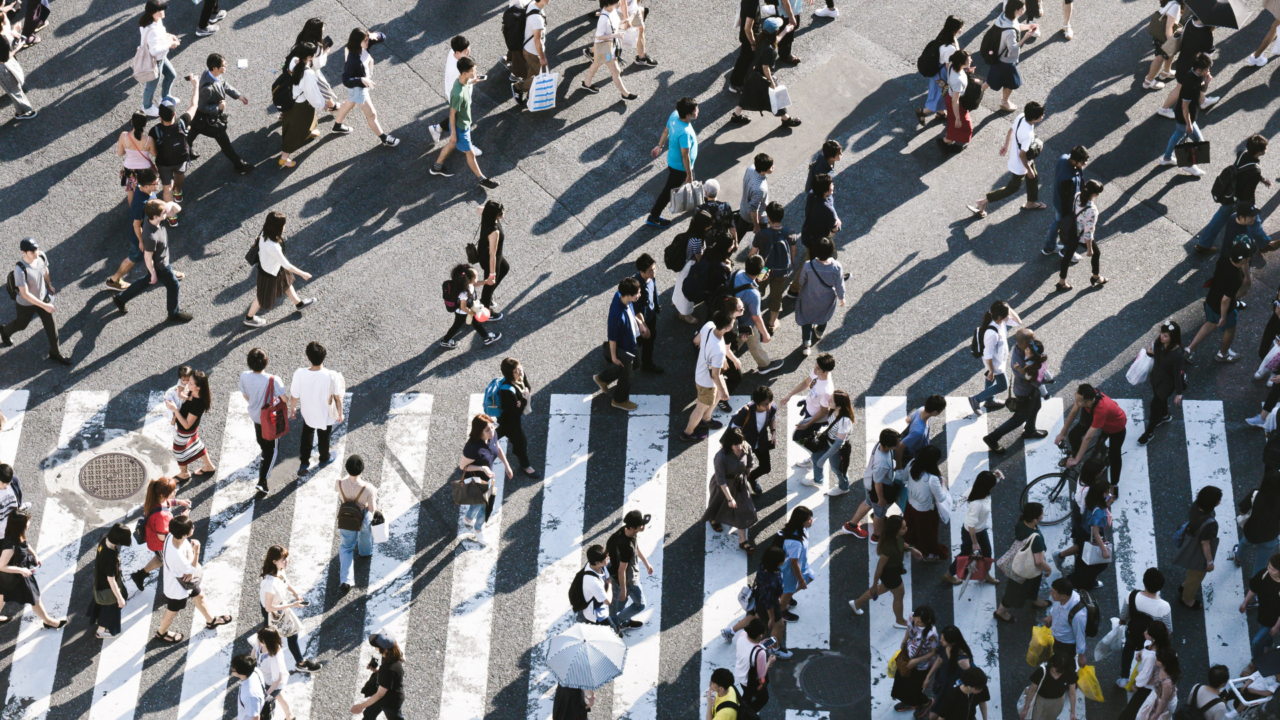
The United Nations global population projection estimates we will reach a global population of 8 billion people by November of this year, with that number increasing to 10 billion by 2080.
Surpassing the 8 billion mark is indeed a major milestone, but the figure alone is not telling of the fact that population growth is at its slowest rate since the 1950s.
Global fertility rates have been on a steady decline, with two-thirds of all people living in regions where births per woman have fallen below the replacement rate of 2.1. In these areas, government policies are typically driving this rate down.
For this reason, the projected growth will not be evenly distributed across the world. Eastern and Southeastern Asia are expected to see their populations shrink, while North American and European populations will grow at slow rates.
Out of all regions, Sub-Saharan Africa and Central and Southern Asia will see the fastest growth in numbers of people, particularly in the Democratic Republic of Congo, Egypt, Ethiopia, India, Nigeria, Pakistan, and the United Republic of Tanzania.
It’s undeniable that a higher global population risks placing additional strain on the planet, especially when it comes to an increase in demand for natural resources and trying to ensure we don’t destroy ecosystems in that process.
The UN states that though population growth ‘may not be the direct cause of environmental damage, it may nevertheless exacerbate the problem or accelerate the timing of its emergence.’
In particular, the fight against climate change will become more difficult if our reliance on fossil fuels isn’t significantly reduced across the board. Whether larger populations increase their contribution to greenhouse gas emissions will depend on the availability of green technology in certain regions.
The good news is, Sub-Saharan Africa – where populations are rapidly growing – is waking up to its most valuable and abundant source of renewable energy: the sun. In 2021, the Africa Solar Industry Association (AFSIA) identified over 7,600 new solar projects, with more than 1,000 already in operation.
The rest of the world has also recognised the region’s green potential, with Sub-Saharan Africa receiving over $34.7billion in international investment for its renewables sector from 2011 to 2020.
If momentum, planning, and financial backing for harnessing and storing renewables continue as they are, it is entirely possible that the region will become a ‘powerhouse’ for solar as predicted – subsequently supporting its growing population in a way that is not taxing on the environment.
Opportunity sparked from growth
Aside from needing to deal with the challenge of adequately distributing natural resources, many nations have real potential to reap the rewards of a growing local population.
Reports by The World Bank suggest that – with the right policies and actions put in place – the likelihood of capturing the social and economic benefits of population growth will increase accordingly.
No doubt, the emergence of a large young, working population in Sub-Saharan Africa is sure to give the region a major economic boost, but experts say this will can only be fully realised if more focus is placed on empowering women and girls.
By investing in women and girls’ education, skills, and providing them with equal market, social and decision-making powers as their male counterparts, African nations will get the most out of their ‘demographic dividend’.
It’s clear that there will be obstacles that need problem solving through strong social policies, increased economic funding, and clear planning for improved infrastructure in regions where populations are growing.
On the other hand, it’s encouraging to see that projects are already underway to support rising populations, and when prosperity of nations relies on equal opportunities, it’s likely improvements to health and social policies are sure to follow.
Deputy Editor & Content Partnership ManagerLondon, UK
I’m Jessica (She/Her). I’m the Deputy Editor & Content Partnership Manager at Thred. Originally from the island of Bermuda, I specialise in writing about ocean health and marine conservation, but you can also find me delving into pop culture, health and wellness, plus sustainability in the beauty and fashion industries. Follow me on Twitter, LinkedIn and drop me some ideas/feedback via email.
When it comes to social change in 2026, Gen Z has lost all the vim of yesteryear. When and where was this energy lost? Let’s break it down.
In the late 2010s Gen Z was synonymous with social change, a broad catch-all term encapsulating the desire for a more equitable and just world.
In 2026, however, the cohort is now more likely to be mentioned in the same breath as subjects...
Used clothes have been enabling people to refine their style and earn money. Now that thrift fashion is reaching new heights on the internet, who continues to benefit the most?
In Nairobi, a second-hand jacket can either be on sale in the market or on social media with all the elegance of a professionally curated thrift shop. It is the same type of clothing item, just sold via different channels.
Some...
A month after the actress was criticised for ‘sexualising women’s sport’, the backlash raised a bigger question: what are women actually allowed to be in the sporting world?
You probably already heard that Sydney Sweeney has ‘great jeans’. The actress stirred up major controversy with an American Eagle advertisement last summer, which was criticised for flirting with eugenics thanks to the aforementioned tagline.
Initially staying silent amidst the backlash, Sweeney...
Between a Nara Smith rebrand and a New York Times bestselling novel, it seems the glory days of tradwifery are behind us.
Nara Smith is best known for her scratch cooking videos. Or maybe it’s the extravagant couture she wears while cooking. No wait, it’s her famous model husband Lucky Blue Smith (once tumblr’s ultimate it-boy). Ah! Got it. It’s the weird and wonderful names of her children: Whimsy Lou,...
We use cookies to ensure that we give you the best experience on our website. If you continue to use this site we will assume that you are happy with it.






























 0 comments