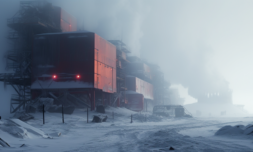
Storms of unprecedented strength and ferocity have cropped up unexpectedly around the world. Though countries in conflict and poverty have been the hardest hit by these events, climate scientists have warned that ‘nowhere is immune.’
For those looking for a positive news story to start the week, I apologise in advance. This article will not be your tonic.
While it certainly seems that there’s enough doom and gloom in the world to go around, discussing what is going on is necessary if we are to muster greater motivation to demand immediate and real change.
Off the back of Earth’s hottest months on record, which caused global heat waves and heat ‘domes,’ triggered widespread coral bleaching events, and sparked a seemingly endless stream of wildfires, catastrophic storms are now causing extreme flooding in ten countries across the world at the same time.
Up until now, it seemed that the Global North believed it was sitting pretty, with many citizens located here remaining in denial of climate change altogether. But the events of recent weeks have shown that no one is scathed on a planet that is getting sicker by the day.
It may be true that countries in conflict and poverty-stricken regions have been sitting on the front lines of climate change, but it may not be long before the tables turn.
Storm Daniel formed on September 4th as a low-pressure system. It quickly intensified to harbour winds and rains typically only observed in tropical hurricanes.
A storm of this strength emerging in the Mediterranean is extremely rare. Formally known as a ‘medicane,’ Storm Daniel became the region’s deadliest and costliest tropical-like cyclone ever recorded.
It first hit Greece, becoming the worst storm in the country’s history. Severe rainfall – more than is normally seen in Greece during an entire year – led to flooding that caused more than €2 billion in damages and killed at least 17 people as well as 200,000 animals.
The storm then moved on to Turkey, where it claimed seven lives and forced residents of rural areas to wade through knee-high water littered with fallen trees to get to safety. The city of Istanbul also experienced flash floods which killed two people.
It later moved across to Bulgaria, where it also caused flooding and claimed four lives.
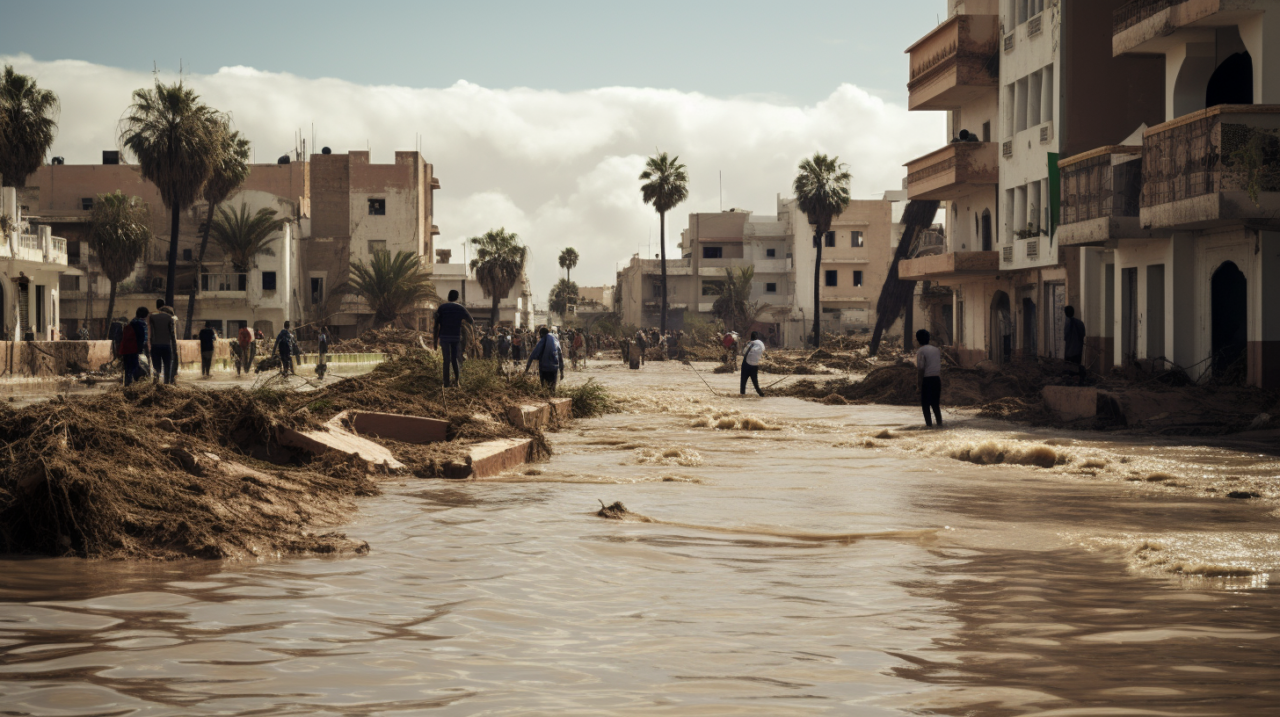
Then, Storm Daniel moved towards the coast of Libya where it would hit the hardest. Torrential rains caused two dams near the city of Derna to fail, leading to a rush of flooding that took the lives of 11,300 people, though this number is expected to rise.
The extensive damage has been blamed on Libya’s crumbling infrastructure, which has been left in poor condition due to a decade of civil war.
Twin Typhoons in Asia
In the first week of September, two typhoons named Saola and Haikui passed through Asia within days of each other.
The two storms caused damage in Taiwan, Hong Kong, and southern China.
Days later, Hong Kong’s metro stations were submerged in flash flooding, as a result of the country’s highest hourly rainfall since records began in 1884.
Jung-Eun Chu, an atmospheric and climate scientist at the City University of Hong Kong, said:
‘There used to be decades between record-breaking rainfall events, but gaps between records are narrowing rapidly. As our world warms, extreme weather that used to happen once in a lifetime is becoming more frequent occurrences.’
Rainfall in the Americas
On the other side of the globe, Brazil was hit by heavy rains and floods.
Officials in Rio Grande do Sul said it was the worst natural disaster the region had seen in four decades, resulting in more than 30 deaths.
Following the continent up north, hundreds of homes, businesses, bridges, dams, and railways were damaged by floods in Massachusetts, USA. Rainfall here and in New Hampshire has been more than 300 percent above normal volumes during the last two weeks.
This is no coincidence. According to the National Oceanic and Atmospheric Administration, more than 90 percent of planetary warming during the last 50 years has occurred in our oceans – sparking a hyperactive hurricane season that does not seem to be slowing down.
Not to mention the flooding that stranded 70,000 Burning Man festival-goers in the Nevada Desert, which was hit with 0.8 inches of rain – about twice the average amount for September – in just 24 hours.
Widening our scope
So yes, conflict-ridden and poorer countries sit on the front lines of climate disasters due to their fragile infrastructures.
But there’s no telling where will be hit next, as our global weather systems become unpredictable and erratic.
To reiterate the words of climate scientists, ‘no one is immune’ to the wrath of a changing climate and as a result, ‘all governments must be prepared.’
In that light, it seems extremely timely that hundreds of thousands of people rallied together in global protests this weekend to call for an end to the use of fossil fuels, the primary cause of the climate crisis.
We can only hope that this movement, combined with a growing number of climate and environment-based legal cases, force those in power to make decisions that will alter our current predicament for the better.
Deputy Editor & Content Partnership ManagerLondon, UK
I’m Jessica (She/Her). I’m the Deputy Editor & Content Partnership Manager at Thred. Originally from the island of Bermuda, I specialise in writing about ocean health and marine conservation, but you can also find me delving into pop culture, health and wellness, plus sustainability in the beauty and fashion industries. Follow me on Twitter, LinkedIn and drop me some ideas/feedback via email.
Students, teachers, and parents have taken to the street to protest France’s crippling education infrastructure. However, as the movement started to gain nationwide traction, so did violence, driven by clashes with the riot police.
These past few weeks have seen intense waves of violence associated with student-led protests in France. What started as a local walkout by teachers at a high school in Créteil quickly turned into a nationwide...
After surviving two doses of a drug intended to kill her, Christa Pike is at the centre of a high-profile legal battle that’s shone fresh light on the absurdity of humane execution.
Last week, Christa Pike survived an attempt on her life. Now doctors at the Tennessee hospital where she’s being held are working tirelessly to save her. Reports state Pike is ‘angry and confused’ about what happened to her,...
When it comes to social change in 2026, Gen Z has lost all the vim of yesteryear. When and where was this energy lost? Let’s break it down.
In the late 2010s Gen Z was synonymous with social change, a broad catch-all term encapsulating the desire for a more equitable and just world.
In 2026, however, the cohort is now more likely to be mentioned in the same breath as subjects...
Used clothes have been enabling people to refine their style and earn money. Now that thrift fashion is reaching new heights on the internet, who continues to benefit the most?
In Nairobi, a second-hand jacket can either be on sale in the market or on social media with all the elegance of a professionally curated thrift shop. It is the same type of clothing item, just sold via different channels.
Some...
We use cookies to ensure that we give you the best experience on our website. If you continue to use this site we will assume that you are happy with it.






























 0 comments