The lights on Berlin’s famous monuments and historic buildings are being shut off in order to save energy amidst Russian energy cuts. Other cities like Hanover are cutting hot water in city-run buildings.
If you’re planning to visit Berlin this summer, don’t expect to see its impressive monuments lit up during the evenings.
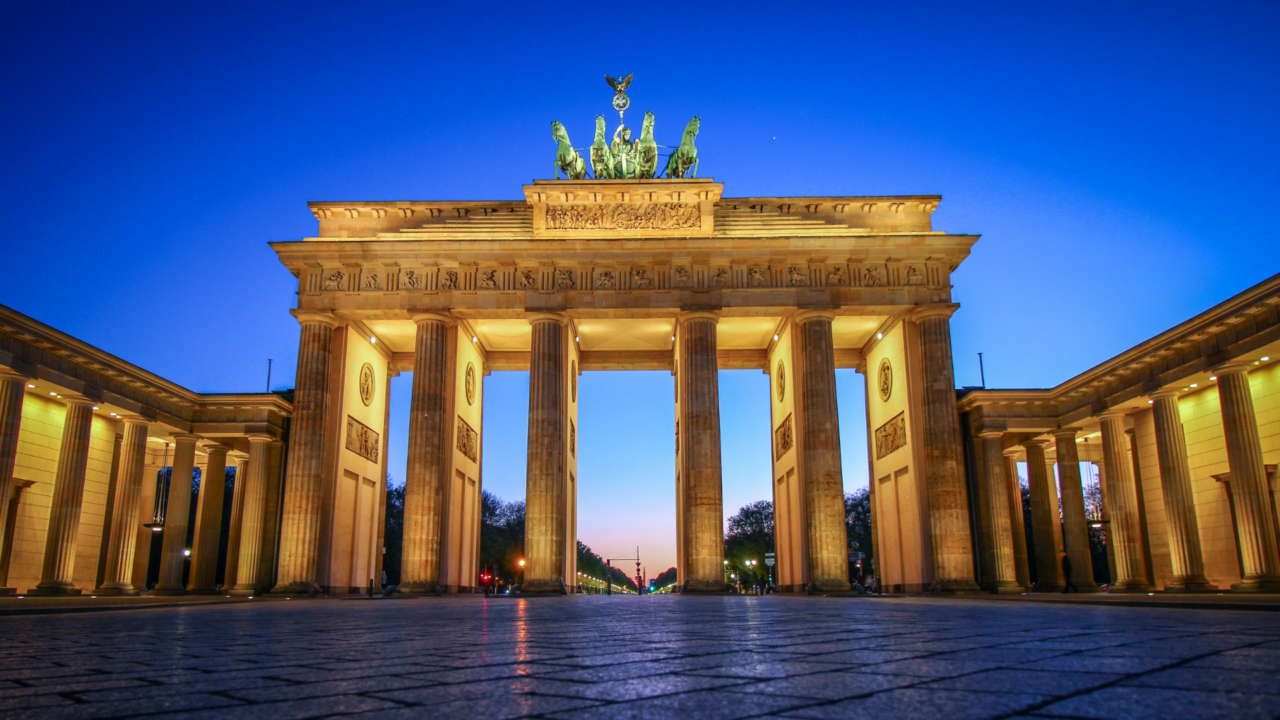
In light of the energy crisis sparked by the war in Ukraine, the city is switching off the power on 200 of its most famous buildings and structures’ illumination systems, including those at the Victory Column and Charlottenburg Palace.
Shutting off the 1,400 projectors will require workers to manually intervene with automatic systems at each site nightly. As a result, the city won’t profit financially on the €40,000 reduction in energy, utilising this sum to instead pay those workers.
Efforts to save energy as winter months draw nearer are also being seen in other German towns and cities. Munich is following suit by turning off the lights on its town hall and Hanover has enforced energy-saving tactics by turning off hot water in city-run buildings and leisure centres.
In recent months, it has started to look like the European sanctions imposed on Russia are starting to backfire.
The EU relies heavily on Russia for its oil and gas supplies – about 40 percent of it, in fact – and limits placed on economic trade due to the invasion of Ukraine has seen Russia weaponize its position as energy king.
Though Russian officials say that EU sanctions have hindered the technical pumping capacities of their facilities due to insufficient repair access, leaders in European countries being choked off of gas supplies have dismissed these claims as false.
‘The turbine is there, it has been serviced,’ said Berlin’s government spokesperson Christiane Hoffmann, after Russia blamed a recent reduced gas delivery on malfunctioning engines.
She continued, ‘At this point in time supply contracts aren’t being honoured. What we are seeing is indeed power play, and we won’t allow ourselves to be impressed by that.’
As the EU remains under Russia’s thumb – at least in terms of energy – leaders are warning citizens of skyrocketing bills and essentially telling them to basically ‘bear with’ as they make strategic cuts until the crisis blows over.
Preparing for the worst possible outcome
Calls to conserve power across Germany came after its leaders branded Russia’s move to withhold energy reserves as a ‘power play’. The Russian state-run energy giant Gazprom reduced gas flow to Germany to just 20 percent of its total capacity.
As European nations brace for the winter ahead, plans to reduce energy used on indoor heating in municipal buildings are being put in place. In the Lower Saxony state capital building, central heating will only be activated from October 1 to March 31 and will be capped at 20C.
‘Every kilowatt hour counts’ said the Berlin’s mayor, Belit Onay, who called the situation ‘unpredictable.’
Addressing the situation further, Germany’s economic minister, Robert Habeck, announced the ‘bitter news’ that energy bills will likely rise to ‘a few hundred euros per household’ during winter months.
Earlier this week, all of the 27 EU member states (aside from Hungary) voted in favour of reducing their national gas use by 15 percent over the winter months. This move could become absolutely vital if the worst-case scenario occurs – if Russia slashes Europe’s supplies completely.
Though the prospect of a total energy cut is certainly worrying, it’s somewhat pacifying to know that this scenario is not one leaders are naïve enough to believe is off the table.
Deputy Editor & Content Partnership ManagerLondon, UK
I’m Jessica (She/Her). I’m the Deputy Editor & Content Partnership Manager at Thred. Originally from the island of Bermuda, I specialise in writing about ocean health and marine conservation, but you can also find me delving into pop culture, health and wellness, plus sustainability in the beauty and fashion industries. Follow me on Twitter, LinkedIn and drop me some ideas/feedback via email.
Studies show a direct correlation between motherhood and a decline in academic tenure, with one in three women leaving academia after becoming mothers.
When I was a student, I remember being struck by how many women were on my Art History course. Out of our 50-or-so cohort, I could count the men on one hand. But it was a very different picture when you looked at the staff.
We had several...
Britain’s press has long claimed to simply report politics, but its deep-rooted bias toward the Conservatives suggests it may have played a far more active role in shaping how the public sees power, leadership, and ultimately who gets to win.
On 13 April 1992 after a devastating election loss, swerving the usual graceful exit, Neil Kinnock stood in front of the press and made a striking claim:
‘...the Conservative-supporting press...
Though the project is a vital strategic asset for the US, its reliance on advanced tech for mitigation techniques have failed to ease local anxieties about water security and the environment.
In the past two years, the US government has placed significant emphasis in obtaining rare earth minerals. From EVs to precision weapons, these minerals have become an essential commodity in the global economy. However, global sanctions on their...
In the last decade, the share of 15-to-24-year-olds in the UK who claim they have a condition limiting their ability to work is reportedly up by 70%.
There has been a sharp rise in the number of jobless young people in the UK citing health problems as the reason they cannot work, according to newly published statistics from the Health Foundation.
The charity thinktank says that the portion of 16-24-year-olds...
We use cookies to ensure that we give you the best experience on our website. If you continue to use this site we will assume that you are happy with it.
































 0 comments