

























Sofia (She/Her) – I’m the Deputy Editor & Media Partnership Manager at Thred, specialising in exclusive articles and live interviews, fashion and beauty with a focus on sustainability, women’s rights, psychedelics, and Latin America. I studied Spanish at the University of Exeter and International Journalism at City, London. Follow me on Twitter, LinkedIn, and drop me some ideas/feedback via email.
Hi, I’m Sofia, and I’m the Deputy Editor & Media Partnership Manager at Thred. I also work closely with Gen Zers from around the world on exclusive articles and live interviews to promote the inspiring work they’re doing to make the world a better place.
During my time at the University of Exeter where I studied Spanish, I chose to spend my year abroad teaching English in Argentina and working as a journalist in Colombia before travelling across the continent with my camera.
Returning to the UK to pursue a Masters in International Journalism and an internship at National Geographic Traveller, I eventually found myself at Thred’s doors.
Now, I balance my time between obsessing over mushrooms, practising yoga in the middle of the office, and telling everyone about the new song I just learned to play on the bass guitar.



Latest Stories from Sofia

Anger is the most powerful emotion for driving climate action
A recent study, which asked over 2,000 Norwegian adults how they felt about the climate crisis, found the link to activism was seven times stronger for anger than it is for hope. If, during the last few years, you’ve experienced an overwhelming sense of anger regarding the current state of our planet, know that – by all means – you are not alone. According to a survey conducted...

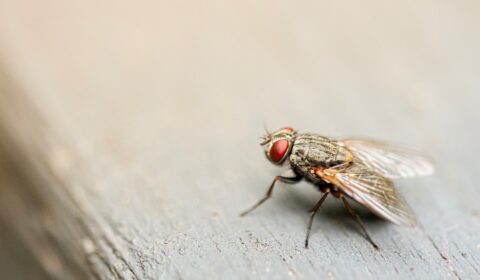
Scientists turn dead flies into biodegradable plastic
According to new research, the hard shells of insects – an abundant resource that otherwise goes to waste – can be used to engineer a type of eco-friendly material which is circular and doesn’t persist in the environment. Plastic pollution is a huge problem. With 30 million metric tonnes of the stuff being dumped on land annually, almost 50 million metric tonnes of it burned, and another 11 million washed away by the...

Australian government to invest $200m into women’s sports
Following the Matildas’ World Cup performance, Prime Minister Anthony Albanese has unveiled a new funding package to improve facilities and equipment country-wide. This weekend, Australian Prime Minister Anthony Albanese announced a 200 million AUD (just over 100 million GBP) boost for women’s sports following the Matildas’ history-making run at the FIFA Women’s World Cup. ‘The Matildas have given us a moment of national inspiration, this is about seizing that opportunity...

How the Global South is confronting the textile waste crisis
Every year, millions of tons of unwanted garments are shipped around the world as part of the second hand clothing trade, ending up on landfill sites in Ghana, Pakistan, and Chile. In an effort to mitigate this pollution problem, entrepreneurs from these countries are getting creative. The planet is, quite literally, drowning in clothes. Though recycling programmes have existed for decades now, of the 100 billion garments bought annually, 92...

Study reveals period products aren’t as absorbent as advertised
For the first time ever, researchers have tested the absorption of pads and tampons using actual human blood instead of water or saline solution. As it turns out, many of them are mislabelled according to their capacity for preventing leaks. It’s inherently clear that women find it much harder than men to have their bodies understood within the medical sphere. Continually dismissed by male and female physicians (I...

Are deepfakes convincing enough to create false memories?
A new study has found that watching deepfake videos and reading short text descriptions of made-up remakes can cause people to falsely remember watching non-existent films. Last month, researchers at University College Cork in Ireland published findings from their research into false memories, a study which indicates that the impacts of generative AI programmes may be more complicated than initially feared. Deepfake tech has already proven itself a dangerously effective means...
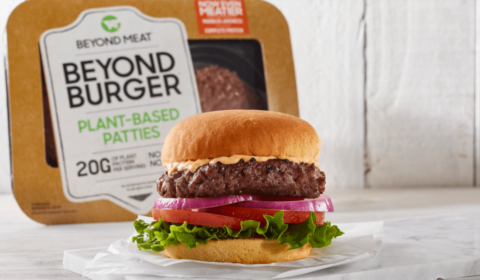
Fake meat sales plummet reigniting the ‘plant-based fad’ debate
Once championed as a way to simultaneously prevent animal cruelty and fight the climate crisis, the protein alternative industry looks to be tanking. This poses the question: is the veganism hype losing its spark? In recent years, it’s become common knowledge that replacing the dearth of meat in the average person’s diet with plant-based alternatives is a sure-fire way to prevent animal cruelty and fight the climate...

How the pandemic upended our perception of time
A new paper by cognitive neuroscientist Nina Rouhani has uncovered that isolating to curb the spread of COVID-19 significantly impacted our ability to accurately recall events – findings that are consistent with memory lapses experienced by prison inmates. Though almost everyone agrees that time has been passing very strangely since the pandemic took hold in early 2020, discussing how some days feel eternal while moths appear to be flying...
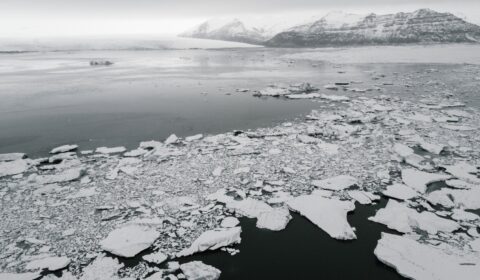
What’s happening to Antarctic sea ice?
It’s winter in the Southern Hemisphere, when sea ice typically forms around Antarctica. This year, however, that growth has been stunted, hitting a record low by a wide margin. It’s deep winter in Antarctica, the time of year that the continent is shrouded in darkness and surrounded by millions of square miles of frozen ocean. According to a recent study, however, there is significantly less sea ice in...
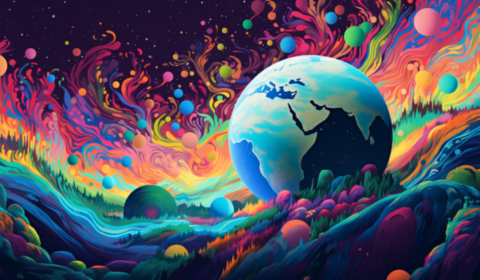
Is there a connection between psychedelic use and eco-activism?
What are the current psychedelic renaissance’s effects on environmental activism and how can the nature-connectedness that’s bolstered by hallucinogenic drugs galvanise social movements and ultimately inspire faster action against the climate crisis? We’ve recently seen a growing acceptance within scientific fields that controlled psychedelic experiences can successfully transform mental health. Despite persistent legal complications and public stigma surrounding their use, scientists are still dedicated to changing our minds about their therapeutic...

