




























 0 comments
Countless studies cite a correlation between gym-going and conservative ideology. So when did exercise get so political?
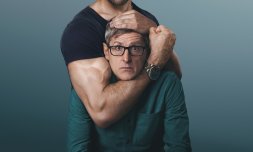
On the most recent US season of Love is Blind, a gym-obsessed contestant named Chris told his new fiancée Jess that he wasn’t physically attracted to her. This revelation would be abhorrently hurtful in any case, but Chris’ reasoning was what most shocked viewers: he didn’t fancy Jess because she didn’t ‘do pilates everyday’.
Chris later went on to compare himself to Andrew Tate, boasting about his lustful attraction to women who spend hours in the gym. It might sound extreme, but this right-wing narrative continues to define our relationship with exercise, and the language we use to talk about health, wellness, and athletic bodies.
So when did exercise get so political? You could argue that it’s always been. Countless studies cite a correlation between gym-going and conservative ideology, whether it’s men abandoning beliefs in socioeconomic equality after lifting weights, or far-right groups using online fitness communities to recruit and radicalise followers.
After the pandemic, researchers found a growing network of online ‘fascist fitness’ chat groups on apps like Telegram. At-home exercise boomed during lockdown, making digital fitness apps a hotspot for the proliferation of niche communities. In some instances, the British far right was found to have positioned physical fitness as part of a ‘wider political struggle’.
Even earlier, in 2017, research from Brunel University in London found that physically stronger men tend to lean more right wing and are ‘less in favour of social and economic equality.’ There was a significant correlation between those men who were heavier and stronger and the belief that ‘some social groups should dominate others’.
It’s the same pattern visible in the recently expanded ‘manosphere’, an online community of men who have lent into far-right and misogynistic thinking.
Speaking of the Brunel University findings, Dr Michael Price, a lead author of the study, said that ‘wealthier men who are more formidable physically’ were shown to be ‘more likely to oppose the redistribution of wealth.’
‘Essentially, they seem more motivated to defend their resources. But less wealthy men who are still physically formidable don’t seem more inclined to support redistribution either.’
Nick Lachey has questions for Chris about his actions on the show #LoveisBlind pic.twitter.com/TtrREWAXvn
— netflix⁷ (@netflix) March 12, 2026
Zoe Williams has also written about the link between getting fit and adopting rightwing attitudes, describing the ‘dark side to wellness.’ This ‘voyage of self-improvement’, Williams argues, is one that often leads to a sense of entitlement – and a propensity to blame others’ problems on their lack of discipline.
‘All those statistics – depressed people, obese people, people with IBS – imagine how much better they would be if only they took responsibility for their health, the way you have.’
Fitness is inherently built on this pursuit of improvement, which makes it fundamentally capitalist. That promise of constant betterment makes wellness a multi-billion dollar industry, with the achievement of personal goals bringing with it a swathe of ‘must-have’ accessories needed to maintain and advance said goals.
One minute you’re struggling to run 5k, and the next you’re downloading Strava, spending hundreds of pounds on fancy running shoes and watches, and signing up for expensive races.
This sense of constant fulfilment brings with it an air of exclusivity – you’re ‘in with the crowd’, joining communities built entirely on ideals of fitness and health that naturally leave out a large chunk of the population.
The temptation to judge other people for not following you into the land of the strong and muscular creeps in, and oop – here come the body-shaming tendencies. Society’s patriarchal, rightwing beauty standards – the same ones that fuelled your own self-criticism and desire to hit the gym – may start driving a disdain for others.
Of course, I’m not suggesting that everyone who’s ever exercised is far-right leaning. But it’s interesting to observe the relationship between wellness and conservative thinking – particularly when it comes to gender ideology and the rise of the manosphere.
Take the explosion of pilates. This particular form of exercise has become a culture in its own right. The term ‘pilates princess’ denotes a very specific kind of woman. It’s not enough just attend a pilates class – you need to look a certain way, wear a certain kind of uniform (Lululemon leggings and Alo Yoga sneakers will do, if you’ve got hundreds of pounds to spare), and indulge in a very unique set of personal interests, like matcha and weekly facials.
So when Chris said he was looking for a woman who attends weekly pilates classes on Love is Blind, what he really meant was he wanted a thin, white, Eurocentric ideal of a woman that’s been built on toxic Western beauty standards.