Last year, 89.3 million people were forcibly displaced from their homes due to conflict, violence, and climate change. Let’s look at the architects creating sustainable housing projects to meet their needs.
When war erupts in one part of the world, it’s not an isolated issue. The consequences are felt by all – albeit at varying degrees – and practical solutions for developing new housing is one that requires collective effort.
The UNHCR (United Nations Refugee Agency) reported that 27.1 million people were made refugees due to conflict in 2021, with that number on the rise due to Russia’s invasion of Ukraine.
At the same time, the global effects of climate change are continuing to worsen, with severe droughts, floods, extreme heat, and climate-induced poverty internally and externally displacing people from their own homes.
In light of Refugee Awareness Week, we’re highlighting initiatives based around the world that are working to build sustainably designed homes and temporary shelters to help those affected most by ongoing crises.
In 2020, France reported a refugee population of over 436,000 people. The crisis is steadily growing as people flee from areas where internal conflict, prolonged drought, and extreme poverty are a daily reality.
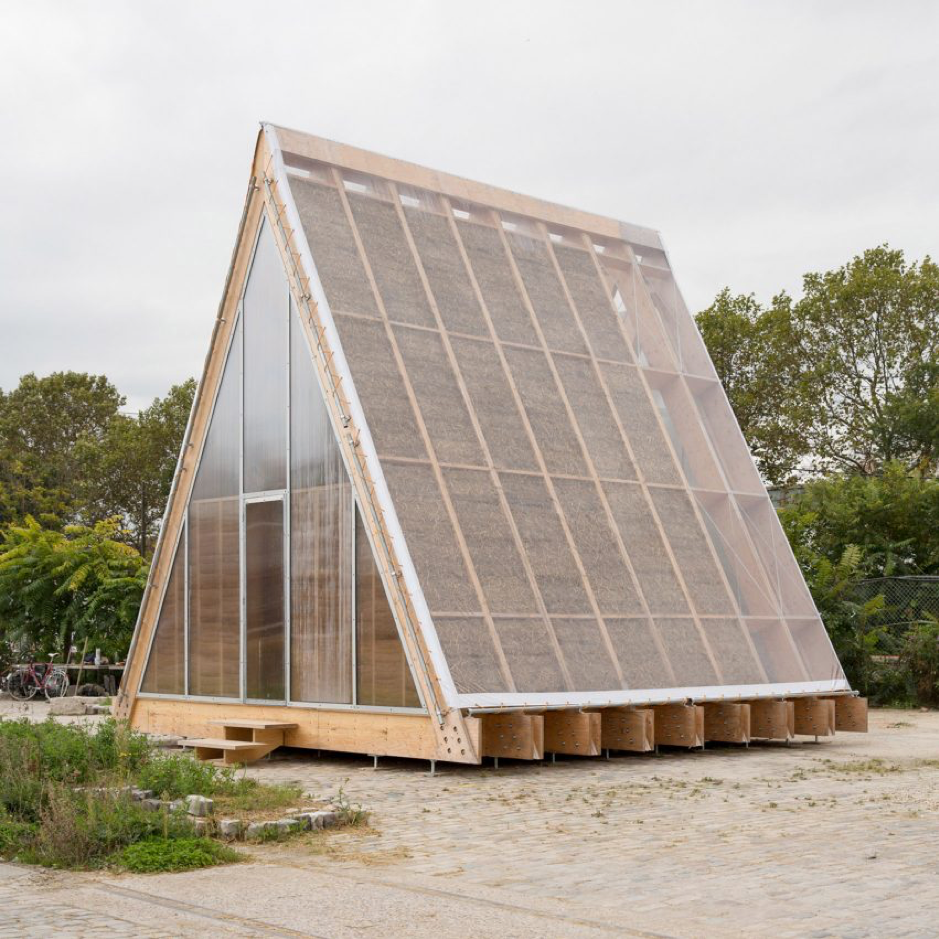
Just a stone’s throw from Paris’ La Station Gare de Mines sits triangular shaped day shelters built in a collaboration by Atelier Craft and ICI. The aim is to offer refugees in the French capital a place to relax and unwind, away from the bustling city.
The tall timber structures provide a safe and temperate space for people to meet, socialise, as well as to partake in mental health support sessions and cultural activities.
Each one comprises of a fully modular frame, allowing them to be deconstructed and moved to other areas of the city or across the country as needed.
Credit: Re: Ukraine
Re: Ukraine
Back in March, it was reported that Ukraine had seen around 4,000 homes and 6,000 buildings already destroyed by Russian shelling. That number has continued to climb as unwavering attacks occur near the country’s Eastern border.
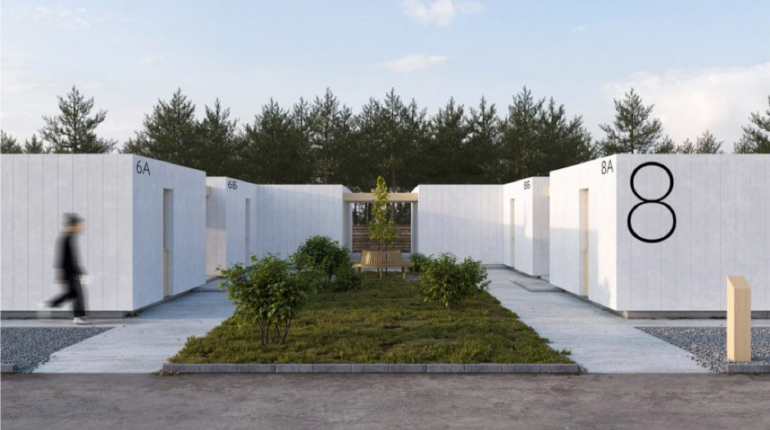
As millions of Ukrainians are forced to flee to the West where things are relatively safer from the threat of invasion, a local studio based in Kyiv has proposed designs for a temporary housing complex called ‘Re: Ukraine’.
The concept, designed by a Kyiv-based studio called Balbek Bureau, uses modular timber-framed boxes which can create affordable settlements for 100 – 8,200 people, fitted with green spaces and children’s playgrounds amongst other amenities.
After meeting with architects from the Balbek Bueau, the project was co-signed by Ukrainian president Zelensky who supported the idea of developing new towns for people to reunite in safety and rebuild their lives within a community setting.
Credit: Better Shelter
Better Shelter
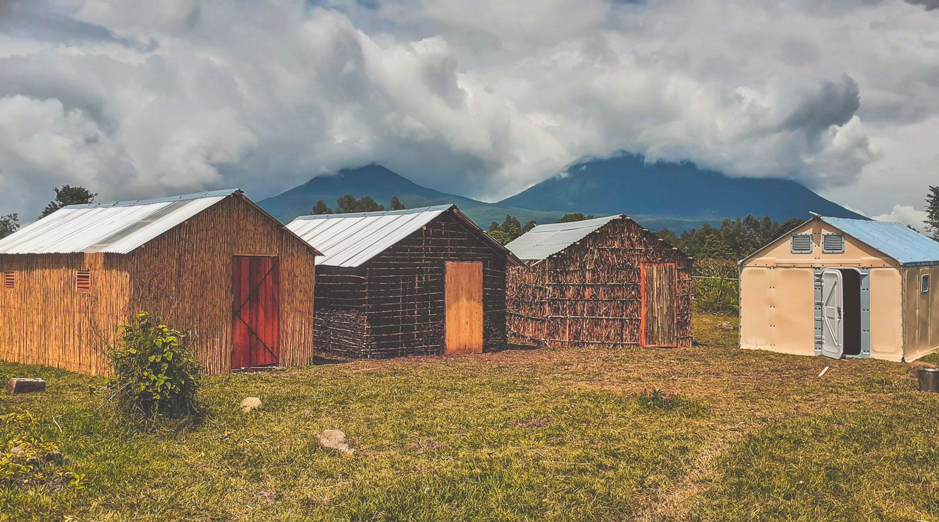
In Rwanda, India, Afghanistan, and Tajikistan, sustainable housing is being built in direct response to ongoing refugee crises caused by climate disasters.
Better Shelter, based in Stockholm Sweden, communicates with on-the-ground humanitarian aid partners who guide structural designs by outlining which materials are most practical and well-suited to the local environment.
The workshop both produces the housing materials and delivers the supplies. Once they arrive, the houses are quickly assembled by aid workers with no need for tools or electricity.
Each home includes a door with a lock, a solar-powered lamp, and is made with materials also found in sites where they are built such as bamboo, timber, or wattle and daub (woven lattice made from strips of wood).
Though this quick-build housing concept has been designed for emergency situations, planning ahead and incorporating materials local to the destination site gives residence the option of adapting them for longer use. Longevity is key!
Credit: SuperAdobe
SuperAdobe Homes
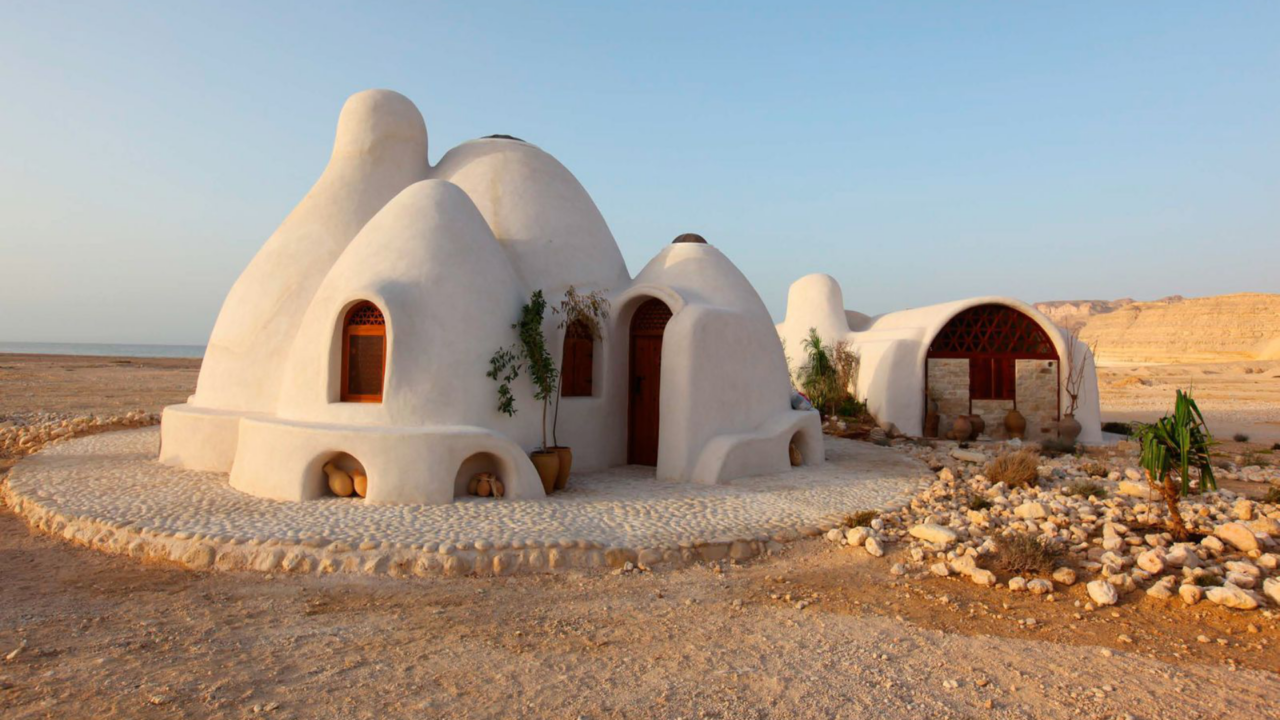
The last but not least of all sustainable housing solutions was created by the late Iranian architect Nader Khalili.
Travelling through Iran during the 1970s, he observed the structures of local villages and was inspired by the homes he saw, which were made of basic materials that can be sourced virtually anywhere.
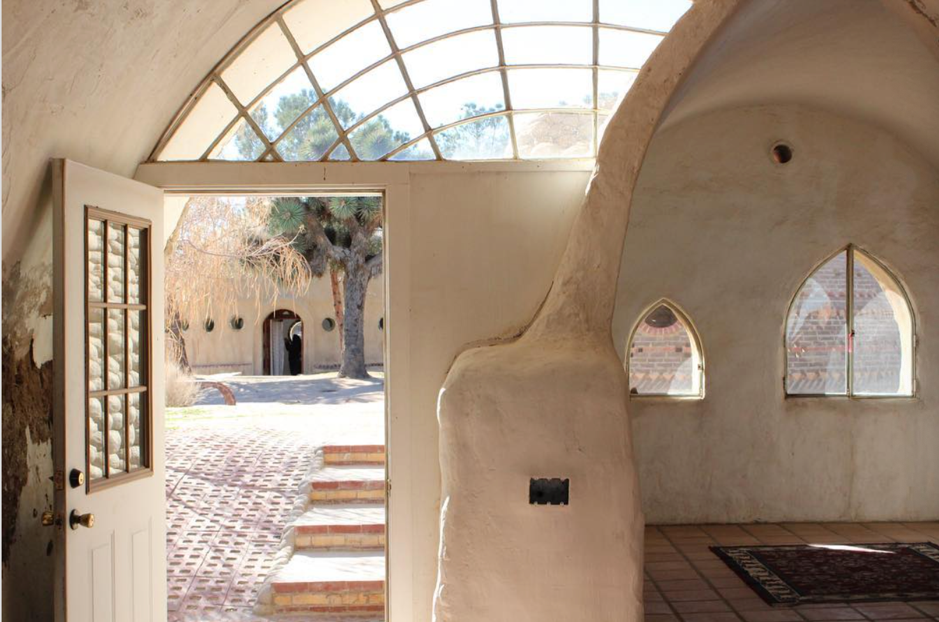
Khalili began developing his first sustainable houses in Jordan using polyester bags filled with soil or clay, stacking them on top of one another to form walls, and securing them together using barbed wires before adding an outer coating of clay or soil.
The simplicity but sturdiness of the structure was motivated by the desire to protect the world’s most vulnerable people. Khalili was acutely aware of the impending climate crisis, which guided his architectural process.
Fast forward to today, and his concepts have been snapped up by NASA for future housing projects on the moon, have been labelled ‘disaster proof’ after withstanding earthquakes and wildfires, and are continuously endorsed by the UN.
Khalili’s children are keeping his legacy alive through the foundation Cal-Earth Institute, which continues to build homes and offers online classes for learning their father’s practical, visually stunning techniques.
Deputy Editor & Content Partnership ManagerLondon, UK
I’m Jessica (She/Her). I’m the Deputy Editor & Content Partnership Manager at Thred. Originally from the island of Bermuda, I specialise in writing about ocean health and marine conservation, but you can also find me delving into pop culture, health and wellness, plus sustainability in the beauty and fashion industries. Follow me on Twitter, LinkedIn and drop me some ideas/feedback via email.
Shane Gillis’ uninspired, unfunny SNL monologue proves sexist humour is still shaping our social norms.
Forgive me for thinking that as a society we’d passed the point of giving men a platform to call women ‘whores’. Turns out we haven’t. Not only did Shane Gillis have free reign to do just that this weekend, he did so on live television, delivering an uninspired SNL monologue in which he mocked women...
The new judge is dismantling diet culture with big bites and no nonsense. We need more of this on TV, now more than ever.
I’ve always loved Nigella Lawson. I’m a fellow foodie, I’m a writer – which means I’ve devoured her written recipes as fervently as the dishes themselves – and I’m also a woman. Nigella has always represented the essence of womanhood in my eyes. She’s confident and unapologetic...
Gen Z subscribes to everything from music and films to software and storage, paying endlessly for things we never actually own. As ownership is increasingly replaced by access, are subscriptions making life more convenient - or creating a generation that pays forever and owns nothing?
There was once a revolutionary economic model called buying something.
You handed over money, gold, or whatever the currency was. Someone gave you the purchased item....
Recruiters are debating on TikTok whether it’s okay to bring iced coffee into a job interview, highlighting discrepancies in professional standards between different generations and industries.
Would you bring iced coffee into a job interview?
A debate has been underway on social media this week as Gen Zers and older professionals consider whether it’s ‘inappropriate’ or an unnecessary restriction that makes new, potential employees uneasy.
It began when TikToker @caitlinrecruiter uploaded...
We use cookies to ensure that we give you the best experience on our website. If you continue to use this site we will assume that you are happy with it.






























 0 comments