After weeks of public pushback, all Tate galleries are cutting ties with billionaire Russian investors amid the war in Ukraine.
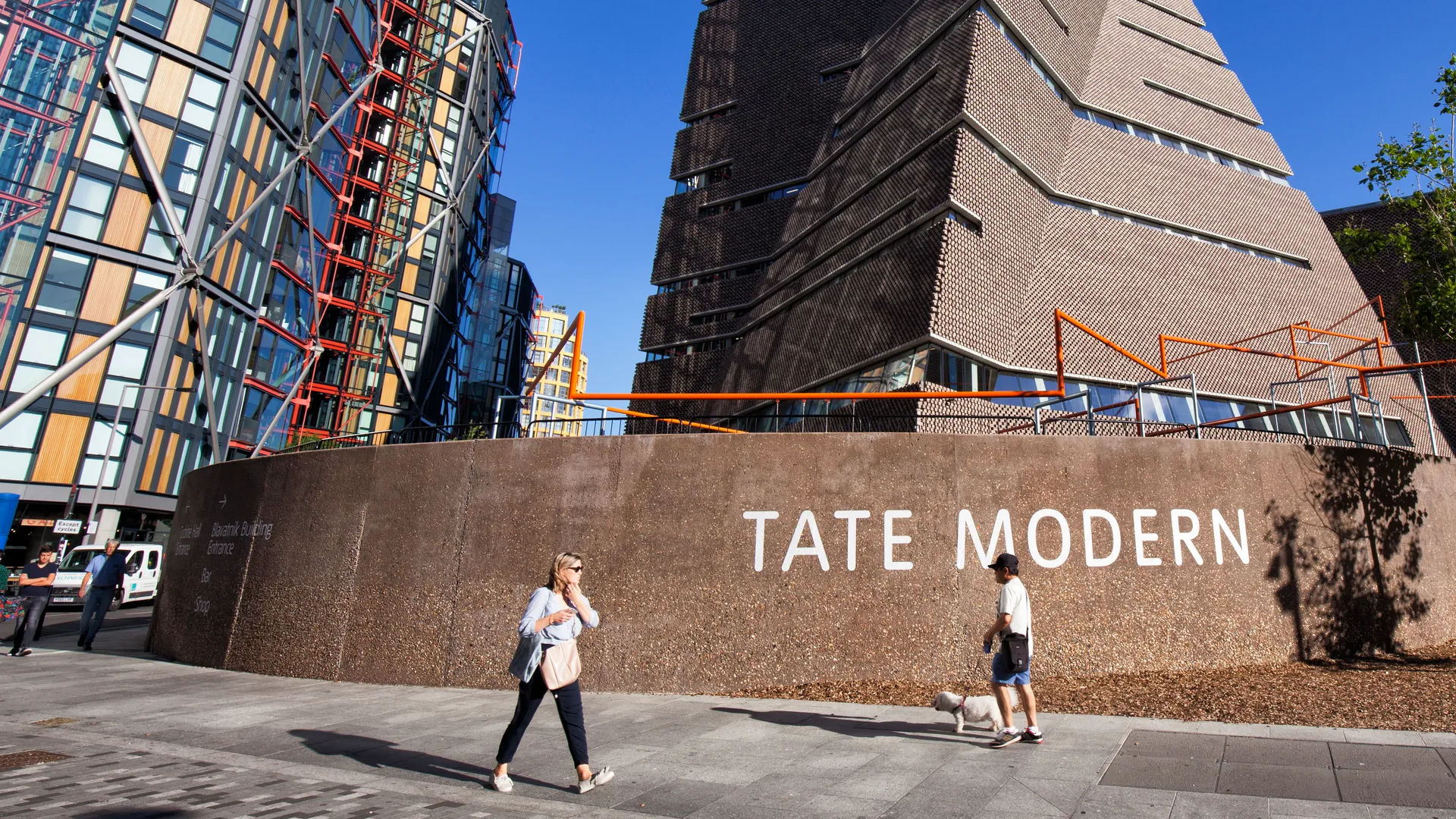
Tate Group, the institution which operates Tate Modern, Tate Britain, Tate Liverpool, and Tate St Ives, has severed ties with Russian investors Viktor Vekselberg and Petr Aven.
The two billionaires had invested in the Tate galleries to earn prestigious membership titles for the Tate Foundation, a charitable organisation that aims to ‘deliver a wide range of educational and artistic programmes across the UK’ and ‘increase public understanding and enjoyment of art.’
Companies across the globe have been implementing sanctions on Russia since Putin invaded Ukraine in late February. Athletic conglomerate Nike was one of the first to halt sales to Russia, with other large brands including H&M and LVMH quickly following suit.
Now, Russian individuals with ties to Putin are being targeted. Vekselberg, founder of a Russian energy company, and Petr Aven, a Russian banker and art collector, have been hit with sanctions across both the US and EU.
Tate issued a public statement last week, claiming that ‘Mr Vekselberg donated [to the institution] seven years ago and no longer holds his honorary membership title.’
The gallery’s dismissal of Vekselberg and Aven comes after swathes of British cultural institutions rush to distance themselves from wealthy donors linked with Putin’s government.
US leaders have also released a list of prominent individuals to be targeted with national sanctions, stating on Friday that Vekselberg had ‘maintained close ties’ with Putin and his private jet and yacht had been marked as ‘blocked property.’
Aven also boasts a $5.5b fortune, and owns the lavish Ingliston House near Virginia Water in London. The sprawling estate covers 8.5 acres and houses a collection of artworks including those by Kandinsky, Henry Moore, and Antony Gormley.
Labour MP Chris Bryant said last week that supporters of Putin should be ‘removed’ from Britain’s cultural institutions, encouraging Tate to sever ties with Kremlin-linked investors.
Vekselberg’s expansive wealth, totalling around $9.3bn, has been used to invest heavily in western institutions. Beyond Tate, the oligarch had also donated to the US Lincoln Center and Massachusetts Institute of Technology.
Both spaces were quick to remove Vekselberg from their boards following Putin’s invasion of Ukraine, while Tate was slow to take action. Bryant criticised the gallery’s passive response; ‘Of course Putin supporters should be removed from our cultural institutions’ he said. ‘Galleries and museums should run a mile from blood-drenched Russian money.’
Tate’s initial response to public criticism was vague, suggesting that Vekselberg and Aven’s historic donations didn’t constitute sanctions; ‘Neither of these individuals are current donors, and there are no UK sanctions on any of Tate’s supporters.’
But just this week, the institution made a sharp U-Turn. ‘Mr Aven’s support of Tate has now ended’, the group announced publicly. Aven’s recent donation the Francis Bacon exhibition ‘Man and Beast’ at the Royal Academy was also returned earlier this month, after he stepped down as a trustee of the gallery.
Tate has confirmed that it now holds no further relationships with donors, past or current, associated with the Russian government. Those in question have refused to comment, rejecting the sanctions as ‘spurious and unfounded.’
The art world’s ability to sanction governmental powers is a nod to the industry’s expansive role in shaping our socio-political landscape. Tate’s removal of Aven and Vekselberg is a positive step in protesting the war on Ukraine, but extortionately valuable artworks remain in the hands of Russian oligarchs.
Ironically, many of these pieces were created by artists on the fringes of society. Those like Kandinsky, who adopted an abstract style to project an anti-institutional sentiment and celebrate bourgeois identity.
Public pressure on British galleries like Tate reveals this avid belief that art has the power to change things. But perhaps it is simply a means to our peace of mind, a way of assuring ourselves that the need to observe conflict can be justified by protesting those who profit from it.
Now, as we watch Putin wage war on Ukraine, the art world is re-exploring its wobbly relationship with conflict. The Clark Art Institute in Massachusetts has unveiled a new show, ‘As They Saw It: Artists Witnessing War’. The collection of drawings, paintings, and photographs unpicks our thwarted fascination with war, and our unending desire to document it.
The actions of Tate and other art institutions highlight this sobering fact: that whether created as a responsive commentary, or claimed as a pawn in international conflicts, artworks continue to hold immense power over global relations and everyday life.
I’m Flo, (She/Her) a Senior Remote Writer at Thred. I recently completed a Masters in Visual Anthropology, and seek to interrogate the ways digital spaces can amplify marginalised voices in the arts and cultural sectors. Follow me on LinkedIn or ping me some feedback via email.
Rapper and musician Macklemore has been removed from Ed Sheeran’s ‘The Loop’ tour after making comments on stage regarding Palestine. He took to Instagram to explain and defend his position, arguing that ‘there is no neutral position between the oppressor and the oppressed.’
Macklemore has reportedly been dropped from Ed Sheeran’s ‘The Loop’ tour following his comments on Palestine during a recent performance.
https://www.youtube.com/watch?v=UmSErSKL874
He had been the opening act for the...
Researchers from consumer group ‘Which?’ say they’ve successfully listed 10 Downing Street on Booking.com as part of a security test. The property was ‘available’ for two months before being removed.
Fancy a stay on Downing Street? Consider yourself a future Prime Minister and need to trial run your accommodation? We’ve got you covered.
Well, not really, but consumer group ‘Which?’ says it successfully listed 10 Downing Street on popular property and...
If findings from recent research are anything to go by, the answer is yes.
Around 60 million Europeans have at least one tattoo. Personal ink is hardly the taboo it was a few decades ago, but that doesn’t mean it’s warmly welcomed in the workplace.
Dr Alyssa Grocutt spent several months researching tattoos, and found that employers are ‘still less likely’ to hire candidates with visible tattoos. Grocutt has hundreds...
The booming world of rapid, vertical mini dramas has generated a multi-million dollar mobile entertainment industry. It’s also fuelled worker exploitation, low wages, and suffocating schedules.
Is TV getting dumber? In today’s post-literate society – an era Rose Horowitch deftly explores in a recent piece for The Atlantic – how we entertain ourselves is a hot topic.
From the second-screen problem to the rise of AI-generated content, the general consensus is...
We use cookies to ensure that we give you the best experience on our website. If you continue to use this site we will assume that you are happy with it.
































 0 comments