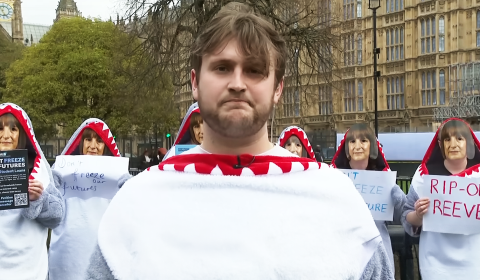
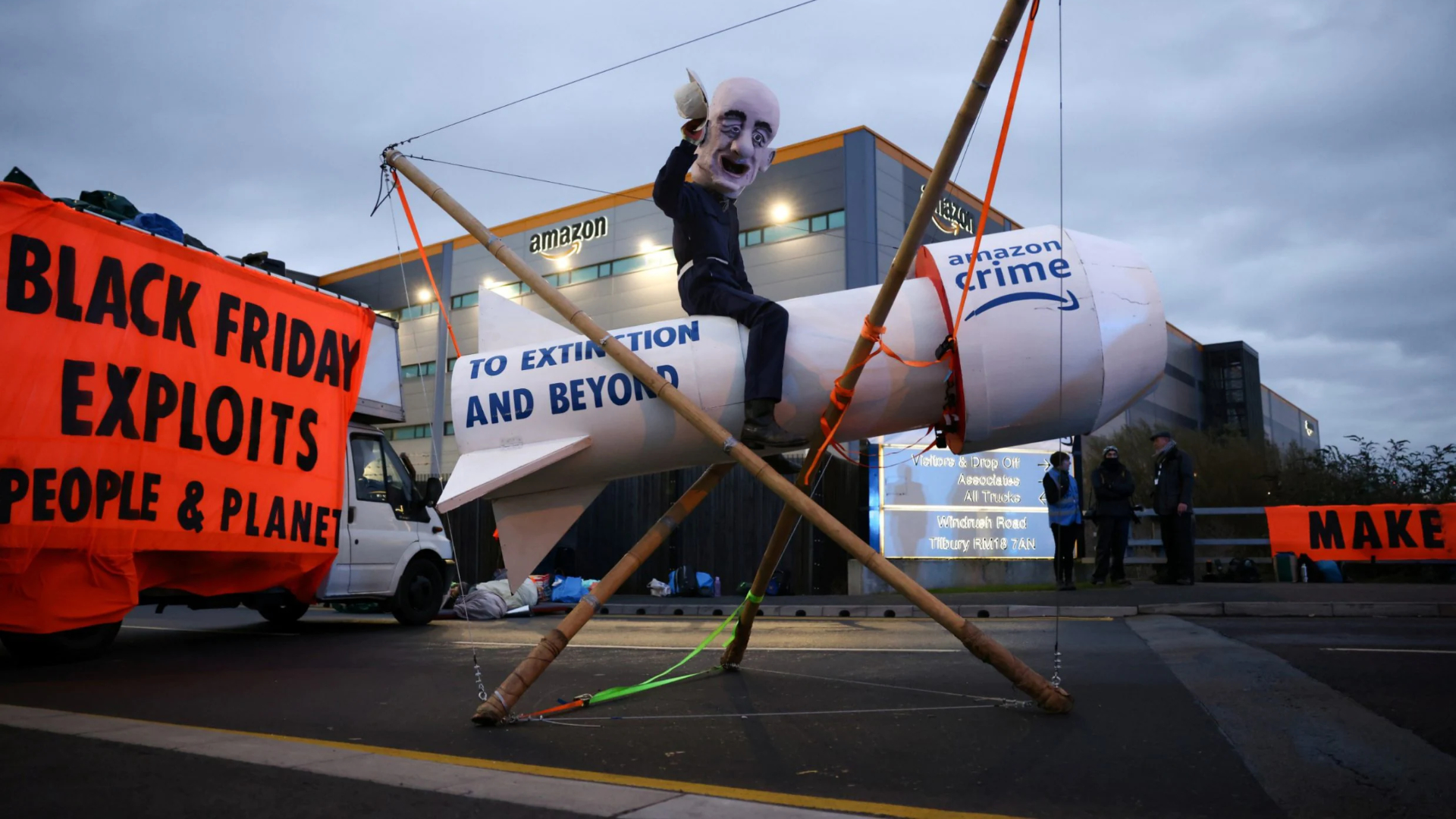
Protestors blocked fifteen Amazon warehouses across the UK, Germany, and The Netherlands ahead of Black Friday.
In recent months, the activist group Extinction Rebellion has ramped up their efforts significantly.
They’ve regularly taken to city streets, made appearances at COP26, and now, are blockading streets around Amazon warehouses ahead of the busiest shopping weekend of the year – and with good reason.
Although snagging a deal on Black Friday feels like a win, the amount of emissions created by retailers as they ship out millions of purchases is exceedingly high.
Researchers have predicted that 386,243 tonnes of carbon could be emitted globally by the sale and shipment of this weekend’s purchases alone.
The not-so-holy grail of online shopping, Amazon, will contribute massively to this figure, given that their annual carbon footprint is bigger than that of entire nations, for example, Switzerland’s.
The website’s mission to sell and quickly deliver cheap products saw Amazon emit 44.4 million metric tonnes of carbon dioxide in 2018 – the equivalent of 215,778 return flights from London to Sydney.
To raise awareness, activist group Extinction Rebellion has blockaded roads outside of Amazon warehouses across Europe – specifically in the UK, Germany, and The Netherlands.
In the Britain, warehouses responsible for up to 50 percent of national Amazon deliveries were targeted, preventing thousands of shipments from going out in a timely manner.
But the motivation behind Extinction Rebellions protests lies not just in disrupting Amazon’s environmentally destructive operations. It is also rooted in taking a stand against the company’s code of ethics.
It is widely known (and sadly, accepted) that Amazon treats its employees poorly. In just the last three years, over 1,000 ambulances were called to the company’s UK-based depots.
Workers from hubs world have spoken out about crowded break times, abruptly cancelled shifts, insufficient safety regulations, and Amazon’s total disregard for worker illnesses and disabilities.
On top of this, the immense pressure to hit shipment targets is worsened by a lack of humanity within management, with workers being constantly monitored by computer algorithms and cameras.
As such, Extinction Rebellions main message when protesting outside European depots is to promote their new campaign: ‘Make Amazon Pay’.
The activists are calling for the public to cancel their Prime memberships and to stop purchasing from Amazon altogether.
As we know, the concept of Black Friday is rooted in our modern obsession with the overconsumption of goods: buying things we don’t need and that we otherwise couldn’t afford without major price drops.
Amazon’s culture is shaped around a similar concept – getting what we want, when we want it, like, now. This is simply unachievable without subjecting the planet and workers to unsustainable practices.
A former worker for Newcastle’s Amazon hub said it best: ‘[The company’s] business model has enabled massive growth. As its empire grows, so does its exploitation.’
Extinction Rebellion have set an ambitious goal to dismantle one of the world’s most prolific shopping websites, but activists from the group have promised that they will continue their campaign until something changes.
Speaking from outside an Amazon warehouse, the group stated, ‘we are only just beginning.’
Deputy Editor & Content Partnership ManagerLondon, UK
I’m Jessica (She/Her). I’m the Deputy Editor & Content Partnership Manager at Thred. Originally from the island of Bermuda, I specialise in writing about ocean health and marine conservation, but you can also find me delving into pop culture, health and wellness, plus sustainability in the beauty and fashion industries. Follow me on Twitter, LinkedIn and drop me some ideas/feedback via email.
In 2015, Gambia banned female genital cutting, making it one of the few countries in West Africa to criminalize the practice. On the grounds of culture and tradition, this progress is now under threat of unravelling.
The legal system in Gambia is currently experiencing a second challenge to the ban on Female Genital Mutilation (FGM).
Through the courts, religious organizations and a member of parliament are making arguments that the...
We’ve heard plenty about how the manosphere is radicalising young boys, but is it having as big an impact as institutions are claiming? Initially used to describe lowly incel gatherings, the term has snowballed into a loose catch-all for elements that don’t always align.
Louis Theroux has a new Netflix documentary on the way for March titled Inside The Manosphere.
Predictably, the promo includes cutaways of online personalities like Sneako, HStikkytokky,...
HR teams are reporting being bogged down by overly lengthy grievances framed around legal precedents that don’t even exist. Rearing its head on a daily basis, the culprit is generative AI.
Have you ever felt so aggrieved you couldn’t articulate yourself properly? Maybe you considered letting AI be angry for you?
If the answer is yes, and your choice of battleground was email, you may be one of a growing number...
Interest rates are accumulating by the second, and young people are leaving university saddled with debt. When did student finance become such a political minefield?
Student debt has always been an unsavoury aspect of adulthood. It’s long been accompanied by hushed tones and avoidant stares. Nobody wants to talk about the fact they’re tens-of-thousands of pounds in debt before the age of 25.
But before I went to university it was...
We use cookies to ensure that we give you the best experience on our website. If you continue to use this site we will assume that you are happy with it.
































 0 comments