






 0 comments
We’re living through transformative times. I’m not sure whether it’s a good thing.
When Nick Arter first downloaded Suno and Udio – off-the-shelf AI music tools – he wasn’t thinking about a career comeback.
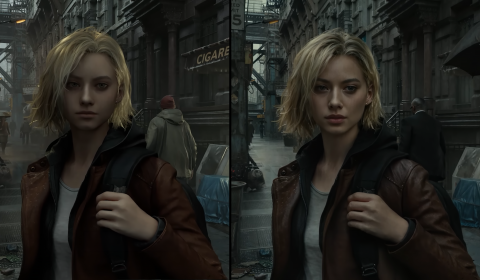
He was a 35-year-old call-centre drone in Washington, D.C., who’d long since abandoned dreams of being a professional rapper. But somewhere between composing prompts, tweaking lyrics, and using Midjourney to conjure album art, Arter discovered that you don’t necessarily need to be human to have a hit on your hands.
And that, dear reader, is the paranoid, existential-crisis-in-a-studio moment we find ourselves in: the era of the AI artist.
Arter grew up in Harrisburg surrounded by ’90s hip-hop – his family’s record collection full of Jay-Z, Nas, Biggie – and his uncles spun ’70s R&B. Yet even at university, music was always a side hustle (though not for lack of trying).
When Arter turned to AI, something clicked. He could generate melodies, furnish lyrics, even invent an alter ego: Nick Hustles, a slightly mythologised version of himself, powered by neural nets. Now, he’s racked up hundreds of thousands of streams on Spotify. All he had to do was write prompts, choose the best bits, and polish things slightly.
To Arter, AI is a democratic bypass of old-school gatekeepers. No need for label meetings or A&R smoke-filled rooms. All it takes is you, a text box, and the chance to build something (convincingly) real.
If Nick Hustles is gentle proof of AI’s creative upside, then ‘Breaking Rust’ is its full-blown rodeo spectacle.
Over the past month, ‘Walk My Walk’, a generic country tune featuring every cliche in the cowboy playbook, hit No. 1 on Billboard’s Country Digital Song Sales chart. The artist is an AI-powered bot, whose overnight success is the result of limited AI regulation on streaming platforms. This kind of technology has had growing impact on song writing, as Breaking Rust and his peers go to show.
But its the permissiveness of these platforms that allows AI to ostensibly thrive, as Andrew Chow reports for Time. For one thing, Breaking Rust’s position in the charts is far from the star-making turn the media’s made it out to be.
‘Because very few people actually buy digital songs anymore, it only takes a few thousand purchases to top the Country Digital Song Sales chart,’ writes Chow. ‘So ‘Walk My Walk’ is No.1 in one metric, but not a meaningful one.’
Ironically, this manufactured buzz machine replicates the artificial origins of the music itself. We’re living in an augmented digital reality time warp.
If Arter’s story is hopeful (the democratization narrative), and Breaking Rust’s is cautionary (the Optical Illusion narrative), then the future of creativity in the age of AI remains murky.
On one hand, proponents argue AI offers a genuine creative outlet. For people who lack traditional access — whether because of age, background, or connections — AI can level the playing field. Arter embraces his limitations, using technology not to erase his humanity, but to amplify his voice.
On the other hand, this could become a dystopian race to the bottom. As we’ve seen, some AI-generated tracks flood streaming platforms, possibly inflating their numbers through non-organic engagement.