






 0 comments
While aversion to it isn’t unanimous, NVIDIA’s DLSS 5 has received far more flack than praise. The AI graphics filter is being slammed as a slap in the face to game designers and a sad indictment of how generative tools are taking over creative spaces.
People are already thirsty for Leon. He doesn’t need a yassify filter.
If you missed NVIDIA’s recent demo, the company unveiled DLSS 5 as the next big leap in AI-assisted gaming performance – and the supposed ‘greatest’ advancement in gaming visuals since Ray Tracing.
Put simply, DLSS 55 takes frames a game has already rendered, reads underlying data like object movement and scene depth, then uses AI to generate extra lighting, material, and image detail to be overlaid in real time.
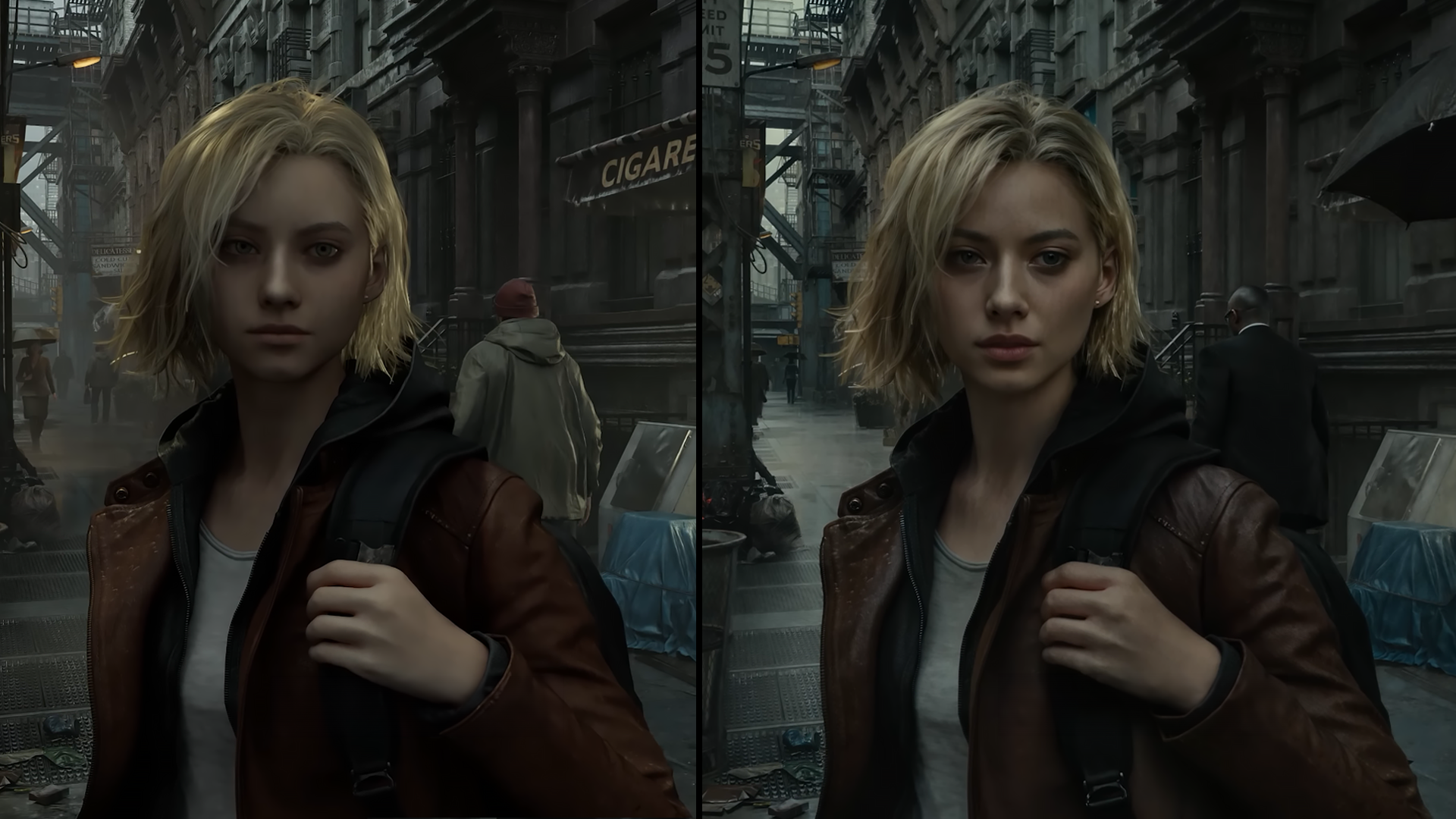
Unfortunately, the reality is less sophisticated than it sounds. When toggled on, intricately designed character models like Resident Evil Requiem’s Grace Ashcroft are transformed into the sort of sheen-heavy, over saturated (both literally and figuratively) figures we’ve become accustomed to seeing on Snapchat or dodgy ad banners online.
While the technology’s parameters ensure that some essence of the original scene remains, the finer creative details are replaced by overly polished assets. Not only do the characters appear illuminated by hero lighting, as though an LED ring light is plugged in out of view, but atmosphere is also traded for a more ‘photo realistic’ reimagining of the environment.
In the case of Resident Evil Requiem, immersion is not only broken by a yassified Grace and muted light sources that no longer bounce off the surrounding objects, but also by the AI erasing the natural effects of the gloomy, low visibility weather in the original game. In other words, intricate design choices are being overridden by an MO to make everything appear more ‘real’.
The Hogwarts Legacy example shows just how jarring this has the potential to be. The game’s character models are intentionally designed to have a semi-realistic yet animated feel, but the DLSS 55 clumsily plonks a photo-realistic face – complete with unnecessarily plump lips and shimmering pores – on the character’s neck. The result isn’t cinematic. Hell, uncanny valley wouldn’t even cut it as a description. It just looks utterly ridiculous.