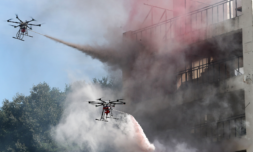
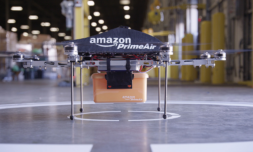
Every year, Mount Everest’s team of Sherpas risk their lives to guide foreign adventurers to the mountain’s peak. New drones could soon ease their burdens, carrying essential medical supplies and heavy climbing equipment.
The climb up Mount Everest is one of the world’s most dangerous adventures, with around four people losing their lives on the journey each year.
Warmer temperatures caused by climate change have made the mountain’s ice cover less stable, increasing this number to an average of 8 annually over the last decade.
Sherpas sadly accounted for a significant portion of those deaths.
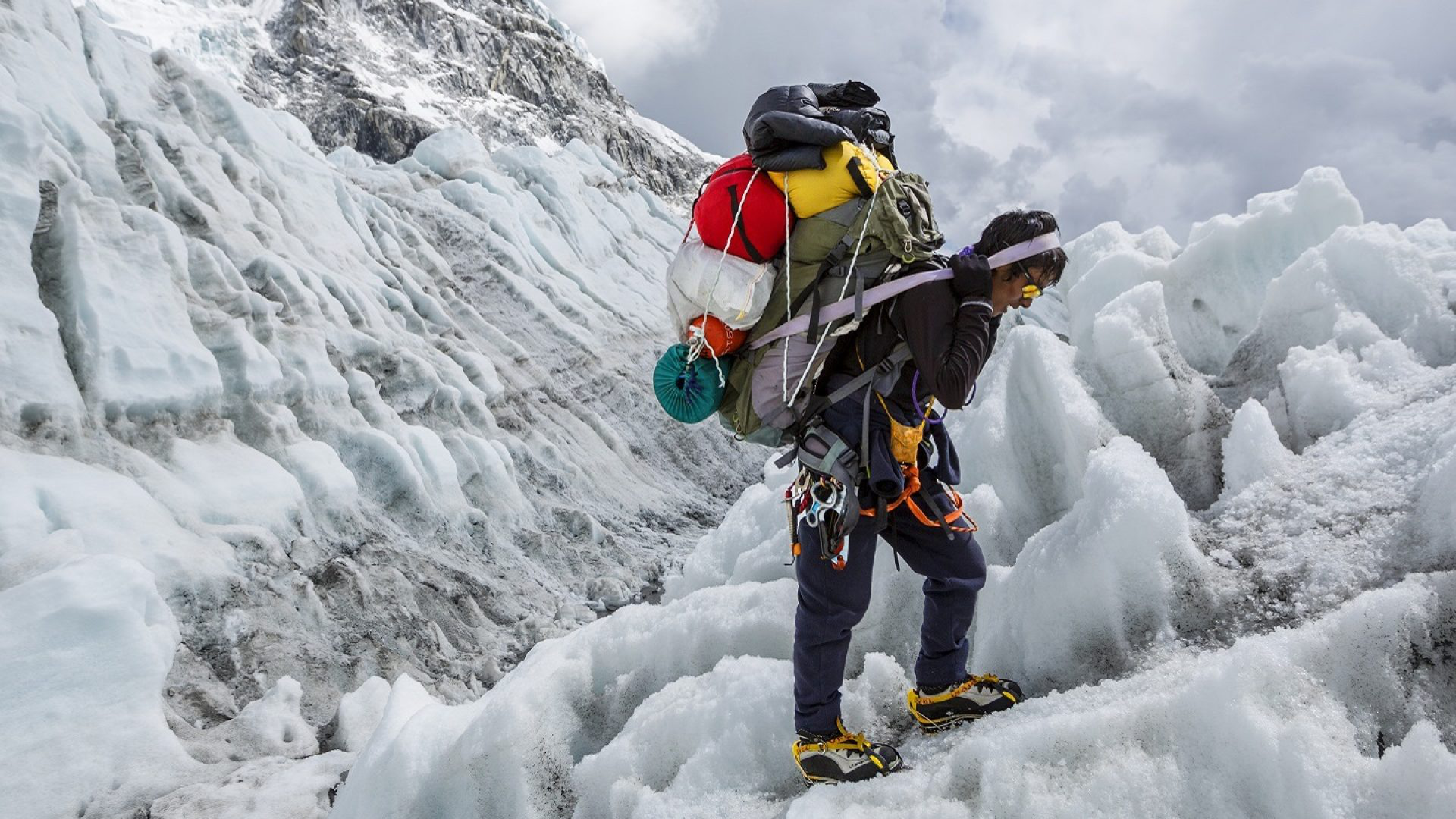
Sherpas are highly skilled and experienced climbers from the Nepalese highlands, known for carrying supplies and fixing ropes for foreign climbers while guiding them to the top of the world’s biggest mountain.
For decades, they have carried heavy loads through Everest’s multi-level, treacherous terrain to assist wealthy visitors who seek the ultimate adventure.
During each 2-3 month climbing season, Sherpas are typically paid around $5,000 US dollars. This is a modest sum when you consider the daily danger they face, not to mention the knowledge that many before them have lost their lives on the job.
Now, drone technology is explored as a way to relieve some of the Sherpa’s burdens while improving overall safety for all who venture up to Everest’s summit.
This year’s peak climbing season will see expedition companies test the use of drones to assist Sherpas with transporting essential goods up and down the mountain.
Everest’s new drones are capable of carrying loads as heavy as 35 pounds, meaning they will have no problem transporting equipment essential to the mountain trek, such as ladders and oxygen cylinders.
It is also believed that the drones could be used to address Everest’s growing pollution problem by helping to transporting waste from high-altitude areas, including the mountain’s peak and numerous base camps.
The use of drones will reduce the time and risk involved in climbing to Everest’s 8,849 metre summit by making a a seven hour journey on foot possible in as little as 15 minutes.
The idea for using drones on Everest came in part as a response to the tragic events of 2023, when three Sherpas died in an avalanche while fixing ropes for climbers. Tragically, their bodies could not be recovered because such rescue missions are largely considered too dangerous.
Looking for ways to improve safety, Mingma G. Sherpa, the managing director of Imagine Nepal, was inspired by Chinese expedition companies using drones on Muztagh Ata, a peak in China.
The success of these drones in ferrying climbing gear, food, and other supplies sparked the idea to test their application on Everest, especially in the notoriously dangerous Khumbu Icefall.
In addition to their role in transport, Everest’s drones are expected to assist in the critical task of mapping safe routes through the ever-shifting icefall.
By using geolocation technology, drones will be able to remove many of the challenges involved in identifying and preparing new paths each season.
Drone operators are hopeful that these devices will reduce the load Sherpas’ need to carry, as well as the likelihood of fatal accidents, which have been increasing due climate change’s impact on the mountain’s conditions.
Because the drones can navigate quickly and precisely, they will reduce the number of climbs needed to transport essential medical supplies.
The drones are being tested by a team of pilots, including those from AirLift, a Nepalese drone startup. These trials will serve to demonstrate the technology’s viability, and hopefully attract investment from expedition companies.
While the introduction of drones seems like a no brainer, their presents an obstacle in implementing them on Everest or on other mountains.
The initial cost of drones is extremely high, sometimes exceeding $70,000 after factoring in taxes, batteries, and additional components.
Still, the use of drones will lower operational costs for expedition companies in the long-term by reducing the number of trips Sherpas need to make, and by minimising the risks involved with every climb.
Start-ups like AirLift are seeking for ways to drive down costs. This includes exploring the option of assembling drones within Nepal, which could reduce the overall price by more than half.
If successful, these trials could make drone technology more widely accessible in the climbing world.
They would also improve safety for and the livelihoods of Sherpas who risk so much to help adventurers reach their goal of reaching the world’s tallest summit.
Deputy Editor & Content Partnership ManagerLondon, UK
I’m Jessica (She/Her). I’m the Deputy Editor & Content Partnership Manager at Thred. Originally from the island of Bermuda, I specialise in writing about ocean health and marine conservation, but you can also find me delving into pop culture, health and wellness, plus sustainability in the beauty and fashion industries. Follow me on Twitter, LinkedIn and drop me some ideas/feedback via email.
Gamers have started mashing together different video games using AI tools. So far, we’ve seen Mario in Halo, Minecraft in Skyrim, and much more. Mind-bending results aside, the tech required to pull this off has some people worried about online security and digital infrastructure.
Ever wondered what Super Mario 64 would look like in Halo: Combat Evolved? How about Wii Sports in Silent Hill? Fancy a Minecraft session in the...
With Gen AI now capable of creating functional molecular structures, Google has come up with a new system to tackle imminent biosecurity risks that come with such innovations.
Before modern AI, much of computational biology focused on storing, searching, and comparing biological data. Public databases allowed scientists to check whether a newly identified sequence resembled something already known, but that was it.
However, this changed in 2020, when Google DeepMind unveiled...
With America’s space ambitions only continuing to grow, Trump is turning his focus to the industry’s workforce that could keep the US ahead of adversaries like China.
In both his terms in office, aside from immigration and anti-wokeness, President Donald Trump’s focus has increasingly turned towards the space front. In 2019, he established the US Space Force (USSF), emphasising the growing importance of space to national security.
But this interest...
Gen Z subscribes to everything from music and films to software and storage, paying endlessly for things we never actually own. As ownership is increasingly replaced by access, are subscriptions making life more convenient - or creating a generation that pays forever and owns nothing?
There was once a revolutionary economic model called buying something.
You handed over money, gold, or whatever the currency was. Someone gave you the purchased item....
We use cookies to ensure that we give you the best experience on our website. If you continue to use this site we will assume that you are happy with it.






























 0 comments