






 0 comments
The nation’s fusion reactor’s recent advancement broke theoretical limits, doubling the potential energy of future reactors, which can now be smaller and cheaper.
La Niña’s cooling effects mark a sharp contrast to the record-high temperatures driven by El Niño at this time last year.
Yet, with each passing year, the stakes of climate change rise, as we increasingly find ourselves living the future we were once warned about. When it was signed, the Paris Agreement was a landmark in environmental diplomacy, yet, 10 years later, it means almost nothing in the climate fight.
However, not all hope is lost as the International Energy Agency (IEA) expects renewable sources of energy to make up 36% of the world’s power, higher than coal’s contribution of 32%. This was attributed to hydropower, being the world’s largest source of renewable electricity, coupled with solar and wind energy’s growing demand in the last few years.
Nonetheless, science has given us the opportunity for a new source of sustainable energy, one that seems almost impossible, but has proven laudable for its astounding mechanics: nuclear fusion.
China’s artificial Sun
Inside China’s Institute of Plasma Physics in Hefei, lies the Experimental Advanced Superconducting Tokamak (EAST), otherwise dubbed as the ‘artificial Sun’. This hefty piece of technology was built for the sole reason to prove that nuclear fusion could be steady and sustainable, whereas previous reactors only proved that fusion was possible.
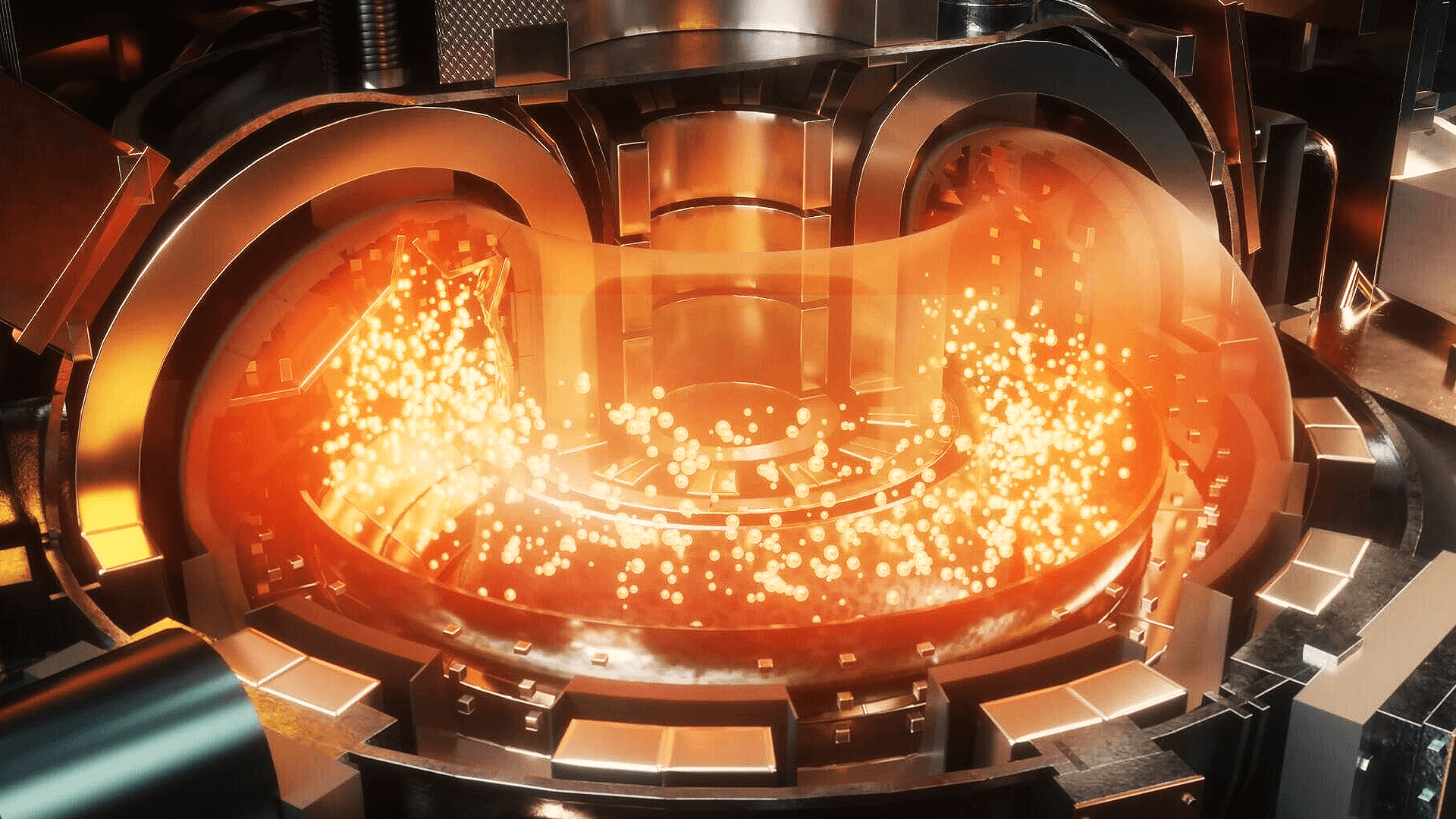
The way EAST works is that deuterium, which can be obtained from seawater, is pumped into a doughnut-shaped vacuum chamber. Then scientists hit it with massive amounts of energy, to turn gas into plasma, which is essentially a soup of charged particles. In future commercial use, the heat produced would be used to boil water, create steam and spin a turbine to generate electricity.
One issue that has persisted throughout global fusion reactor development is the Greenwald Limit which caps how much fuel a reactor can hold. Since higher density is required to produce more energy, this limit prevents reactors from reaching ignition.
Ignition is essentially the point where the reaction becomes self-sustaining, generating enough of its own heat to stay running without external power. Without it, the reactor consumes more energy than it produces. However, with it, fusion becomes a viable, ceaseless power source.
So, for about 38 years, this limit acted as an unbreakable ceiling, until EAST raised the eyebrows of skeptics.
The breakthrough
On January 1, expected working on EAST published a study wherein they revealed that the tokamak had successfully operated outside the limit, which they called the ‘density-free regime’.
In fact, they exceeded expectations as the reactor’s plasma had remained perfectly stable with the density reaching 1.3 to 1.65 times the theoretical limit. This breakthrough means that it is very much possible to achieve stable plasma with higher density, leading to more energy being generated from the reactor.
This breakthrough was built upon its previous one, wherein the reactor managed to maintain a steady-state, high-confinement plasma for 1,066 seconds – about 17 minutes and 46 seconds. This more than doubled the previous record of 403 seconds. Moreover, the plasma was held at over 100 million degrees Celsius; in context the Sun is only 15 million degrees Celsius.