Self-care has become an exercise in intentional self-indulgence that plays itself out in compassion fatigue and treat-yourself culture. Instead, we ought to look to the origins of the self-care movement: a community project and an act of resistance through solidarity.
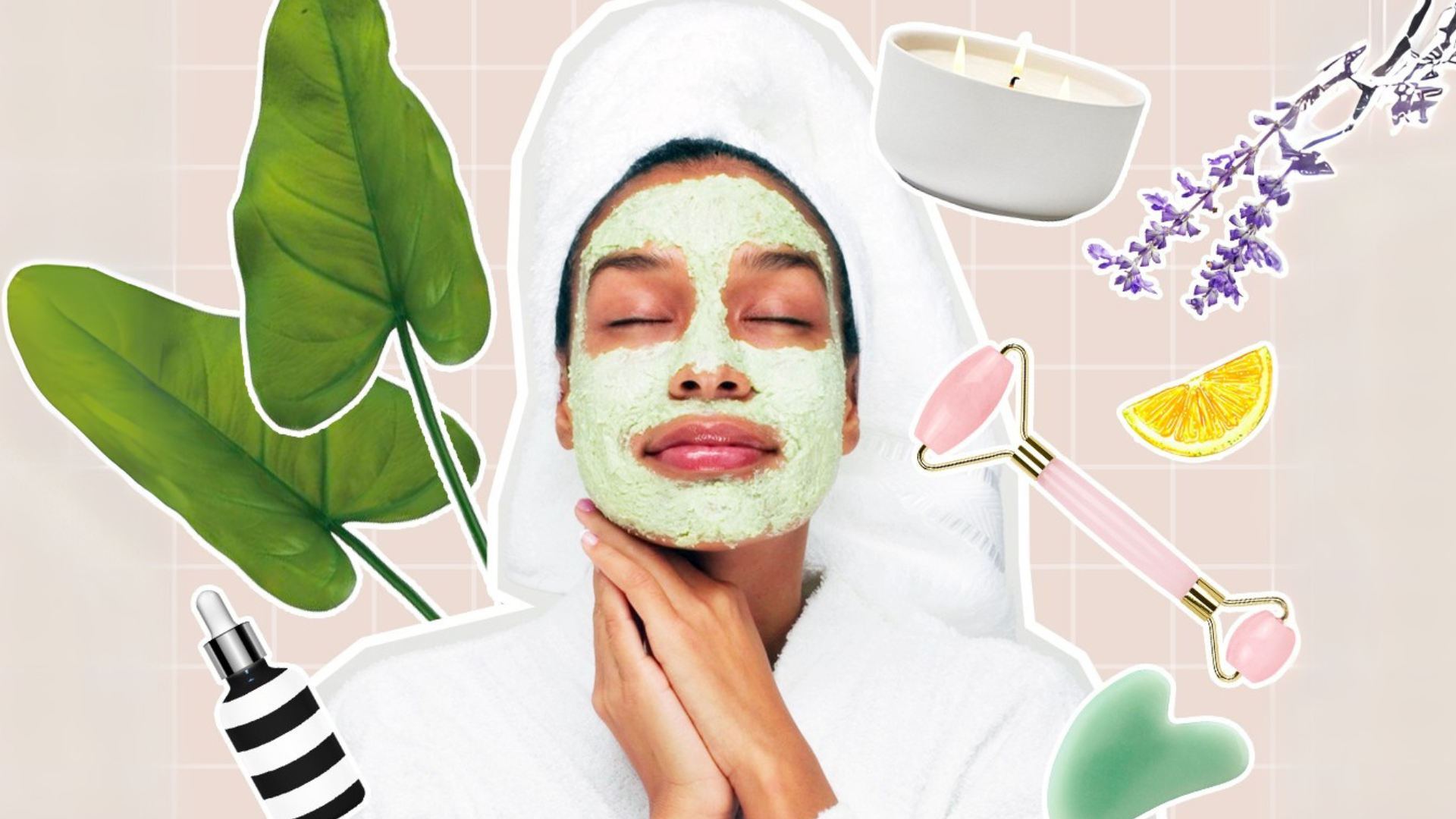
By now, presumably, you’ll have had your bubble bath, with a sleepy girl mocktail on the side, rinsed off your face masks (sheet, clay, charcoal, overnight, and of course, red light therapy).
If you haven’t yet moisturised, take a pause and do that now.
Welcome back.
Now that your skin is smoothed, pores eliminated, jaw jade-rolled, mouth taped, and the mere whisper of body hair seamlessly stripped away from your body, it’s time for the next stage of relaxation to begin.
In truth, in a minute I’m about to clamber into my own bed, the blue light from my laptop still casting an eerie glow against the wall behind my head as I collapse, exhausted, onto my (plain old cotton) pillow cases and nab a few hours before my alarm is set to assault me once again tomorrow morning.
I have neither exfoliated my pores nor plucked any hairs out of my face – or from anywhere else on my body.
As much as I’d like to claim this as a feminist retaliation against the conventional beauty norms that have plagued women for years, it’s not for a lack of internalised necessity, rather just of willpower. If I remember to slap on some moisturiser I consider it a spa-esque success.
The time and patience people have to follow an umpteen step skincare routine baffles me, as does the financial output for such a rigorous process. The average Gen-Zer spends around $2,000 annually on beauty products, and around 5475 minutes a year on their skincare routine. It’s practically a whole job in itself.
But take the nighttime routine and morning shed out of the equation for a minute; it’s not as if this is the only form of self-care that people appropriate and post all over their TikTok.
Admittedly, I have (however unwittingly) taken part in at least some of these trends. I too slip my earphones in and click play on yet another podcast as I take a solitary stroll, passing by other amblers presumably doing the exact same.
Likewise, as I begin to envision the dinner I’ll cook alone for myself later – and the joy of having only my own mind to disagree with about whether I binge several episodes of First Dates or commit to a Rom Com – it strikes me again how hyper-individualistic this kind of self-care is.
And sure, getting more sleep and stretching probably is really good for your mental and physical health. I’m not going to sit here and refute, like, science.
Unfortunately, however, this investment in the self, that comes with a dermatological price tag and an expensive gym membership, doesn’t seem to have any greater purpose beyond rising at 5am. It really does seem like the “self” is sort of all there is to it.
And I know I know. A running club runs together, and you can have a spa day with friends. But never have I been to a run club where people weren’t comparing Stravas or competing against both each other and, oddly, themselves, for a new PB.
As for the spa, well, you try speaking to your mates while your face is smushed into the weird part of a massage bed and see how intelligible you are.
While this modern-day self-care movement might endorse the illusion of togetherness – or rather, get you to endorse it through compulsive consumer pressure – it’s not exactly a movement of solidarity.
Rather, it’s more often than not a neoliberal act of self-actualisation that fails to offer lasting positive effects on our wellbeing such as more accessible necessary resources.
This stands against the origins of the self-care movement as it was conceived of in the twentieth century.
Political self-care
Self-care first caught on in a medical context as doctors advocated ways that patients could care for themselves.
In the 1960/70s this was particularly in reference to mentally ill and/or elderly people. The concept was later expanded to serve workers in high-risk or emotionally daunting occupations in order to prevent burn-out and combat work-related stress.
As Alice Capelle, author of Collapse Feminism, explains, it wasn’t until it was used by the Black Panther Self Defence movement and the women’s movement at this time that self-care came to be viewed as political.
Self-care in the political sphere was, for these oppressed groups, a way to survive the disproportionate maltreatment they received from the racist, sexist, and technocratic state, by reclaiming their right to their own health.
In this sense, it was a way of ensuring that people would be able to defend themselves and their people when faced with oppositional threats and systemic violence.
Karla D. Scott, a professor of communication at Saint Louis University, has suggested that this ‘image of caring for your people and self-care’, is what evoked the African philosophy ‘Unbuntu’ (I am because we are).
Whereas these days self-care has been appropriated to allow people to indulge in individualism and turn their moisturised faces away from global issues.
As psychologist Maytal Eyal has pointed out, “instead of self-care being this mechanism to take care of yourself so that you can then show up for others”, somewhere along the way, self-care transformed into self-obsession.”
We’re told to treat ourselves to the wine and the chocolate, and then shamed for not pushing ourselves in our 6am gym session (on a Saturday!). To take a holiday and to find a work-life balance, with little regard for how our absentee approach to our workload will fall on the shoulders of other people in our industry.
What’s more, like most other means of production in our capitalist society, this self-care is largely sustained through the exploitation of other people. Those who have neither the time nor the financial means to care for themselves and their own families, and often with further environmental repercussions.
This isn’t to criticise the process of nighttime routines or an elongated bubble bath, but rather to point out that fighting fascism with exfoliator is unlikely to have a lasting impact.
Alternatively, then, we should look to groups like the Black Panthers in order re(re?)-appropriate self-care as a way to reinvigorate our political consciousness.
Audre Lorde is right to argue that we need to take care of ourselves in order to be able to care for others.
However, the role of neoliberalism in our self-driven participation in the exploitation of others as we seek momentary relief for ourselves from the drudgery of life under capitalism has made self-care not merely self-indulgent. It’s also made it dangerously individualistic.
By instead viewing self-care as a collective movement of self-preservation for resistance rather than an individual coping-mechanism, we can create long-lasting and sustainable community driven systems of care which protect ourselves and the most vulnerable.
In the words of poet and civil rights activist Maya Angelou: “None of us are free until all of us are free.”
Annie (She/Her) – Originally from Newcastle Upon-Tyne, Annie’s writing focuses mostly on class and feminist issues, with a particular interest in sex-culture, identity politics, and current affairs. She studied both her undergraduate and postgraduate degrees in English literature at the University of Manchester. (Yes, it was a lot of reading. No, it didn’t ruin books for her). Follow her on Twitter or Instagram, or feel free to get in touch via email.
Plenty of us want to check out from the algorithm. But is this a luxury few can afford?
I told myself this would be the year I get rid of social media for good. It started with a phone detox – my addiction had reached its peak when I found it difficult to sit through an episode of great TV without glancing at the screen in my hand. I hit rock...
A UCLA study has built on research suggesting that our belief of how well we sleep has a greater impact on cognitive performance, tiredness, and general mood than how many hours we actually get.
If there’s one thing this generation loves martyring itself over, it’s how ‘exhausted’ we are and how little we sleep.
We’ll go to bed at gone 2am, set an alarm for 7:30am, and wake up ready to...
Overzealous women are preparing for motherhood like it’s a marathon.
The wellness girlies have become wellness mothers. Our societal love-affair with anything self-optimising, be it an overpriced supplement or a cyborg-adjacent beauty tool, has infiltrated the minefield of motherhood – particularly for first-time parents.
Social media is window dressing for the global wellness industry, which now boasts a $6.8 trillion+ valuation. Influencers sell us their spotless morning routines and plates of...
Spoiler alert: it doesn’t involve resolutions.
It’s that time of year again: the start of a new one. A fresh twelve months lie before us, promising nothing except the unexpected. If there’s one thing I’ve learned after twenty-nine Januarys, it’s that you can make plans all you like. The universe will still find a way to laugh.
Which makes the annual ritual of New Year’s resolutions feel particularly absurd. Perhaps to...
We use cookies to ensure that we give you the best experience on our website. If you continue to use this site we will assume that you are happy with it.
































 0 comments