






 0 comments
chow time, maggots

One of the most notorious practical disasters ever in the history of psychological study. Fuck it, let’s do it again… but for Netflix.
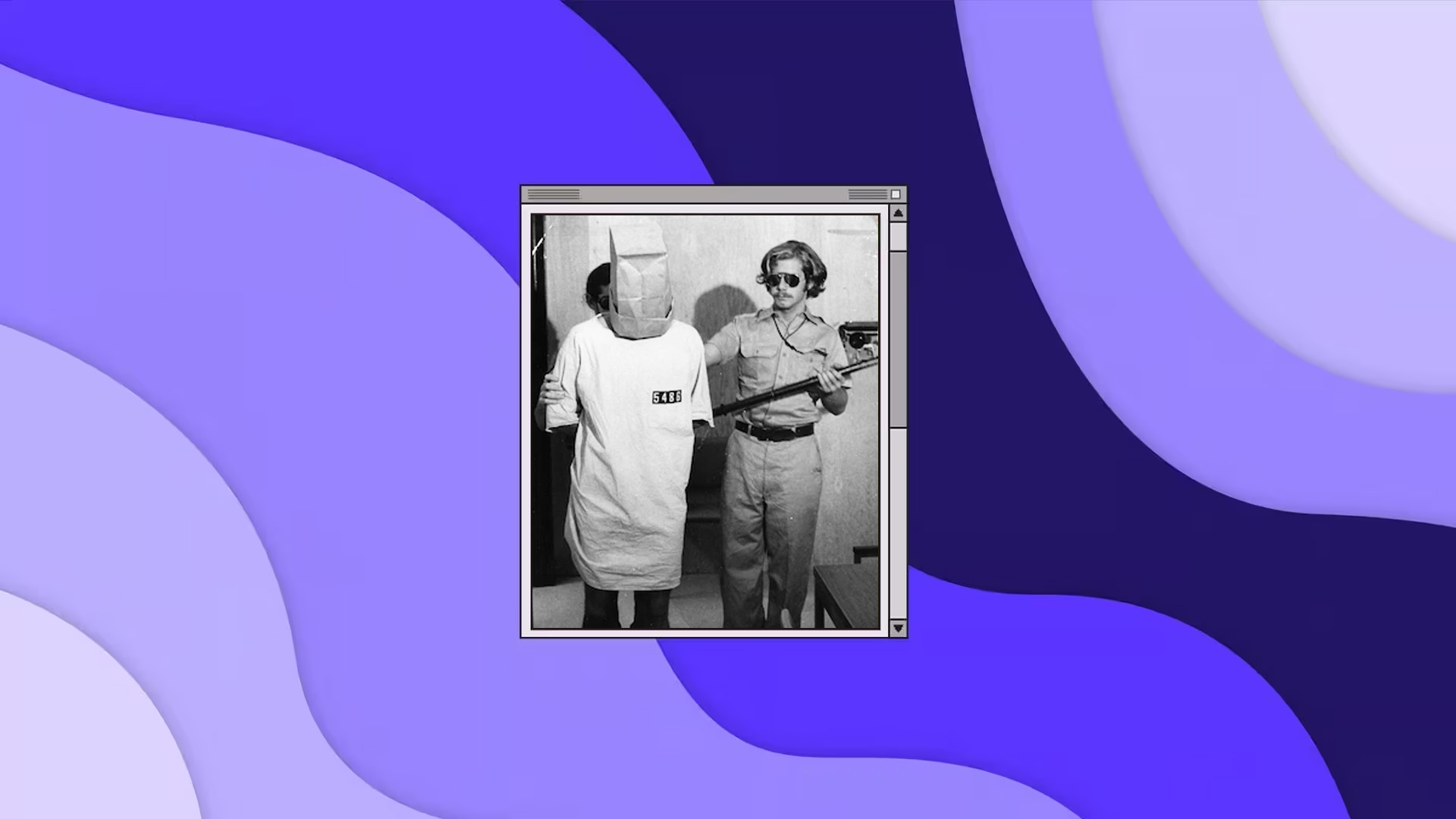
If you’ve studied either criminology or psychology in any capacity, you’ll no doubt have heard about the Stanford Prison Experiment of 1971. While teaching at Stanford, the now-notorious Philip Zimbardo was still making his name in psychology. In his clamour for clout among his peers, he devised an experiment and got spectacularly lost in the sauce.
He set up a mock prison at the university and recruited a bunch of young men to play at being either guards or prisoners. The experiment was supposed to last two weeks, but made it only six days before the plug was pulled – despite the clear reticence of our Zimbardo.
Basically, some of the guards instantly leant into the role in the most Shawshank and Sleepers way possible, showing just how quickly power can give way to cruelty.
Across six days, prisoner participants were subjected to degrading physical punishments, forced nudity, sleep deprivation, food and bathroom restrictions, solitary confinement in a cupboard, and sustained psychological torment. The fallout became one of the field’s most infamous cautionary tales about power, authority, and submission.
Anyway, Netflix, lovers of seemingly anything macabre, reckon it’s time to do it again.
The New Stanford Prison Experiment, coming out in mid-October, will be putting 30 ‘willing’ contestants – and Netflix were big on highlighting that – in a makeshift prison kitted out with cameras. Over six episodes, power will apparently shift between the groups as producers ask whether empathy and individuality can survive hierarchy and control.
It all sounds more highbrow than what Netflix will actually be hoping for. The original experiment is shat on for its lack of objectivity and scientific validity, but Netflix showrunners aren’t worried about that. They’ve got a recognisable name, and a setup to hopefully cause enough discord to create compelling TV without dragging in lawyers.
As for the inevitable criticism, Netflix won’t give a solitary shit, either. This is a platform currently promoting a serial killer anthology by packaging real-life monsters like some kind of deranged Avengers line-up.
The original experiment endeavoured to show how power can drive people to do heinous things, but this resurrection of it shows that big companies aren’t concerned with ethical baggage so long as subscribers are willing to engage with it.
The worst part about it is that I know I’m going to watch it out of pure curiosity.
Yours sincerely,
A shameless hypocrite