0 comments
what? Nah I never knew that, never knew that

The BBC must be terrified of whistleblowers at this point. But the latest exposé hasn’t come at its expense… it actually gets the honours of spilling the tea on someone else.
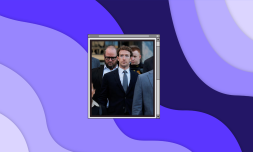
Canaries have come to the BBC with a case concerning Meta and TikTok, and their supposed amplification of toxic content for clicks. Given Zuckerberg is already in court batting off accusations that his platforms are deliberately addictive to minors, this sudden inquisition will have him yanking his permed hair out.
Social media tycoons have long used the defence that overtly negative content circulates on their platforms as an unwanted side effect: a minority of bad actors, some loopholes, the odd oversight or moderation failure. What they don’t tend to say is that dangerous or inflammatory stuff is good for business, and you certainly wouldn’t catch them saying they deliberately tolerate it for clicks.
Well, well, well.
The BBC has just released a chunky exposé, in which 12 former employees at Meta and TikTok say that content of an inflammatory (or rage bait-y) nature was viewed as currency. They say that internal research showed outrage was driving engagement, and both effectively left the door ajar for it to continue seeping through.
At Meta, one former engineer at the company said staff were told to allow more ‘borderline’ harmful content into users’ feeds, including misogyny, conspiracy theories, and flat out misinformation, as Meta scrambled to compete with TikTok’s numbers and reassure investors. Internal documents suggest Facebook knew morally charged or anger-inducing posts were generating the most buzz, and decided to push them harder.
Another ex-employee said that Instagram Reels was knowingly launched without adequate safeguards in place. They claim preliminary internal reviews showed that harmful comments were way more common there than on the base platform, with 75% higher levels of bullying and harassment, 19% more hate speech, and 7% higher violence and incitement.
TikTok’s allegations are equally grim. A whistleblower from its trust and safety team told the BBC that cases involving minors, sexual blackmail, cyberbullying, and extremist content were sometimes given lower priority than complaints involving politicians.
In one example, a mocked political figure took precedence over a 17-year-old reporting cyberbullying and a 16-year-old whose photo had been coopted for sexualised content. Another said dodgy videos often began surfacing after users had been on the app for a while, as the algorithm steadily learned which posts were most likely to keep them engaged and refined itself.
We all know that rage bait content does well. Just go on Kick for 10 minutes and you’ll see that. But it’s another thing entirely if social media companies are baking this content’s parameters into their models.
Click here to read the full story.
identity
In Search of Banksy – reuters
A whole-ass investigation to prove what a Google AI prompt would have provided anyway. Fair enough, we respect it. Reuters has had a go at the art world’s worst kept secret, tracing a surprisingly paper-heavy trail that points to Banksy being a Bristol-born artist called Robin Gunningham – who changed his name in 2008 to David Jones, making himself ‘harder’ to track. From Murals in Ukraine to US court filings, and an old New York arrest report, the investigation throws out some interesting firsts, if you’re the type who enjoys a rifle through legal records. The more alluring story is how Banksy used anonymity as part of the brand, with Reuters, to its credit, showing that the mystery was sustained by legal, commercial, and cultural infrastructure. It wasn’t a dramatic unmasking, but plenty went into keeping the ‘myth’ angle alive.
🇬🇧 Reuters journalists have discovered that the street artist behind the pseudonym Banksy is Robin Gunningham, a 51-year-old street artist from Bristol who later changed his name to David Jones.
Gunningham/Jones had previously been identified in a 2008 Mail on Sunday piece, but… pic.twitter.com/8Nm7yJ11T9
— Europa.com (@europa) March 17, 2026
Louis Theroux’s manosphere documentary is an infuriating failure – the independent
This two-star review was good for a morning chuckle, and now the dust has settled on the documentary, the verdicts are starting to pour in. The theme of Louis Theroux’s Inside the Manosphere has received plenty of criticism from us for its shaky framing and tenuous focus, but the Independent’s slant came from another angle entirely. It argues, pretty convincingly, that Louis was never going to get any sort of accountability from those who earn a crust in a realm devoid of morality and hellbent on virality. It says the presenter is out of his depth, unable to challenge misogynistic figures whose entire business model is shameless attention, provocation, and anger. Given HStikkytokky is gearing up to go on Piers Morgan’s podcast for another shouting match, it’s hard to argue otherwise.
Absolute idiots commenting after the Theroux documentary looool pic.twitter.com/y0OceKb1Hv
— HSTikkyTokky (@HSTIKKYTOKKY4) March 14, 2026
uncanny valley
Benjamin Netanyahu is struggling to prove he’s not an AI clone – the verge
People are struggling to discern whether they’re seeing Netanyahu addressing the masses, or AI slop working its magic. Basically, loosen the f*ck up Benj. In all seriousness, though, there are surreal conspiracy theories – largely pushed by the Iranian state media and sections of the internet – that the nation’s leader has been killed off and replaced by AI generated footage. They’re gaining traction, and everything he posts is now subject to microscopic scrutiny. ‘Extra fingers’ and dodgy coffee cups have been explained away by fact-checkers, but the scepticism rages on. The Verge is less concerned about the specific claims, and more interested in how quickly geopolitical paranoia is able to snowball in a world where AI is everywhere. If that angle doesn’t entice, it’s fairly amusing.
View this post on Instagram
Nvidia Announces DLSS 5, Injecting Even More AI Into Games – ign
Nvidia is rolling out what it calls the ‘GPT’ moment for graphics. Yesterday, its DLSS 5 showcase showed how the technology has evolved from sharpening visuals and upscaling resolution, to flat out injecting ‘photorealistic’ AI over character models and environmental assets. In clips of Bethesda’s Starfield and Resident Evil: Requiem, the DLSS technology enhances the faces of NPCs and playable characters in real time. The only problem: many gamers say the original design vision is lost. In the case of Resident Evil’s Grace Ashcroft, the change is reminiscent of the yassify memes of 2023. There’s that uncanny sheen and smoothed over skin texture that we’ve seen so often in corners of the app store or on dodgy ad banners online. Knowing how strongly people take exception to creative flair being substituted by AI, this one was never going to go down well, and Nvidia is already tempering the technology’s effects following the backlash.