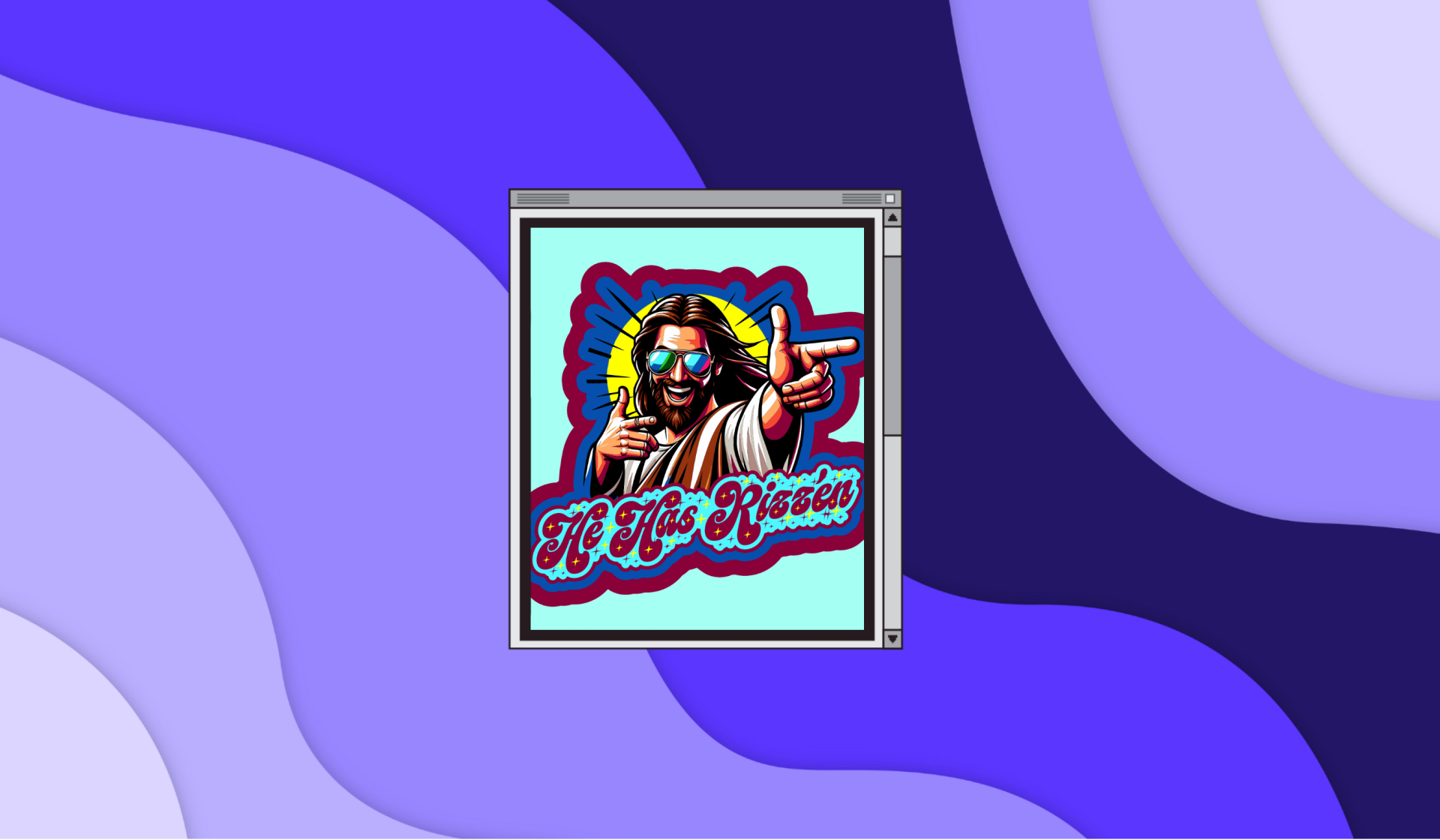
Gen Z is officially the most religious generation of the moment, surpassing the kind of devotion typically associated with senior citizens… A recent YouGov poll shows that belief in a higher power among 18–25 year-olds has rizz’en (sorry) from 28% in 2018 to 49% in a single year, 2024. The number of people who said they went to church monthly also jumped massively from 7% to 23%. If you guessed it’s because of social media.. congrats, you’re a bloody genius. Faith doesn’t only start at home nowadays… it’s being cultivated via influencers on television, TikTok, and Instagram. #ChristianTikTok has amassed more than 25 million views, and influencers like Taylor Frankie Paul from The Secret Lives of Mormon Wives and Love Island UK star Matilda Draper have both gone hugely viral for content surrounding their faith. Other religious creators say young people regularly message them to say their content encouraged them to explore faith or attend church for the first time. This journey into religion may well be driven by a search for meaning and peace after growing up through a pandemic, cost-of-living crisis, and a constant stream of bad news. People say religion provides purpose, structure, and a genuine real-life community which admittedly is becoming harder to find offline. And although some young people say they barely ever see faith content and remain atheist, the numbers don’t lie… Gen Z is starting to explore their personal faith in a very online and modern way. Amen.
Career minimalism – culturally curious (via substack)
Sure, young people of today have gotten a ton of flack for refusing to let work run their lives, but that hasn’t stopped them from standing their ground or digging their heels in further. ‘Career minimalism’ is essentially the Gen Z version of Millennial’s ‘like a boss’ era, only the opposite, if you can even remember that far back. What I’m saying is: many young people see their job as representing financial stability and financial stability only. It’s not a demonstration of their identity, passion, or long-term loyalty. These young people instead conserve their ambitious energy for other projects, side hustles, freelance work, creative projects, and small businesses that aren’t just pursued for extra cash. It’s clear this attitude has been shaped by witnessing widespread layoffs, burnout culture, and being sold ‘career growth’ that hasn’t always guaranteed better pay making trust in traditional career paths veryyyyy low for young people. Plus, when your whole identity isn’t tied to one job title, a job (or lackthereof) won’t truly feel like personal failure. We all know Gen Z shocked the corporate world by demanding flexibility, transparency, and mental health support, but thanks to them, those things aren’t perks anymore – they’re the bare minimum. Companies that adapt to this new norm will better position themselves to keep the next generation in their workforce, while the rest keep scratching their heads as to why no one’s sticking around. Clue up!!!
You’d think that young people doesn’t care about things like food, sex, or fun, especially when looking at how so many have cut themselves off from them. Scrolling on the Gen Z side of IG or TikTok demonstrates how everyday life has become increasingly controlled, optimised, measured for a huge portion of young people. That’s because at least 50% of this generation sources health advice from TikTok, where ‘wellness’ is often conflated with strict rules. You know how it goes: cut this out, track that, fix your sleep, fix your body, fix your skin, fix your entire life. As a result, social media has caused disordered eating to rise, but additional studies suggest this restriction is leeching into other life aspects beyond food. With self-improvement young people’s primary focus, dating is seen almost like work – another barrier leaching on their time and energy, derailing them from becoming their best self. To offer Gen Z some grace, the desire to take control is somewhat expected when the world feels unstable in so many aspects, and saying no to food, sex, or emotional risk is a way to gain a feeling of safety… whether it’s done entirely wittingly or unwittingly. But sidestepping potential mess also means missing out on a lot of the good things life has to offer. Here’s a gentle reminder: a bit of chaos might be uncomfortable but it’s also where unforgettable positive memories actually happen.
Micro-retirement and Gen Z – nomag (via substack)
Like the generations that came before it, Gen Z was told ‘work nonstop now and enjoy life after 65’. The different is, they said… respectfully, no thank u lol <3. This gen believes long, intentional breaks should be taken during your working life, not at the end of it. No, not a holiday or a gap year… that’s for Millennials. Gen Z wants to hit pause BEFORE burnout hits. Though older generations accepted burnout as a potential inevitability, young people don’t – especially when rewards like homeownership, job security, and linear careers are more difficult to achieve than ever. So instead of waiting for a future that may never arrive, Gen Z is approaching work-life balance differently. Micro-retirements are self-funded breaks that vary in purpose, with some individuals using them to rest and distance themselves from work properly, while others travel slowly, try out freelancing or remote work, or simply focus on self-development. Gen Z wants the world to reframe its mentality to understand that rest isn’t something to be earned but a necessary part of maintenance. And during these micro-retirements, Gen Z wants to experience liveable cities like Bangkok, Hanoi, Lisbon, and Budapest, all of which are becoming attractive options due to their affordability, good healthcare, walkability, technical connectivity and healthy daily rhythm. Micro-retirement, then, isn’t about avoiding work but giving yourself chance to reassess and recalibrate before making the next big career move.
The 2026 FIFA World Cup is supposed to be a global celebration, but for many fans, the US leg already looks anything but welcoming. Matches are set to be held across 11 American cities (co-hosted with Canada and Mexico) but strict travel bans under Trump’s administration could prevent fans from dozens of countries including Haiti, Iran, Senegal, and Ivory Coast from attending. Players and staff get exemptions… but fans do not. Even those who can enter face the terrifying possibility of ICE raids, which have surged since 2025, with arrests occurring in a number of match host cities. Human rights groups report that undocumented people and US citizens alike have been detained and separated from their families due to rampant racial profiling. Throughout all of this, FIFA has virtually stayed silent, which is not really surprising considering the organisations corrupt history. But awarding Trump a ‘Peace Prize’ is a new low even for ethically bankrupt FIFA. Young people’s memories of the 2026 World Cup could see the event forever tarnished in their minds. What’s supposed to be a global event meant to unite communities from all over the world is (by being hosted in the US under Trump’s regime) is actually coming across as exclusionary and unsafe.
Think society is in decline? Research gives us some reasons to be cheerful – positive.news
A lot of people seem to think society is going downhill, with new surveys revealing that almost half of Americans see rudeness as increasing. But behavioural research shows that, deep down, people still value loyalty, honesty, and helpfulness. Across countries, education levels, political views, and religions, studies looking into what people value most consistently find that people rank compassion higher than power or wealth. Data on real-world behaviour also shows that people act accordingly. Bystanders often do step in during conflicts, wallets containing cash are returned everyday, and when given large sums of money, many people give generously to others and charity. So why do we feel like everything’s falling apart? Well, negative news gets the most clicks, and so do extreme voices on social media, making bad behaviour feel normal even when it’s not. That said, believing the worst about people isn’t harmless, and if we continue to think that everyone is a selfish tosser, we’re less likely to volunteer in our community, cast our vote, or help others in need which can actually make things worse. Getting out into the world, touching grass and talking to others, noticing kindness and focusing on the good stuff is the foolproof antidote!
Ok, this one is a little concerning. A recent survey of 2,520 U.S. adults aged 18–29 found that one in five people has asked a chatbot about STIs, and one in 10 used AI to help identify a possible infection… errrrrrr ok. Perhaps more worryingly, many shared photos, described symptoms in detail, and even discussed recent sexual activity. But get this: nearly a third of those who later got tested found the AI’s assessment was wrong (!!!!!). Despite AI’s innacuracy, 92% said they’d use chatbots again (!?!?!). Are you facepalming? I’m facepalming. Over a third of respondents said they feel more comfortable talking to AI than to a healthcare professional, citing comfort and privacy as driving factors for turning to tech. Gen Z is digitally native and self-directed about health, and it’s true that talking about sexual health with others can be awkward. It’s also true that waiting rooms or clinics can be intimidating, and AI provides a space to be honest, while having to wait for an appointment or requiring health insurance. But let’s be real: even the ‘smartest’ chatbots aren’t doctors, and relying on them for a diagnosis can and probably will lead to mistakes or massive oversights. Not to mention, ChatGPT cannot prescribe you any necessary antibiotics or other medicines. If you’re concerned about something, seek out professional help people!!!
The joy of doing one thing well – raised on social (via substack)
YouTube and TikTok are full of videos captioned “Chronically offline is the new cool” or “Rescuing myself from digital hell”, and despite the irony of those statements, they do hold some weight. Gen Z was basically born addicted to smartphones designed to keep attention scattered, so now, they’re turning to single-use ‘uni-tasker’ objects: physical books instead of Kindles, iPods instead of Spotify, digital cameras instead of phone cameras, and analog watches instead of smartwatches. And while nostalgia for the tech is playing some role in this new trend, young people are more concerned with reintroducing focus, peace, and privacy into their lives. Offline hobbies like knitting, pottery, trading cards, playing instruments, hiking, and birdwatching are becoming more popular too. Gen Z wants to do one thing at a time very well and getting offline where multiple apps, tabs, or chats scream for our attention simultaneously, is a key part of that.

Thanks for reading and make sure to subscribe for the latest news on Gen Z and youth culture! Also, don’t forget to check out The Gen Zer for a weekly roundup of more trending insights, stories, and discussions.
Until next time!
































 0 comments