





























 0 comments
The phenomenon of half-watching, half-listening is symptomatic of a broader degradation in our attention spans.
Streaming services have left us paralysed with choice when it comes to entertainment. Nowadays, deciding what to watch on TV can take hours – even longer if you’re compromising with a viewing partner. And when you do finally land on something everyone agrees with, there’s another battle to be won.
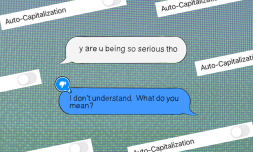
Whether you’re an avid defender of closed captions or sit in the ‘they’re redundant and distracting’ camp, subtitles have become a bug-bear in most households. And as a self-defined subtitle hater, I’ve noticed them cropping up a lot more than I’d like.
Turns out that’s not in my head. A new poll has found that people under the age of 45 are using subtitles more than older adults, with 4 in 10 young people saying they use them at least ‘often’ when watching TV or films. That’s compared with about 3 in 10 adults over 45.
It’s ironic given closed captions were once associated with those hard of hearing – implying an older demographic. But thanks to social media, we’re now living in a pervasively subtitled world. And not only that – our constant stimulation via short-form videos, reels, and targeted ads has made it almost impossible to stare at one screen undistracted for an extended period of time.
That might sound grim – that that task of sitting and gazing at a television has become a chore in itself – but at risk of sounding very Black Mirror about the whole thing, that’s the reality in which we now find ourselves.
It makes sense that most of us choose denial when faced with the true extent of our degrading attention spans. When the Associated Press shared the findings of their new study on subtitles, many were quick to comment defending their preferences.
The greatest life lesson I have learned from Gen Z is to watch with subtitles on pic.twitter.com/n1CgJMXI4z
— Patrick Anderson (@pimlius) May 4, 2024
‘Audio quality has gotten worse’, said one comment, reflecting the general consensus amongst AP News readers. The only reason so many of us are choosing to turn the subtitles on, it seems, is because Hollywood sound mixing has taken a hit.
There might be some truth in this – especially as the film industry faces cost cuts and pressure from media heads. But David Barber, sound editor and mixer and the president of the Motion Picture Sound Editors, has other ideas.
‘Part of it is cultural,’ Barber told AP News and Entertainment. ‘What the younger kids are doing is, a lot of them will multitask. They’ll listen to music while they’re watching a show. So they’re catching bits and pieces of this, bits and pieces of that. I think they probably are half-listening and half-watching. It’s an interesting phenomenon.’
The stats stack up, too. Besides the AP’s recent survey, a study in 2021 found that 80% of 18-25-year-olds used subtitles some or all of the time. If you aren’t hearing impaired and fluent in the language of the dialogue, then what could be driving this shift besides our growing dependence on screens?