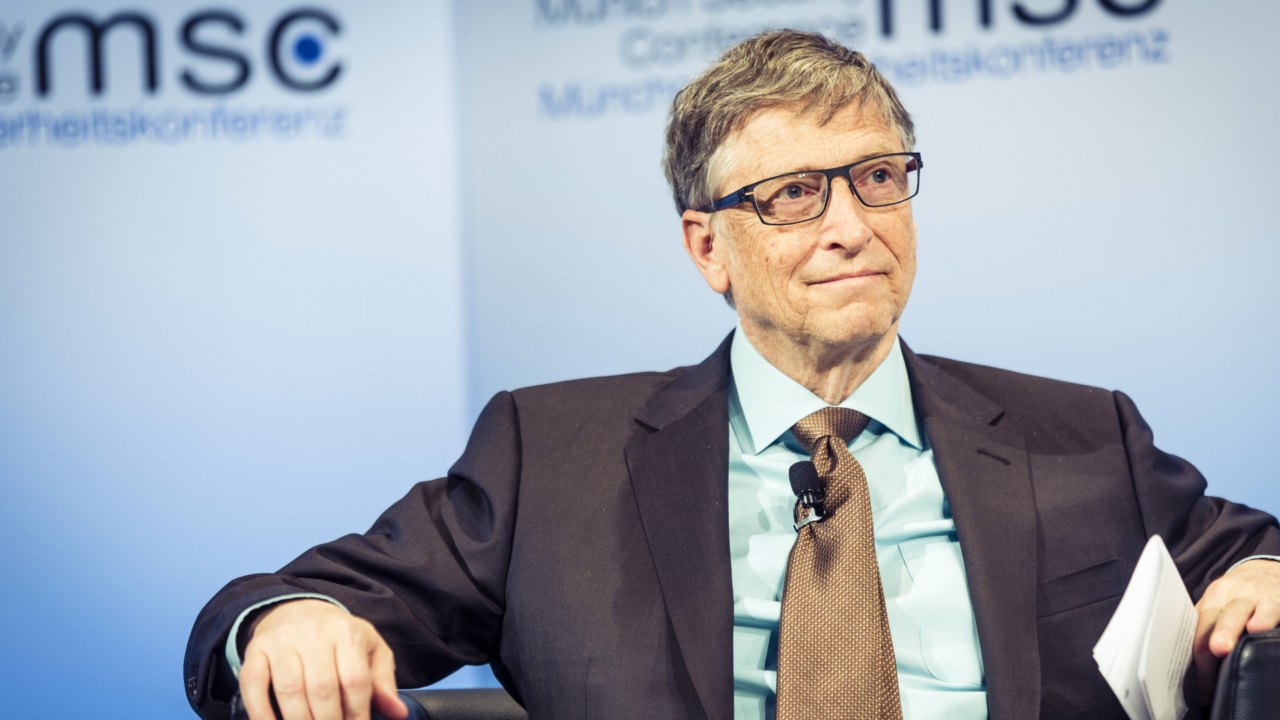
In a recent BBC interview, Bill Gates brushed off allegations that he’s a hypocrite for preaching about the climate crisis while owning at least four private jets which he uses to travel for humanitarian work on a regular basis.
Oh, billionaires. Will they ever really get it?
Even those who look most grounded from the outside appear to be deluded about the way their extraordinary lifestyles have an impact on the planet.
Bill Gates seems to be the latest.
The Microsoft tech guru turned humanitarian and climate activist has been extremely wealthy for decades now. According to Forbes, he is the world’s sixth richest individual, worth $106.7 billion.
Gates has been vocal about the work of his organisations which innovate agricultural systems in areas hardest hit by climate change. He also funds research to prevent the outbreak and spread of serious diseases, amongst other efforts.
But when questioned about the regular use of his numerous private jets in a recent interview with the BBC, Bill Gates appeared to be annoyed that anyone would suggest he’s a major contributor to the climate crisis.
During the lengthy interview, Amol Rajan of the BBC asked, ‘What do you say to the charge that if you are a climate change campaigner, but you also travel around the world in a private jet, you’re a hypocrite?’
Awkward, but someone had to say it. Props to Amol.
Bill Gates became visibly agitated and responded that by ‘funding direct air capture that exceeds [his] family’s carbon footprint’ through the organisation Climateworks and by regularly spending ‘billions of dollars on climate innovation’ he is ‘not part of the problem.’
He continued, ‘Should I stay at home and not come to Kenya and learn about farming and malaria?’
While I can understand wanting to enjoy the comforts of wealth (wouldn’t we take all fly private at least once if offered the chance?), it does seem backwards to claim that chucking money into climate organisations makes up for owning and primarily using four private jets on a regular basis.
This is especially true with the knowledge that a private jet flight emits 4.5 to 14 times more CO2 than a flight by a commercial airliner. It’s also worth noting that a single private flight emits 50 times more than the same trip on a European train line.
Still backing himself completely, Gates continued, ‘Anyway, I’m comfortable with the idea that not only am I not part of the problem by paying for the offsets, but also through the billions that my breakthrough energy group is spending.’
He closed the topic with the bold statement, ‘I’m part of the solution.’
Of course, we’ll have to give Mr Gates his flowers for doing far more for the human race and the planet than most earners in his category.
In 2015, he founded Breakthrough Energy as an umbrella company for his investments in sustainable energy and carbon-cutting technologies. In December of last year, Reuters reported that Gates invested more than $2 billion in other climate-related technological development organisations.
Nice work on paper, but it hasn’t totally allowed him to evade occasional criticism.
At a climate-focused conference held by the billionaire, Greenpeace had accused attendees of ‘ecological hypocrisy’ for boasting about their efforts in mitigating the climate crisis while getting to the event on fossil-fuel-hungry private jets.
Whether doing environmental work can cancel out emissions is just another complicated moral dilemma weaved into the climate crisis.
It’s one that Bill Gates – and many others – will likely have to defend for years to come.
Deputy Editor & Content Partnership ManagerLondon, UK
I’m Jessica (She/Her). I’m the Deputy Editor & Content Partnership Manager at Thred. Originally from the island of Bermuda, I specialise in writing about ocean health and marine conservation, but you can also find me delving into pop culture, health and wellness, plus sustainability in the beauty and fashion industries. Follow me on Twitter, LinkedIn and drop me some ideas/feedback via email.
The value of personal attractiveness is established much younger than you might think. But what does this mean for girls growing up in an image-obsessed era?
We check our appearance around 38 times per day. That pastime was once reserved for mirrors, and now extends to every reflective surface in our vicinity. Phone screens are the obvious preference – whether via their front-facing cameras or shiny black lock screens.
Social media...
Records that were long withheld by the city now reveal that the officials knew about Ground Zero’s toxic air in the years following 9/11 and chose to mislead the public.
On September 11th, 2001, Americans were initially met with confusion when the North tower was first hit. Minutes later, when the second plane struck the South Tower, that confusion quickly turned into fear.
While the collapse of both towers would reshape...
A charge on overnight stays could give Britain’s cities more money to spend on the people who visit them. But with holidays already feeling like a luxury, is this really the moment to make them more expensive?
There are few things more reliably British than complaining about something we secretly love. Sure, the weather is one – but what about tourists? In a blinding bit of great news for crowd-haters,...
When it comes to social change in 2026, Gen Z has lost all the vim of yesteryear. When and where was this energy lost? Let’s break it down.
In the late 2010s Gen Z was synonymous with social change, a broad catch-all term encapsulating the desire for a more equitable and just world.
In 2026, however, the cohort is now more likely to be mentioned in the same breath as subjects...
We use cookies to ensure that we give you the best experience on our website. If you continue to use this site we will assume that you are happy with it.
































 0 comments