






 0 comments
Ayo Edibiri’s interjection to terrible journalism is commendable and disheartening in equal measure – for the simple fact it was needed at all.
Questions surrounding pertinent issues like #MeToo and BLM are – rightly – regular talking points on the annual film festival press cycle. But they usually crop up in layered conversations between filmmakers, actors, and journalists seeking to highlight the many ways Hollywood shapes, and is shaped by, the socio-political landscape.
They aren’t often dished out haphazardly by bad reporters with no clear intent – at least in high-profile settings like the Venice Film Festival. And most certainly not as a means of excluding the very individuals whose lived experience they most reflect.
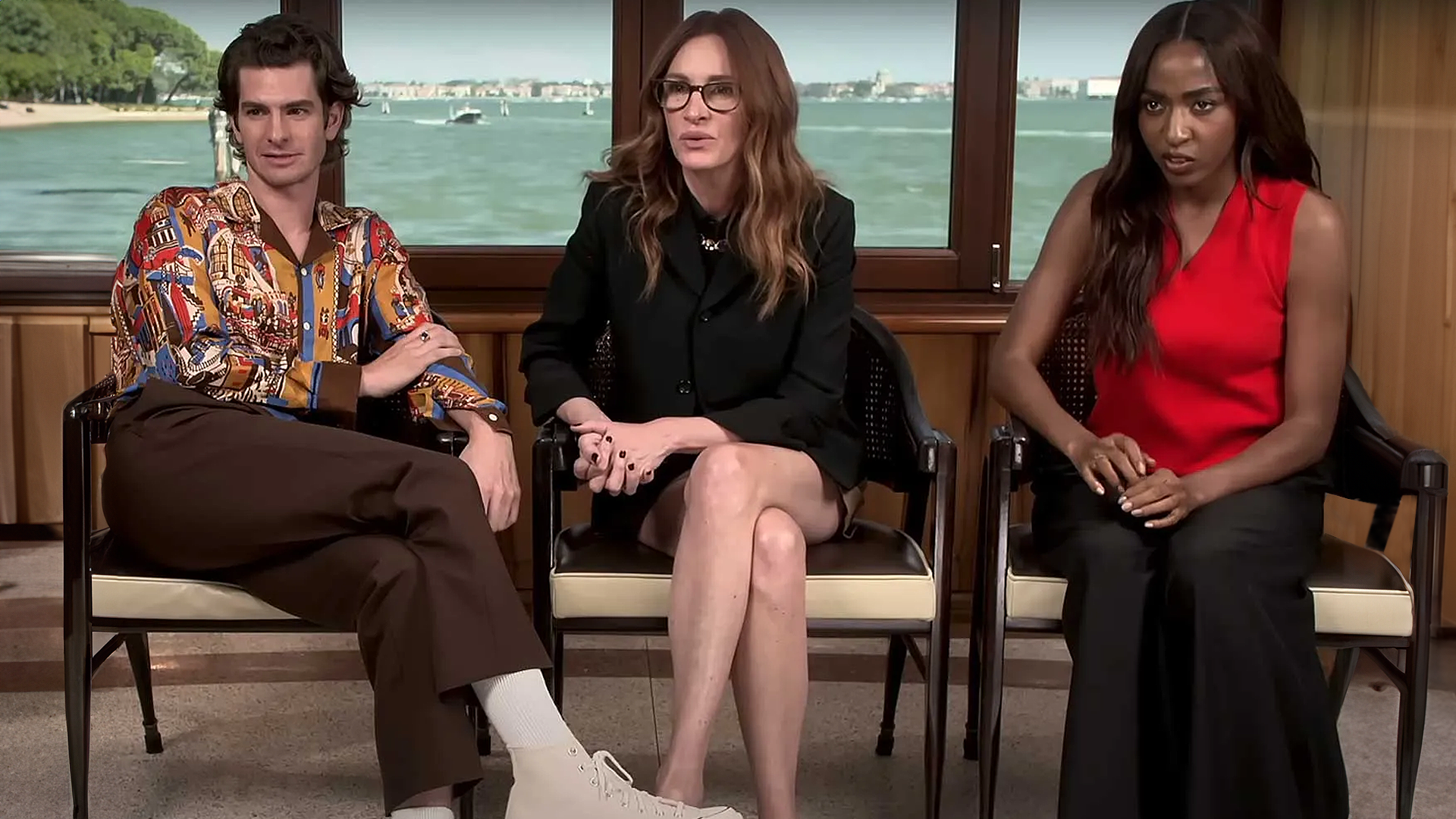
But that’s exactly what happened this week to actor Ayo Edibiri, who found herself interjecting when an Italian journalist purposefully directed a meandering question about the ‘politically correct era’ at her After the Hunt co-stars.
Andrew Garfield, Julia Roberts, and Edibiri were left confused when their interviewer asked what they thought had been lost in a post-Me Too and Black Lives Matter era, now that both movements were ostensibly ‘done’.
When Roberts asked for a repeat of the question, visibly bemused, the journalist reiterated their initial statement: that they only sought answers from Garfield and Roberts, not Edibiri.
But rather than sit back in silence, Edibiri softly raised her hand. ‘I know that’s not for me and I don’t know if it’s purposeful that it’s not for me – but I am curious – but I don’t think it’s done,’ the actor said, addressing the notion that two of the decade’s most prominent socio-political issues were old news.
‘I don’t think it’s done at all. I think maybe hashtags might not be used as much, but I do think that there’s work being done by activists, by people, every day, that’s beautiful, important work that’s not finished. That’s really, really, really active for a reason.’
Edibiri’s co-star Andrew Garfield was quick to voice his agreement, saying that both movements were ‘still absolutely alive […] just maybe not as labeled or covered or magnified as much in this present moment.’
The awkward incident quickly went viral as viewers commended Edibiri’s ‘graceful’ response to what was, arguably, a terrible instance of journalism. At worst it was a blatant act of racialised ignorance – and the reporter responsible, Federica Polidoro, has since faced significant backlash.