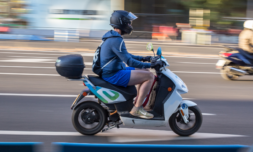
Getting people to switch from cars to bikes won’t be an easy feat, but if achieved, it would create positive change for the planet, our health, and overall quality of life.
In certain parts of the world, cycling is the norm for the majority of the population.
The city of Amsterdam has more bikes than people, with residents cycling an average distance of 2.6km every day. After living there for two years, I can tell you first hand that bikes are king – with the few cars that are on the road routinely making way for them.
A new study at the University of Southern Denmark suggests that if the global population began to cycle as much as the Dutch, annual carbon emissions would be reduced by 686 million tons. That figure is larger than the total emissions of countries such as Australia, Canada, Saudi Arabia, and the UK.
According to Statista, global emissions from the transport sector come in at 7.3 billion metric tons a year. Passenger cars make up almost half of those emissions when aviation is not included in the figure.
With such a simple and obvious solution, why don’t we all just take up cycling to slow global heating? Well, like most things related to climate change, it’s not so straightforward.
Firstly, bikes aren’t cheap. Not everyone will have the disposable income required to invest in one. Even a basic, decent-quality pedal bike starts at around £250.
The solution? Well, money via government subsidiaries would be a great place to start – and some countries are already making significant strides.
As part of its national climate change policy, France is giving citizens from low-income areas €4,000 when they trade in their cars and switch to e-bikes for travel. Those earning higher incomes can apply for smaller grants.
With France’s ambitious mission to get 9 percent of its population to switch to bicycles within the next two years – 27 percent of people in the Netherlands already have – President Emmanuel Macron has also invested €250 million to make its capital city, Paris, completely bikeable.
This is a core problem for places like London, where cycle routes aren’t available in every borough. As I am, many will be scared shitless to share the road with double-decker buses, opting to hand over around £1k to Transport for London every year.
That said, a £338 million project to build cycle lanes and pedestrianise roads in England has already been confirmed, after the number of people willing to bike across cities rose during the pandemic.
Okay, so assuming this all gets done in dozens of countries around the road, we’ll all have shiny new bikes and safer roads to cycle them on. What else is in it for us?
Reaping the social benefits
The health benefits of cycling speak for themselves, with studies suggesting that people who cycle to work are 45 percent less likely to develop cancer or cardiovascular disease.
It’s a low-impact form of exercise, making it gentle on joints and easy to adopt at any age. Not to mention, exercise boosts endorphins – those delightful happy chemicals in your brain – and you’ll probably prefer feeling the breeze in your hair over sitting on a sweaty bus or subway for 30+ minutes. Unless you’re Andrew Tate, in which case that privilege does not apply.
Could this be the reason the Dutch mark their quality of life an average 8 out of 10?
Though cycling may not be practical for those with disabilities or families with young children who need to be driven, the increased option for adults and young people to cycle safely will incite major change. Thanks to less exhaust from traffic, air will be cleaner, and we’ll breathe more easily.
It’s difficult to argue with the case made time and time again for making our planet more cycle friendly. The social, economic, and environmental benefits stretch well beyond the points I’ve made here – so what are we waiting for?
Deputy Editor & Content Partnership ManagerLondon, UK
I’m Jessica (She/Her). I’m the Deputy Editor & Content Partnership Manager at Thred. Originally from the island of Bermuda, I specialise in writing about ocean health and marine conservation, but you can also find me delving into pop culture, health and wellness, plus sustainability in the beauty and fashion industries. Follow me on Twitter, LinkedIn and drop me some ideas/feedback via email.
NHS bodies have imposed a two-year minimum wait for assessments as demand for diagnosis soars.
There are many benefits to raising awareness for neurodevelopmental conditions. The taboos that kept thousands suffering in silence have significantly decreased in the UK, and support is more readily available than ever before. But besides there still being significant room for improvement in the neurodevelopmental care sector, the growing demand for diagnosis of conditions – particularly...
The alleged incident took place on university grounds in 2024. Cornell has yet to comment publicly.
On Tuesday, the names and faces of seven Cornell University students flooded the internet. They were all young men. And they were all allegedly involved in the gang rape of a woman on campus in 2024.
Jane Doe initially came forward shortly after the incident was said to have happened, telling Cornell University Police on...
Experts suggest the disappearance of London’s iconic red buses will hit the poorest the hardest.
Like most major cities, London is built on a sprawling public transport system. Boasting the tube, black cabs and an iconic route of red bus services, England’s capital is one of the most famous and efficient transport hubs in the world. But experts warn it’s at risk of rapid decline.
Outside of zone 1, red buses...
Alleged victims will be granted new measures including private entrances and waiting rooms, along with specialist ‘trauma-enforced training’ for court staff.
Andy Burnham has announced the rollout of new specialist rape courts in England and Wales, building on measures that are currently only available in limited locations.
At least one courtroom in every Crown Court will be dedicated to handling rape and cases involving serious sexual offences over the next...
We use cookies to ensure that we give you the best experience on our website. If you continue to use this site we will assume that you are happy with it.





























 0 comments