After two months of peaceful demonstrations sparked by a proposed pension reform in France, the message is clear: President Macron remains unmoved by his citizens’ clear opposition to the policy. As frustration increases without any sign of a U-turn, the national mood has started to turn sour.
Protests.
They’re the vehicle for French citizens to ensure democracy continues to work in their favour. That sentiment continues to hold true, with 1.28 million people taking to the streets this month to oppose President Emmanuel Macron’s newly proposed pension reform.
To the discontent of the large majority of citizens, the government is planning to raise France’s minimum retirement age from 62 to 64. On top of this, public sector workers will have their current privileges scrapped. There will also be an increase in the required employment years to qualify for a full pension.
The new proposals will drastically change the lives and plans of many blue-collar workers employed in physically gruelling jobs. French newspapers are reporting that small towns like Bordeaux, Lille, Nates, and Rennes have been at the forefront of the fight.
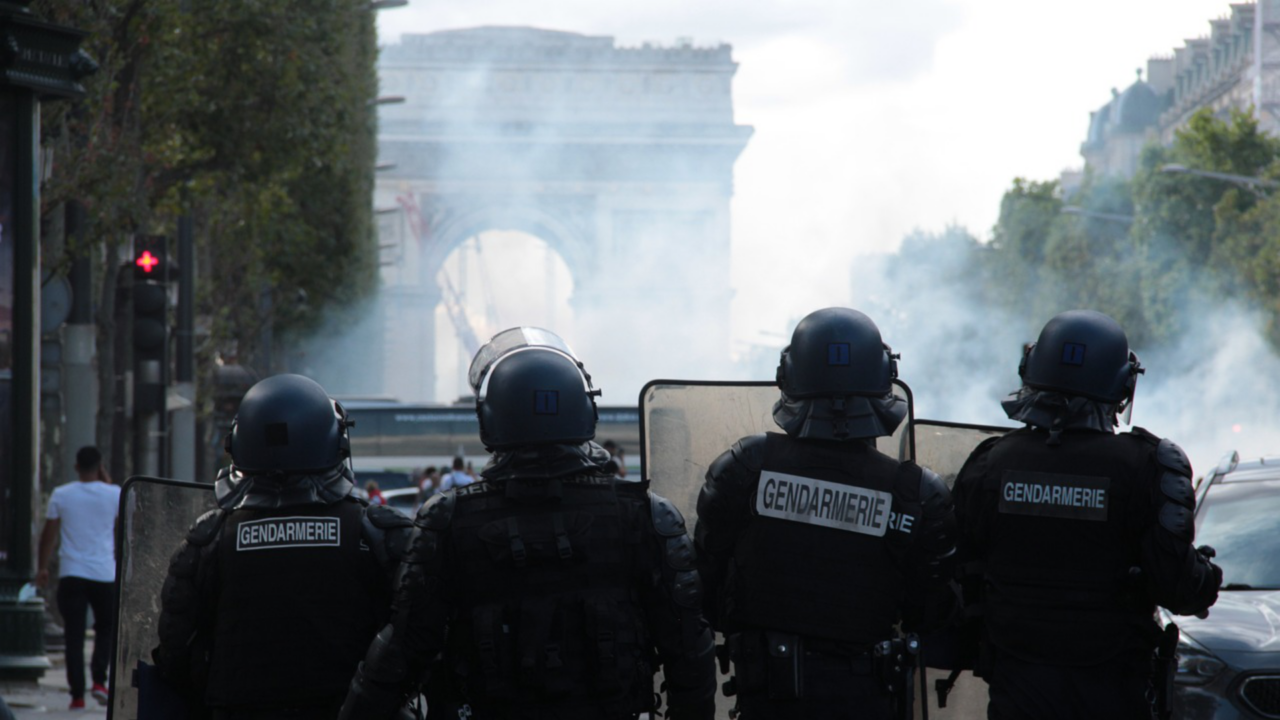
As expected, the protests have been met with great police presence. At least 13,000 police officers had been deployed, with 5,500 of them in Paris streets.
For two months, peaceful and organised strikes took place. But in the last 10 days, they’ve taken a slightly more unsettled turn. Many streets have been seen dotted with fires and politician constituency office windows have been smashed in.
It doesn’t help that the record-breaking number of officers is heightening tensions on the ground, with lawyers writing to local newspapers to report unnecessary citizen arrests, injuries, and rough treatment of crowds.
In regards to the disruption of daily life, the strikes have affected bin collections, rail transport, air travel and schools. Numerous flights were cancelled in Bordeaux, Marseille, and Toulouse while uncollected trash lined the pavements of Paris streets.
As a seemingly normal life continued in and around the protests, a lack of bin collections wasn’t exactly an ideal situation. ‘The rats are having a party here,’ one Parisian said.
These factors, along with the unpredictability of the situation in the capital, caused Macron to cancel King Charles III’s State visit at the very last minute.
Speaking aptly of the meaning behind the national protests, French citizens have said they believe ‘the social state and social safety net [in France] is disappearing.’
In rural areas, citizens urge that it’s ‘not just about pensions.’ They urge the government to acknowledge how it has ‘abandoned’ their communities and pulled resources and services from their towns.
Hearing these statements, it shouldn’t be surprising that 90,000 students have also joined in demonstrations echoing their own version of what they feel is going wrong under Emmanuel Macron’s presidency.
Many are still scarred from their lived experiences of economic fragility during the COVID lockdowns. They now fear that moving forward, there will be no welfare state or support left for their parents – let alone themselves.
Emmanuel Macron has not budged on his stance despite the obvious discontent of his people. His public approval ratings have dropped by as much as 28 percent since he announced the policy reform.
Accepting the ‘unpopularity,’ he called upon his prime minister, Élisabeth Borne to address the nation. She said, ‘We have to find the right path… we need to calm down,’ while admitting there would likely be no changes to the policy.
Whether President Macron will survive another term hangs in the balance. Even so, there looks to be no obviously better-suited leaders on offer. French citizens could very well end up staying with the so-called devil they know.
Deputy Editor & Content Partnership ManagerLondon, UK
I’m Jessica (She/Her). I’m the Deputy Editor & Content Partnership Manager at Thred. Originally from the island of Bermuda, I specialise in writing about ocean health and marine conservation, but you can also find me delving into pop culture, health and wellness, plus sustainability in the beauty and fashion industries. Follow me on Twitter, LinkedIn and drop me some ideas/feedback via email.
Though the project is a vital strategic asset for the US, its reliance on advanced tech for mitigation techniques have failed to ease local anxieties about water security and the environment.
In the past two years, the US government has placed significant emphasis in obtaining rare earth minerals. From EVs to precision weapons, these minerals have become an essential commodity in the global economy. However, global sanctions on their...
In the last decade, the share of 15-to-24-year-olds in the UK who claim they have a condition limiting their ability to work is reportedly up by 70%.
There has been a sharp rise in the number of jobless young people in the UK citing health problems as the reason they cannot work, according to newly published statistics from the Health Foundation.
The charity thinktank says that the portion of 16-24-year-olds...
Less 20-somethings are getting married today than ever. As Gen Z ditches wedding rings, it begs the question: what has changed?
There’s little I love more than the sweet sound of an orchestra playing a doting love song, as a couple makes it down the aisle, ready to make the ultimate commitment and say: ‘I do’. Yet nowadays, it seems like my generation is more inclined to say ‘I don't’...
Louis Theroux’s manosphere documentary has raised questions about how we tackle a toxic community that spreads in the shadows and thrives in the spotlight.
It was only a matter of time before Louis Theroux shuffled into frame and imparted his gauche two cents on the manosphere. The documentarian is beloved for his awkward silences, an approach that has allowed him to carve out a hefty filmography of deep-dives into some...
We use cookies to ensure that we give you the best experience on our website. If you continue to use this site we will assume that you are happy with it.
































 0 comments