






 0 comments
The President’s plans for an ostentatious White House ballroom may seem relatively inoffensive given his track record of aggressive leadership. But they reflect a country divided and a political system on the brink.
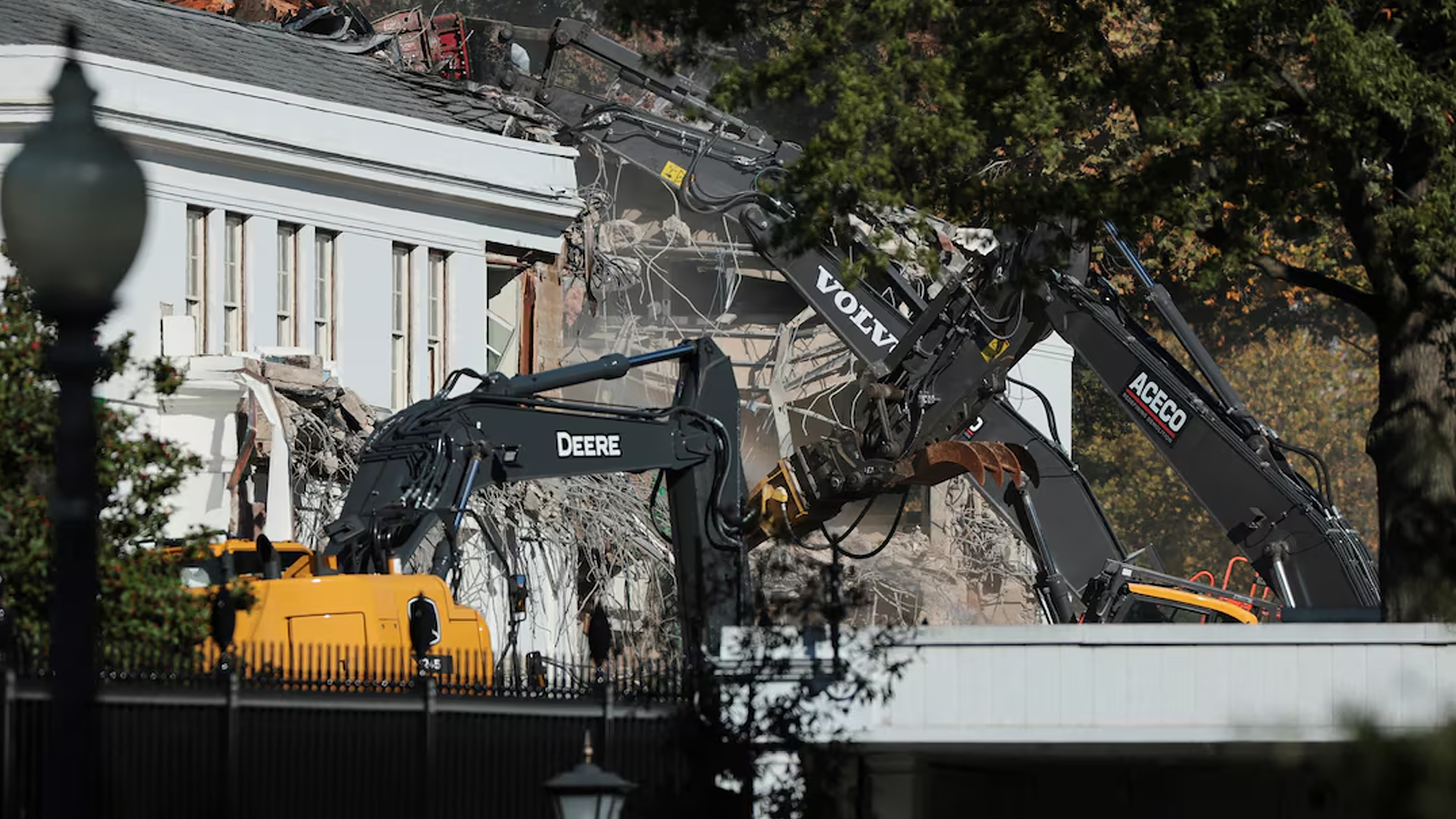
Whether or not you’re clued into US politics, you’ve probably heard mutterings of Trump’s ballroom in the past few weeks. The President has undertaken an ‘aggressive’ construction project involving the destruction of the White House East Wing and its rose gardens – originally built by First Lady Jacqueline Kennedy.
The plans have been publicly approved by Amazon billionaire Jeff Bezos and a bevy of Trump supporters who’ve been quick to highlight other costly DIY projects carried out by previous Presidents – including Barack Obama’s basketball court.
However, examples like these are a futile comparison given they didn’t require the demolition of large swathes of the White House and its grounds. Trump’s determination to quite literally steam roll over a historic wing of the building, covering it in concrete, holds up a fitting mirror to his politics. He is a leader who, as Richard Primus argues, ‘sees the Constitution as an obstacle to be surmounted, not a repository of values that he must respect.’
As he sets his sights on a third Presidential term, Trump has been described as an authoritarian leader who ‘prefers to stir feelings of fear, vulnerability, hopelessness, and political inevitability.’
His demolition of the East Wing thus marks an America divided, but also a political system on the brink of irreversible change.
Nowhere was this so deftly visible than in a social media post by Jack Schlossberg, Jacqueline Kennedy’s grandson. The political commentator shared side-by-side images of the White House rose garden – the first in its prime and brimming with colourful flowers, the second covered in concrete and trucks.
‘My grandmother saw America in full colour – Trump sees black and white,’ Schlossberg wrote beneath the images. ‘Where she planted flowers, he poured concrete. She brought life to the White House, because our landmarks should inspire growth and community.’
‘Her Rose Garden is gone, but the spirit of the Kennedy White House lives on – in the young at heart, the strong in spirit, and in a new generation answering the call to service.’
Trump’s planned gold-gilded ballroom, to be built where the East Wing once stood, will cost an estimated $300 million. Perhaps unsurprisingly, given Bezos’ support of the project, Amazon is one of the donors.