Growing up, we believed that the UN was a mighty force formed to protect our universal human rights above all. Based on recent global events, many feel that the organisation is becoming powerless.
The United Nations, founded in the aftermath of World War II, was designed to prevent future conflicts and foster global cooperation.
Despite its great successes in ending conflicts, maintaining peace, and providing aid across the world, the organisation’s limitations are becoming increasingly evident in the face of modern warfare.
The UN’s core strength – soft power – relies on diplomacy, dialogue, and international consensus from member states. This approach has been instrumental in building peace and mediating disputes, but falls short when confronted with the innerworkings of 21st-century conflicts.
From the crisis in Sudan to violence in the Democratic Republic of the Congo, as well as the resurgence of the Israel-Palestine conflict now spreading into Lebanon – the UN’s ability to douse the flames of modern conflict has become virtually imperceptible.
This raises a serious and necessary question about whether the organisation is capable of fulfilling its founding mission. Is the UN, once a pillar of protection for humanity, now powerless in the face of modern conflicts it was created to prevent?
Soft power + Security Council paralysis
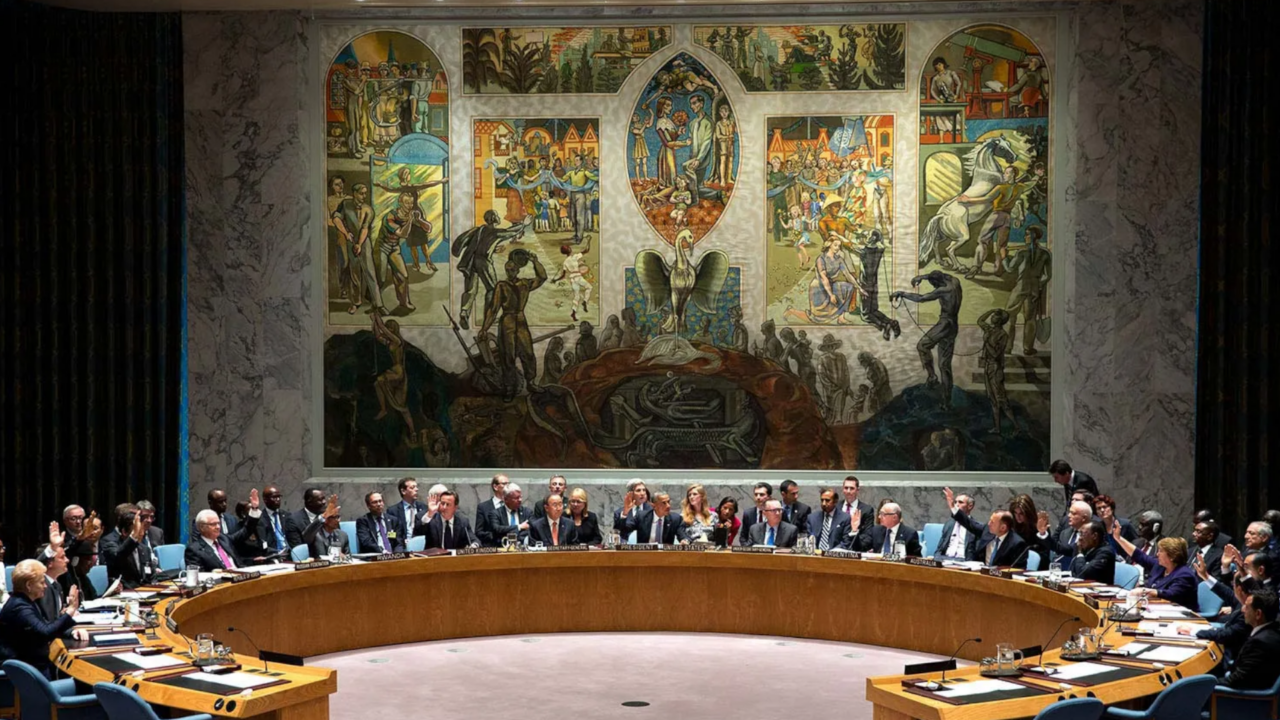
Perhaps the UN’s biggest vulnerability lies in the structure of the Security Council, where real power exists.
The UN’s ability to deploy peacekeepers or broker ceasefires is restricted by the veto power of the Security Council’s five permanent members: the United States, Russia, China, France, and the United Kingdom.
In the event that one of these countries has geopolitical interests at stake in the conflict being discussed, meaningful action to prevent violence and civilian suffering can be immediately vetoed, and ultimately, blocked.
With the Council’s five nations more entangled than ever in global trade, security alliances, and regional power struggles, the veto has enabled leaders to make decisions not based on humanitarian concerns, but on geopolitical and economic interests.
Not to mention, modern warfare increasingly involves non-state actors, insurgent groups, and cyberattacks — areas where the UN has limited authority.
The rogue nature of these threats challenges the UN’s traditional peacekeeping model, which was designed for post-war stabilisation rather than complex, asymmetrical conflicts.
As the world has become more interconnected, the lines between local conflicts and international interests have blurred, making a unanimous consensus within the council difficult to land on.
The UN Charter, while enshrining the organisation as a force for peace, upholds the principle of non-interference in the internal affairs of states. This creates a paradox: the UN is meant to prevent human suffering, but it cannot act without the consent of the very governments that may be perpetrating that suffering.
As a result, the efficacy of the United Nations Security Council’s structural weaknesses are exposed and its ability to manage global crises hindered.
This gridlock has become devastatingly apparent during the ongoing conflict in Sudan.
Since April 2023, the country has witnessed violent clashes between rival military factions, spiralling the country into a humanitarian disaster.
Though the total number of people killed during the conflict is unknown, medics in the region put the figure between 20,000 and an even more disturbing 150,000 people.
A further 7 million people in Sudan have been displaced from their homes and into the desert where they face other serious challenges, including dehydration and starvation.
More than 80 hospitals have been bombed, basic services have collapsed, and food and medical supplies have become increasingly scarce. The UN has repeatedly called for ceasefires, peace talks, and humanitarian access, but members of the Security Council have failed to act decisively.
The cause of this inaction, of course, is rooted in geopolitical interest. Russia, for instance, has a lot to lose in Sudan, including gold mining operations and military agreements. A reluctance from Russia to alienate its allies has led to the UN’s diplomatic inaction.
Meanwhile, China has remained cautiously neutral due its strategic ties to numerous African nations, aiming to avoid intervention that could be seen as infringing on Sudanese sovereignty.
This veto gridlock means that while Sudan burns, the Security Council is forced to continue deliberations.
A lengthy case study in peacekeeping failure
If Sudan exposes the paralysis of UN diplomacy, the Democratic Republic of the Congo highlights the limitations of its peacekeeping operations.
The DRC has been entrapped in conflict for more than two decades, with various rebel groups, militias, and foreign actors battling for control of its mineral-rich regions.
The UN Organisation Stabilisation Mission in the Democratic Republic of the Congo (MONUSCO) is one of the largest and longest-running peacekeeping missions in history, operating in the region since 1999.
Despite deploying tens of thousands of troops and raising billions of dollars in funding – primarily via the UN Peacebuilding Fund and from several European governments – MONUSCO hasn’t been successful in bringing peace to the region.
Rebel groups, including the Allied Democratic Forces (ADF) and the March 23 Movement (M23), continue to operate with impunity, terrorising civilians with the goal of gaining ultimate control over the region.
In fact, MONUSCO has been regularly criticised for failing to protect civilians in the Congo.
Peacekeepers on the ground cited restrictions in their mandate as the reason for their inaction. They stated that they were authorised to use force only in self-defence or to protect civilians, but this instruction was so narrowly defined that they were incapable of preventing a rebel takeover.
In 2021, another tragedy highlighted MONUSCO’s powerlessness when a UN peacekeeping convoy in eastern Congo was ambushed, leading to the death of the Italian ambassador to the country.
Despite the UN’s presence in the Congo for over two decades, more than half of locals view MONUSCO as ineffective, and in the worst cases, view it as complicit in the conflict.
The organisation has withdrawn around 15,000 of its peacekeepers in recent months.
Israel-Palestine: a decades-long struggle
The UN’s powerlessness is perhaps most evident in the Israel-Palestine conflict, where more than 70 years of resolutions, envoys, and peace processes have failed to produce any lasting solution.
In many ways, the Israel-Palestine conflict is a model example of the UN’s larger issues: the paralysis of the Security Council, the multi-failures of diplomatic initiatives, and the complexities of sovereignty vs. intervention.
Since the creation of Israel in 1948, the UN has made a long list of attempts to resolve tensions and various conflicts between Israelis and Palestinians.
Numerous resolutions have been passed calling for a two-state solution, addressing the rights of Palestinian refugees, and condemning illegal Israeli settlements in the West Bank – the latter practice has continued throughout the years regardless, even more so in recent months.
Still, the Security Council’s actions have been consistently thwarted by the United States veto.
This includes those that condemn the expansion of settlements or the use of disproportionate force against Palestinians. More recently, the US also blocked UN calls for humanitarian pauses during Israel’s carpet bombing of Gaza.
As a result, the UN’s involvement has been reduced to calls for ceasefires and urges to both sides to return to peace talk negotiations – appeals that are almost always ignored.
Security Council talks continue as the situation on the ground deteriorates, especially with the expansion of Israel’s military operations into Lebanon.
In solidarity with the people of Gaza, the Lebanese militant group Hezbollah launched rockets into northern Israel. Israel responded by conducting airstrikes not only on Hezbollah targets, but on civilian infrastructure in Lebanon too.
The UN, particularly through its peacekeeping mission in Lebanon (UNIFIL), issued calls for restraint urging both parties to avoid further escalation, but once again, these appeals fell on deaf ears.
For more than a year, Israel’s deadly airstrikes have continued with little more than symbolic condemnation from the international community.
Meanwhile, Hezbollah remains a potent military and political force in Lebanon, unperturbed by UN sanctions or diplomatic pressures.
Reshaping the future
The UN’s powerlessness in the face of these conflicts – whether in Sudan, the DRC, Israel-Palestine, Lebanon, or Yemen – points to a serious crisis of relevance.
Rethinking the veto power of the Security Council’s permanent members must be addressed if the UN is to regain credibility as a force for peace in the world where modern warfare and weapons of mass destruction are now a reality.
Peacekeeping operations also need to be reformed to ensure they are properly resourced, with workers given clear mandates, to help them act decisively when civilian lives are endangered.
While the UN remains a critical forum for international diplomacy and humanitarian efforts, its reliance on soft power – and the veto politics within the Security Council – has rendered it basically incapable of halting many of today’s most serious conflicts.
Former Secretary-General Dag Hammarskjöld once said, ‘The United Nations was not created in order to bring us to heaven, but in order to save us from hell.’
But in Sudan, Congo, Gaza, and Lebanon, the UN seems powerless to stop such a descent.
Deputy Editor & Content Partnership ManagerLondon, UK
I’m Jessica (She/Her). I’m the Deputy Editor & Content Partnership Manager at Thred. Originally from the island of Bermuda, I specialise in writing about ocean health and marine conservation, but you can also find me delving into pop culture, health and wellness, plus sustainability in the beauty and fashion industries. Follow me on Twitter, LinkedIn and drop me some ideas/feedback via email.
Students, teachers, and parents have taken to the street to protest France’s crippling education infrastructure. However, as the movement started to gain nationwide traction, so did violence, driven by clashes with the riot police.
These past few weeks have seen intense waves of violence associated with student-led protests in France. What started as a local walkout by teachers at a high school in Créteil quickly turned into a nationwide...
After surviving two doses of a drug intended to kill her, Christa Pike is at the centre of a high-profile legal battle that’s shone fresh light on the absurdity of humane execution.
Last week, Christa Pike survived an attempt on her life. Now doctors at the Tennessee hospital where she’s being held are working tirelessly to save her. Reports state Pike is ‘angry and confused’ about what happened to her,...
When it comes to social change in 2026, Gen Z has lost all the vim of yesteryear. When and where was this energy lost? Let’s break it down.
In the late 2010s Gen Z was synonymous with social change, a broad catch-all term encapsulating the desire for a more equitable and just world.
In 2026, however, the cohort is now more likely to be mentioned in the same breath as subjects...
Used clothes have been enabling people to refine their style and earn money. Now that thrift fashion is reaching new heights on the internet, who continues to benefit the most?
In Nairobi, a second-hand jacket can either be on sale in the market or on social media with all the elegance of a professionally curated thrift shop. It is the same type of clothing item, just sold via different channels.
Some...
We use cookies to ensure that we give you the best experience on our website. If you continue to use this site we will assume that you are happy with it.






























 0 comments