






 0 comments
One person has died and at least 16 others have been injured in a van attack at Berlin’s Pride event. The queer community has been left reeling as one of Europe’s most inclusive cities is reminded of a growing contempt toward LGBTQIA+ people.
Berlin is often lauded as Europe’s most progressive city. The streets are lined with subversive clubs, bars and art spaces. Many of the continent’s young people have relocated to Germany’s capital in search of a freer, bolder life – especially as places like London fail to invest in urban nightlife.
Even as many of Europe’s governments veer toward the right, Berlin has remained a bastion of liberal ideals. And it’s considered a safe space to be openly queer, as reflected by the city’s vibrant annual Pride events.
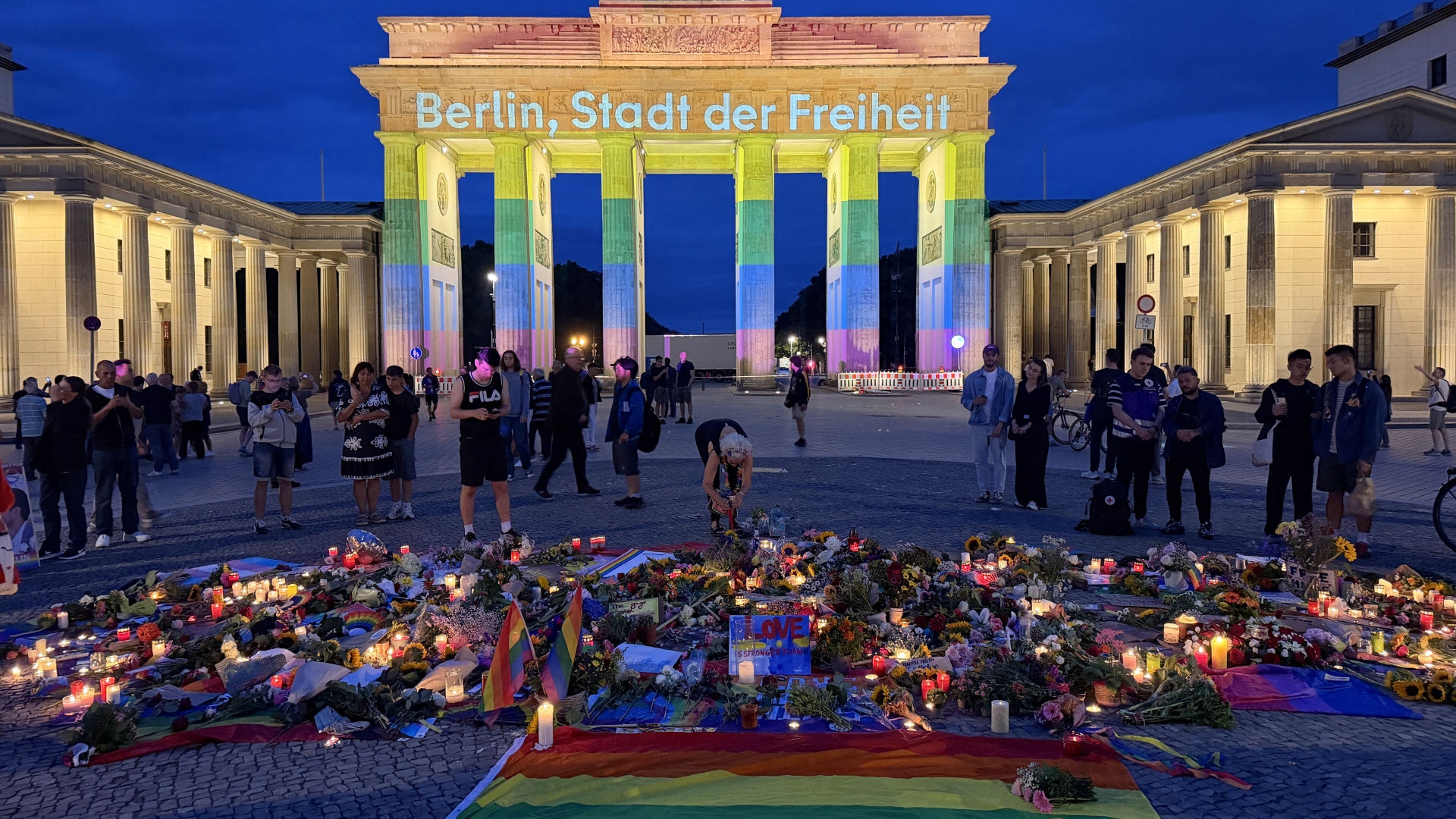
But that sense of safety was violently crushed over the weekend when a van ploughed into a crowd in the city center, just near the famous Brandenburg Gate. At least one person has been killed and around 16 others injured in the attack.
The suspect has been named by police as 21-year-old Abdul B, who German media outlets are reporting to be a supporter of the Islamic State group (IS).
German Chancellor Friedrich Merz said in a statement he would ‘make sure this horrific act is fully investigated and punished,’ and an intensive, city-wide manhunt is currently underway.
The attack took place as crowds celebrated the finale of Christopher Street Day – Berlin’s annual Pride event, named after the site of the Stonewall Inn in New York City – on Saturday night. Witnesses saw a car driving ‘very quickly’ into the crowd and heard screams as people ran into Tiergarden park to hide.
Several people were also apparently stabbed by the attacker, according to reports. Berlin has since cancelled any further Pride events and the city has been left in a state of shock. The queer community has been forced to endure a violent reminder of the anti-LGBTQIA+ sentiment mounting globally, as international politics sway further to the right and safe, inclusive spaces are increasingly threatened.
The motivations of the attack remain unclear, but those in the LGBTQIA+ community live with a devastating history of violence and marginalisation. Still, the reality that these kinds of incidents can still happen in places like Berlin – Europe’s queer capital – is difficult to comprehend. The impacts will be deep-rooted and long-lasting.
‘It’s one of the worst days for the queer community and a day I personally hoped I’d never have to experience… I’m shocked,’ said Julian Methig, who attended the event.
Emergency workers set up a helicopter landing pad near the Reichstag parliament to transport the injured to nearby hospitals, and quickly instigated a full-blown search for the perpetrator after the van used in the attack was found empty.
Berlin mayor, Kai Wegner, called the deadly assault ‘an attack on our free and cosmopolitan society.’
‘Following a peaceful and colourful CSD, the rally for a tolerant and peaceful Berlin was attacked in the most brutal manner,’ he said on X. ‘Berlin is the city of freedom – and out freedom has today been attacked in the most appalling way. My thoughts are with the victims, their families and friends.’
For many queer people, Pride has always been more than a celebration. It is an act of visibility. A declaration that despite decades of persecution, criminalisation and violence, LGBTQIA+ communities will continue to occupy public space unapologetically.
Attacks on Pride events reverberate so far beyond the immediate victims. They are designed to spread fear, forcing people to question whether visibility is worth the risk.