Tlou Energy is the first Australian firm to be fined for lying about its environmental credentials. A corporate watchdog says claims that its sub-Saharan African gas and electric power projects are carbon neutral and low emissions are ‘factually incorrect’.
If the latest legal ongoings in Australia are anything to go by, it could be getting difficult for energy companies to hide behind greenwashing tactics.
The front page of Aussie-based Tlou Energy’s website promises ‘cleaner energy for Botswana & Southern Africa’, but a bit of further digging by the Australian Securities and Investment Commission (ASIC) is calling their bluff.
In a statement, the corporate body said, ‘ASIC was concerned that Tlou either did not have a reasonable basis to make the representations, or that the representations were factually incorrect.’
This has led to the energy firm being the first to be issued a fine of AUS $53,280 for greenwashing. ASIC is adamant that it won’t be the last.
Tlou Energy stated that all the electricity produced in its sub-Saharan Africa projects would be carbon neutral and that it had received official environmental approval.
It went further to say that Tlou had the capability to generate large quantities of electricity from solar and that its gas-powered energy would be low emissions, but corporate regulators at ASIC couldn’t find sufficient evidence to support any of these claims.
All of these inconsistencies are what led the energy firm has become Australia’s first to be fined for greenwashing.
ASIC has stated that Tlou Energy’s payment of the fine isn’t an admission of guilt. But it is slightly telling that the firm agreed to cough up the money, despite denying it had broken any rules.
Australia’s energy enigma
Despite being rich in biodiversity – think coral reefs, kelp forests, deserts, mountains, and forests – Australia’s government has been particularly stubborn about taking action to mitigate the climate crisis.
Australian ministers, like those from India, China, and Japan, kept their hands in their pockets as leaders from more than 40 nations penned a commitment to phasing out coal at COP26.
This blatant refusal led to an outcry from environmentalists around the world, especially as coal accounted for a whopping 40 percent of the growth in global emissions last year.
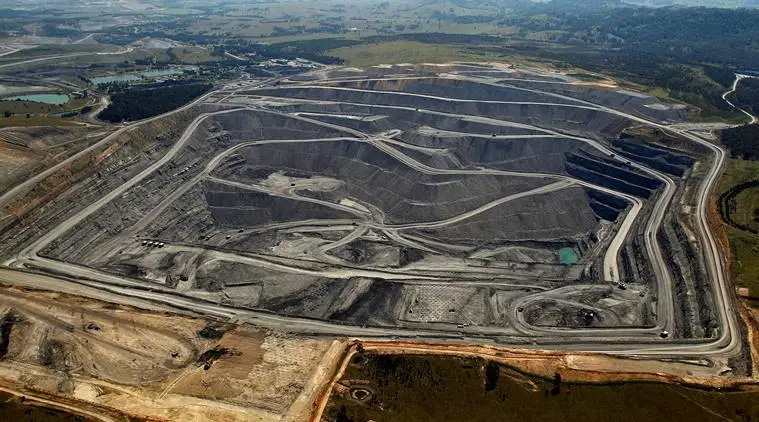
While disappointing, Australia experiences serious financial gain from burning and selling fossil fuels. In fact, coal mining makes up 10 percent of the nation’s gross domestic product.
Australian coal mine
To the surprise of absolutely no one who has been keeping up with the planet’s wellbeing, most political leaders have the interest of the national economy at heart.
For that reason, we can’t always expect dollar-concerned governments to assess the ethical and environmental practices inside energy companies. A sad reality, but it’s true.
This is what makes the work of external investigative bodies like ASIC so important.
ASIC’s deputy chair Sarah Court said that companies making vast claims about sustainability ‘must ensure they can support those statements and have a reasonable basis for doing so.’
A fair warning, as ASIC is on a mission to step up its anti-greenwashing agenda, with a number of active investigations already pending.
These projects are examining any potential misleading or deceptive statements by major Australian companies.
In other words, if you’re saying your energy is eco-friendly, we’re gonna need to see the receipts
Deputy Editor & Content Partnership ManagerLondon, UK
I’m Jessica (She/Her). I’m the Deputy Editor & Content Partnership Manager at Thred. Originally from the island of Bermuda, I specialise in writing about ocean health and marine conservation, but you can also find me delving into pop culture, health and wellness, plus sustainability in the beauty and fashion industries. Follow me on Twitter, LinkedIn and drop me some ideas/feedback via email.
A month after the actress was criticised for ‘sexualising women’s sport’, the backlash raised a bigger question: what are women actually allowed to be in the sporting world?
You probably already heard that Sydney Sweeney has ‘great jeans’. The actress stirred up major controversy with an American Eagle advertisement last summer, which was criticised for flirting with eugenics thanks to the aforementioned tagline.
Initially staying silent amidst the backlash, Sweeney...
Between a Nara Smith rebrand and a New York Times bestselling novel, it seems the glory days of tradwifery are behind us.
Nara Smith is best known for her scratch cooking videos. Or maybe it’s the extravagant couture she wears while cooking. No wait, it’s her famous model husband Lucky Blue Smith (once tumblr’s ultimate it-boy). Ah! Got it. It’s the weird and wonderful names of her children: Whimsy Lou,...
NHS bodies have imposed a two-year minimum wait for assessments as demand for diagnosis soars.
There are many benefits to raising awareness for neurodevelopmental conditions. The taboos that kept thousands suffering in silence have significantly decreased in the UK, and support is more readily available than ever before. But besides there still being significant room for improvement in the neurodevelopmental care sector, the growing demand for diagnosis of conditions – particularly...
The alleged incident took place on university grounds in 2024. Cornell has yet to comment publicly.
On Tuesday, the names and faces of seven Cornell University students flooded the internet. They were all young men. And they were all allegedly involved in the gang rape of a woman on campus in 2024.
Jane Doe initially came forward shortly after the incident was said to have happened, telling Cornell University Police on...
We use cookies to ensure that we give you the best experience on our website. If you continue to use this site we will assume that you are happy with it.






























 0 comments