






 0 comments
With climate change raging over glacial ice, the landmark sanctuary was built to preserve Earth’s historical records held within the ice.
Time machines have long captured human imagination but have remained firmly in the realm of science fiction. Yet, understanding the past may not require such sophisticated piece of tech at all, for nature has already given us something alike – glacial ice.
Snow is composed partially of air, and as layers accumulate over time, their increasing weight compresses the lower layers into solid ice. During the process, tiny pockets of the atmosphere and environmental compounds are sealed off in tiny bubbles. In essence, glacial ice preserves literal samples of ancient air, frozen in time.
These samples are accessed through ice cores drilled from ice sheets and glaciers. Within them lies concentrations of greenhouse gases, biological material such as pollen and microbes, and even traces of human activity. Evidence ranging from lead pollution caused by Roman-era smelting to radioactive fallout from 20th-century nuclear testing can be detected within the ice.
Each layer acts as a timestamp recording both natural and anthropogenic changes to Earth’s atmosphere.
By analysing these records, scientists can trace how greenhouse gas compositions have evolved over hundreds to even millions of years. This is how we know, for instance, that current atmospheric CO2 levels far exceed those of the past.
Ironically, the very phenomenon these ice cores help us understand, climate change, is rapidly destroying the glacial archives themselves. As glaciers and ice sheets shrink, irreplaceable climate records risk being lost forever.
In response to this urgent situation, a group of brilliant minds came together to propose a solution: an ice sanctuary.
The ice sanctuary
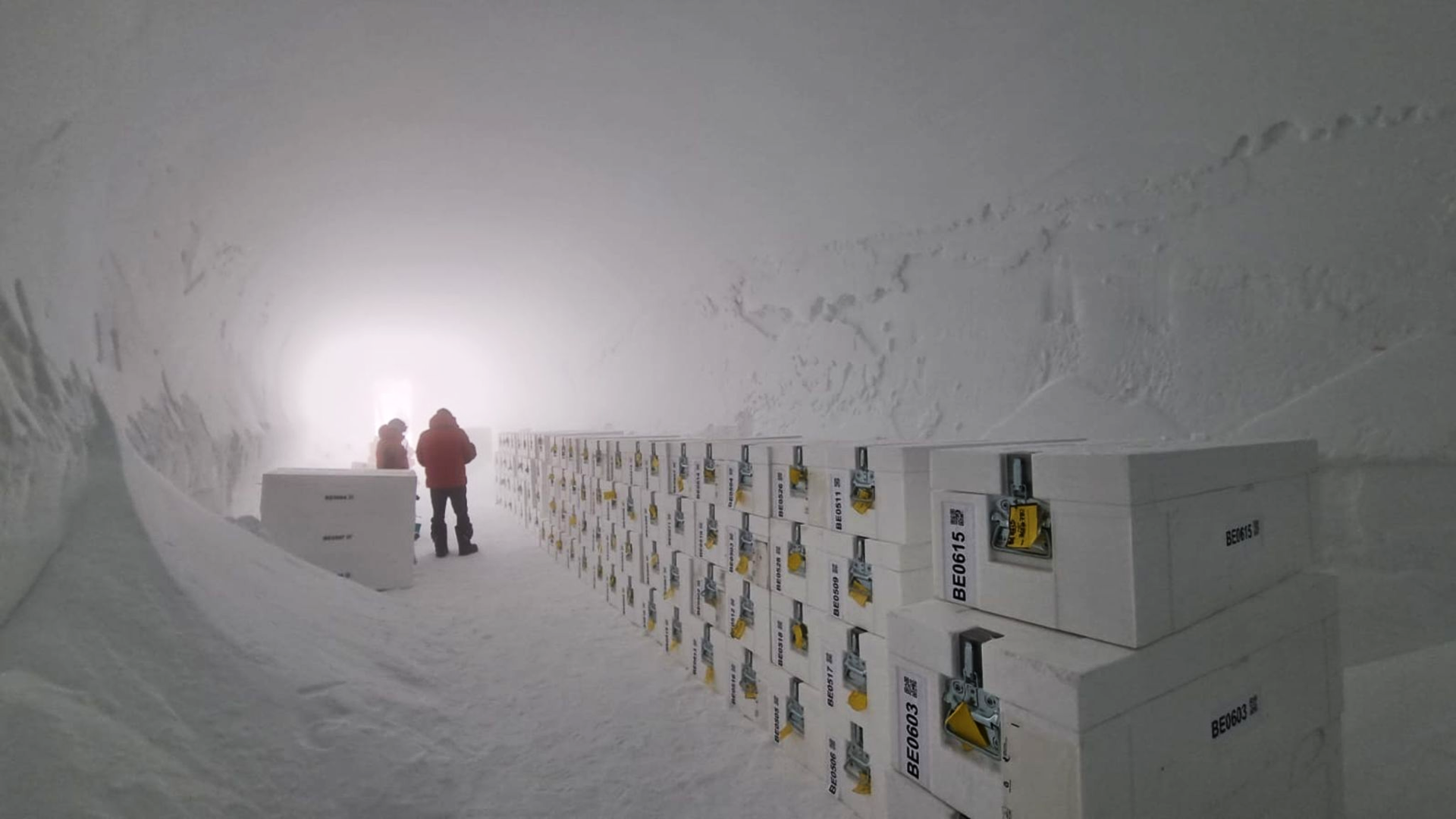
On January 14, the Ice Memory Sanctuary was officially inaugurated at Concordia Station in Antarctica. The underlying structure is a 35-meter-long cave dug into compacted snow. Ice cores stored within the sanctuary are naturally preserved at a constant temperature of -52°C, eliminating the need for electricity or mechanical cooling.
With mountain glaciers becoming increasingly endangered, this frozen library was designed to preserve ice cores from vulnerable regions across the world. Beyond safeguarding existing data, it was created with future generations of scientists in mind. Advances in technology may one day allow analyses that are currently impossible, making these preserved cores invaluable climatic time capsules.
This initiative was not done on a whim, however, with the broader mission beginning as early as 2015, though the ice cores had been stored in advanced freezers in Europe. It was only in 2021 that the Ice Memory Foundation was officially founded in France, and in 2024 that the Antarctic Treaty System approved the project to be legally built on the Antarctic Plateau.
Currently, within the Sanctuary sits ice cores from Mont Blanc, France, and Grand Combine, Switzerland that were added to the collection shortly before the inauguration. The next few years expects the addition of a dozen more cores – namely from the Andes, the Caucasus, Svalbard, and the Pamir Mountains.