






 0 comments
Large families are increasingly hard to achieve – and afford. As the cost of living continues to rise, have children become the ultimate status symbol? And what does this say about our values?
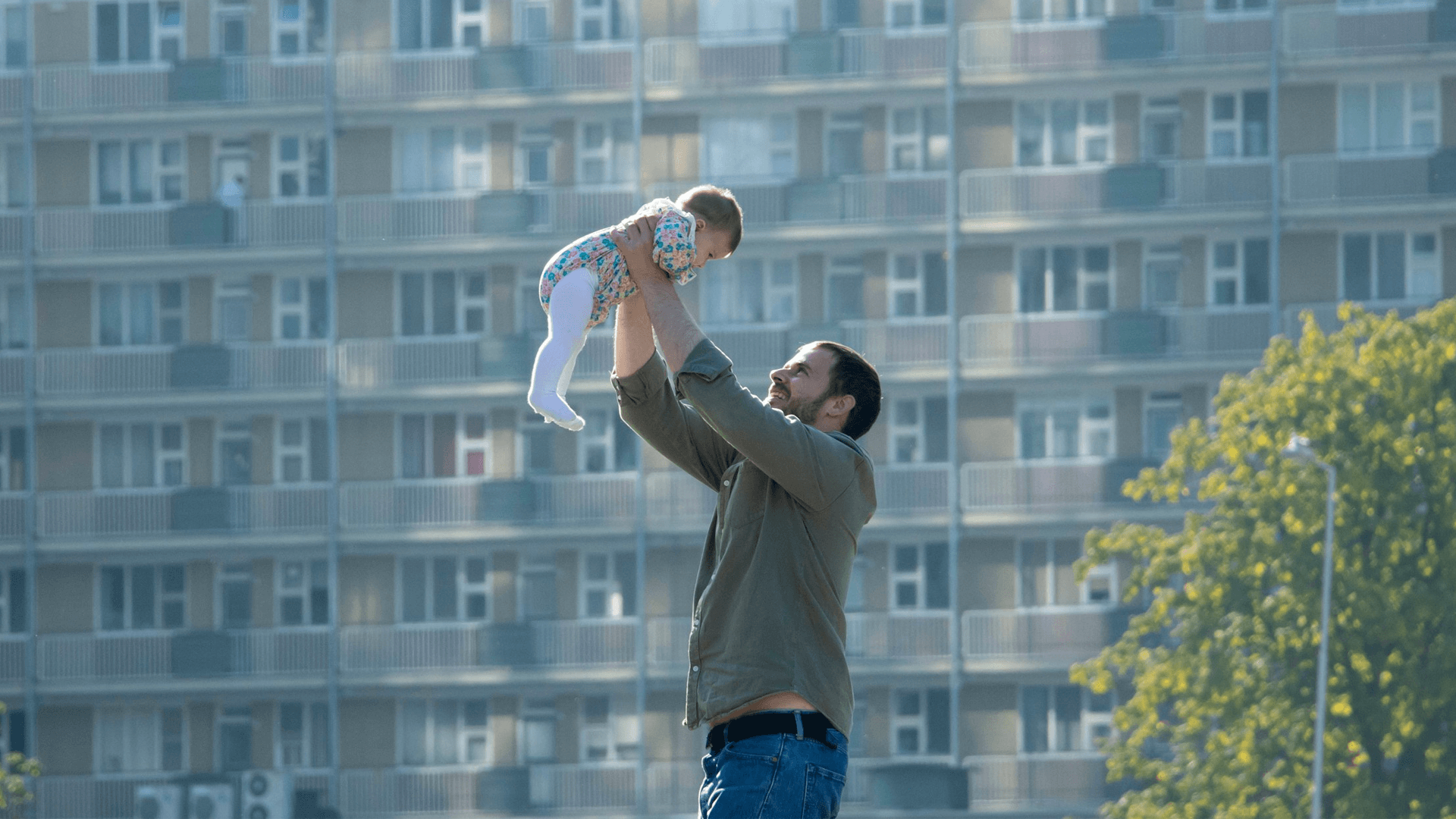
In Britain today, raising a single child is enough to stretch most households to the edge of their means. Housing costs, childcare, food, and education make family planning a calculation in survival as much as sentiment.
Against this economic backdrop, the large family has taken on a new meaning. When Sophie Ellis-Bextor entered the ‘five-kids club’ back in 2019, it was less an observation about celebrity than about class. With estimates that one child costs around £150,000 to raise over the course of a lifetime, the ability to sustain five is not simply a choice but a declaration of insulation from financial insecurity.
In the years since, the economy has only continued to falter – and the act of having children has become more of a financial talking point. What once represented a conventional family size – say, three to four children – now registers as extraordinary (enviable even) precisely because it’s so unattainable.
At a time when many are postponing or abandoning the prospect of parenthood entirely, to have multiple children functions as a public symbol of abundance. Children themselves become the embodiment of wealth. Not to put too fine a point on it, but children are quite literally living proof of their parents’ financial status.
That might sound brash, but the reality is even more uncomfortable when set against the global landscape. In places like Sudan and Gaza, millions of children face starvation, bombardment, and mass displacement. Their futures are being obliterated in real time while the world debates ceasefires. Across refugee camps in Lebanon and Jordan, children grow up without stable schooling or healthcare, their existence a permanent state of waiting.
In these contexts, childhood itself is precarious and expendable. To juxtapose this with the celebratory coverage of affluent families in the West parading four or five healthy, expensively dressed children on Instagram reels is to witness a profound moral dissonance. Children in one part of the world are aestheticised as markers of privilege; children in another are stripped of agency and reduced to statistics of suffering.
But even in wealthy locales, the concept of children as status symbols is also layered and complex. As Eugene Healey points out, parents who are able to balance caring for multiple children with a busy social life and flourishing career are the true purveyors of privilege.
Not only can they afford a large family in the first place, but they can afford to have one that doesn’t impede on other areas of their life – they can pay for hired help, cleaners, nanny’s, boarding school, and even private chefs.
This disparity is not just geopolitical but ethical. To raise multiple children in Britain today requires wealth, time, and access to resources – an architecture of privilege that shields parents from the anxiety most families feel.
To have many children in Gaza, by contrast, is no less common, but is inseparable from loss: to become a parent there is to live with the knowledge that each child’s survival is not guaranteed. Both situations produce large families, but the meaning attached to them could not be further apart.