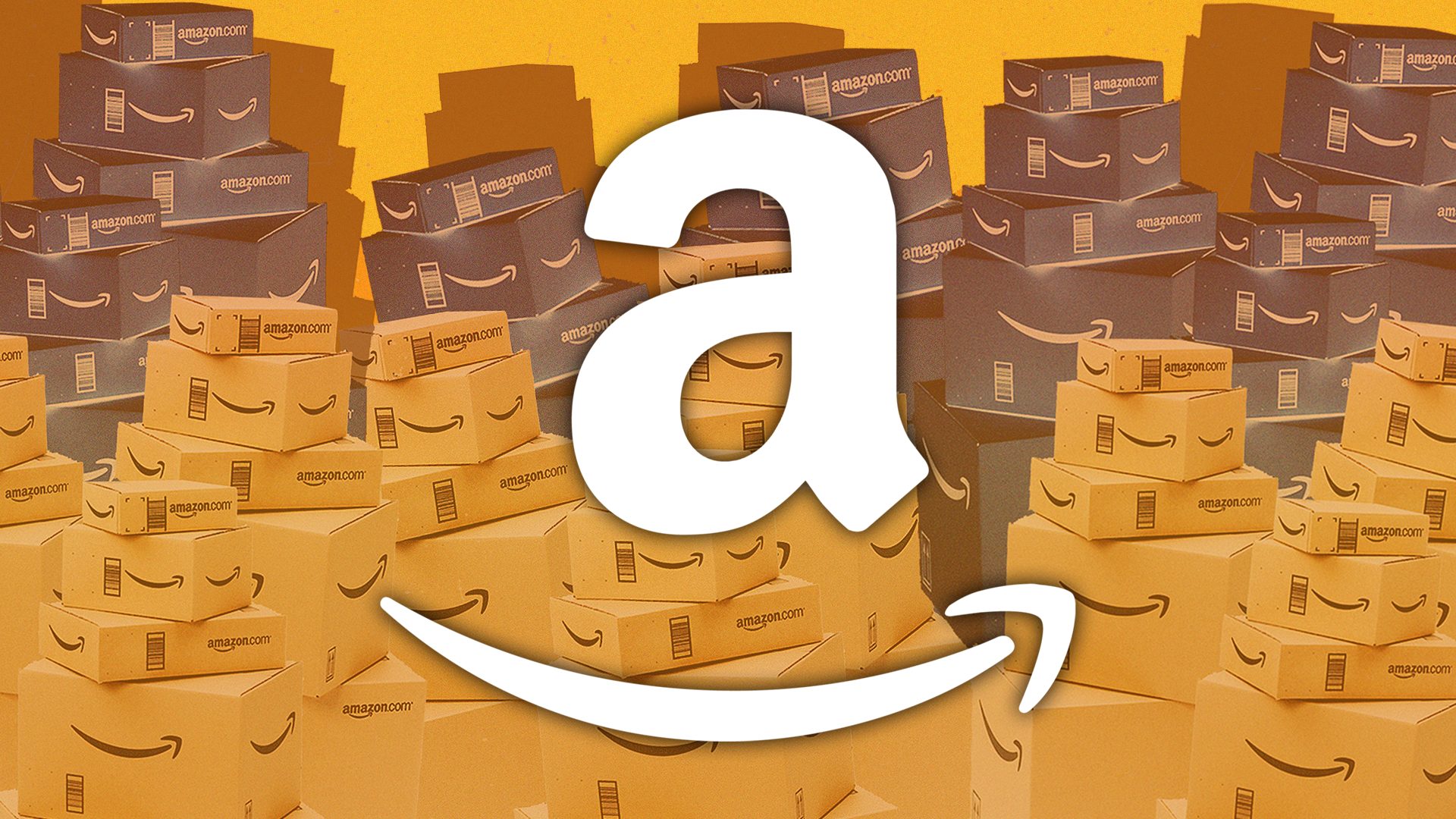
An investigation by ITV has claimed that Amazon UK is destroying upwards of 130,000 unsold products every week, creating an unprecedented amount of waste and e-waste.
Online retailer Amazon is destroying millions of unsold and discarded items every single year, according to a new investigation by ITV.
Footage taken undercover at one of 24 distribution centres shows a huge amount of items – much of it tech such as laptops and phones – being thrown into a ‘destruction zone’. Employees say most are unopened or still in shrink wrap, and that nearly all destroyed products could be resent to charities.
Items are thrown into large bins and carried away by lorries. They’re then disposed of in recycling centres, with only a small number being used for energy recovery.
This is where non-recyclable products are burned to create heat, electricity, or fuel.
Amazon’s business model relies on vendors storing products at its warehouses, but this costs companies a significant amount the longer they’re left unsold. Eventually, it becomes cheaper for these third parties to simply dispose of items rather than paying an upward fee to keep them housed.
Obviously this isn’t great news. E-waste and plastic remain two huge environmental issues, especially in the UK, where much of the country’s recycling is sent overseas.
Amazon’s insanely high volume of wasted products is disappointing, especially considering that most if not all of these destroyed products could be sent to charities, hospitals, or schools for use by those who need them or can’t afford tech normally.
The good news is that almost all of these items are recycled and not sent to landfill, at least according to Amazon. In response to the investigation, it claimed that it is ‘working towards a goal of zero product disposal and our priority is to resell, donate, or recycle any unsold items’.
That’s easier said than done, however, and for now Amazon has a huge waste problem that needs addressing sooner rather than later.
Keep in mind too that recycling remains a complicated issue and isn’t as easy as you’d think. Often it’s actually detrimental to reducing our carbon footprint and many experts believe it is no longer a viable option to tackle our waste problem.
What can be done in the future to change things?
Amazon technically isn’t doing anything illegal – it’s just very poor form.
The UK government is facing a wave of public calls to intervene with new legislation that forces large companies to be more responsible in handling unsold items as a result of ITV’s investigation.
Greenpeace spokesman Sam Chetan-Welsh noted that ‘it’s an unimaginable amount of unnecessary waste and it’s shocking to see a multi-billion pound company getting rid of stock in this way’.
Greater consumer awareness can also help. We’ve all been aware of Amazon’s dodgy tax history, poor employee wellbeing, and its dismissive attitude toward philanthropy for quite some time, but its massive monopoly over the online retail industry makes it hard to not use.
The more of us kick up a fuss, the more likely we’ll see meaningful action. As mentioned, some are already asking the government to step in with legal action – the more of this momentum is pounced on, the quicker Amazon will get its act together. In theory, of course.
I doubt this will slow Jeff Bezos’ inevitable takeover of Earth, but we can cry out in defiance in the meantime. What’s a fight without a little shouting, eh?
I’m Charlie (He/Him), Deputy Editor and Senior Writer at Thred. I was previously the Editor full time at Thred before moving to Bristol in 2024. As a music and gaming enthusiast, I’m a nerd for pop culture. You can find me curating playlists, designing article headline images, and sipping cider on a Thursday. Follow me on LinkedIn and drop me some ideas/feedback via email.
The ongoing Winter Olympic Games have seen many acts of defiance against the Trump administration. How will the situation play out when the US hosts in 2028?
When Baron Pierre de Coubertin revived the Olympics in 1896, one of his main aims was to promote mutual understanding among athletes. He believed that competing on the track instead of the battlefield could encourage peace and help prevent war.
However, countless...
Anxiety, depression, and emotional problems are on the rise across the globe, cutting across boundaries of culture, geography, and socio-economic status. The World Health Organisation says ‘one in seven’ have a mental health disorder in 2026.
According to the World Health Organisation, ‘one in seven adolescents worldwide has a mental health disorder.’ Such statistics obviously cannot be ignored.
This generation of teens is the first to be raised in an...
Why has the precedent that ‘British culture is dying’ invaded every aspect of our lives recently? From TikTok commentary to culture-war politics, who is really influencing the supposed shift in British culture?
Claims that Muslims and BAME communities are erasing British culture have become a popular rhetoric in recent political spheres in the UK, but also around the Global North as a whole. Popular, but not new.
Here's my take...
Findings suggest women' s professional development was only a priority for half of US businesses in 2025.
‘Many companies are overlooking women – and it’s crucial that they don’t,’ reads the opening line of the 2025 Women in the Workplace report. What follows is no more encouraging. The state of play across the corporate landscape is pretty dire where gender parity is concerned.
The standout finding was that only half...
We use cookies to ensure that we give you the best experience on our website. If you continue to use this site we will assume that you are happy with it.
































 0 comments