






 0 comments
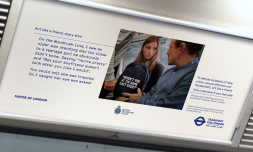
The petition, started by a student, follows TfL’s ‘Act Like a Friend’ anti-harassment campaign.
Almost 12,000 people have signed a petition calling for women-only carriages across the London Underground network. It comes shortly after TfL’s anti-harassment efforts and reflects a growing sense of unease on board public transport services.
UCL student Camille Brown set up the petition after she had ‘had enough of women being unsafe’ on the tube. It now has just over 11,950 signatures, meaning it’s likely to receive a response from the government.
Brown has urged London mayor Sadiq Khan and TfL to introduce gendered carriages as a way to protect women on board – drawing on her own childhood experience of travelling in alone in London. The 21-year-old recalls sending daily ‘SAS’ messages to her family to let them know she was ‘safely at school’.
‘It was not a rare occurrence for girls at my school to arrive in tears [after] having experienced or witnessed something traumatising on the underground.’
‘Public harassment of women on the London Underground is a growing issue and TfL’s approach is failing – we always see it, we always say it, but it’s still not sorted,’ Brown wrote on the petition page.
According to statistics recently released by TfL itself, during the first six months of 2025 there were 907 sexual offences reported across TfL services, an increase from 879 in 2024. This is consolidated by a recent BBC investigation which revealed that reports of sexual assaults and harassment on trains have risen by more than a third over the past 10 years.
But despite Brown’s successful campaign, TfL have said it would not support women-only carriages on the network.
Siwan Hayward, TfL’s Director of Security, Policing and Enforcement, said: ‘Everyone should feel and be safe when travelling across the network, but isolating women is not the answer to tackling sexual offenses. We do not support any proposal for female-only train carriages on TfL services, but instead are working closely with the police to ensure our capital’s transport network is a hostile place for offenders, including the use of intelligence-led policing operations to target offenders and hotspot locations.’
Online, women are pushing back with their own lived experiences. ‘I think this is a good idea, I feel so much safer travelling that way especially at night,’ said one comment.
But many share TfL’s sentiment, arguing that segregation does little to target the root of the problem.